Lemongrass Chicken with Garlic and Ginger Marinade Recipe
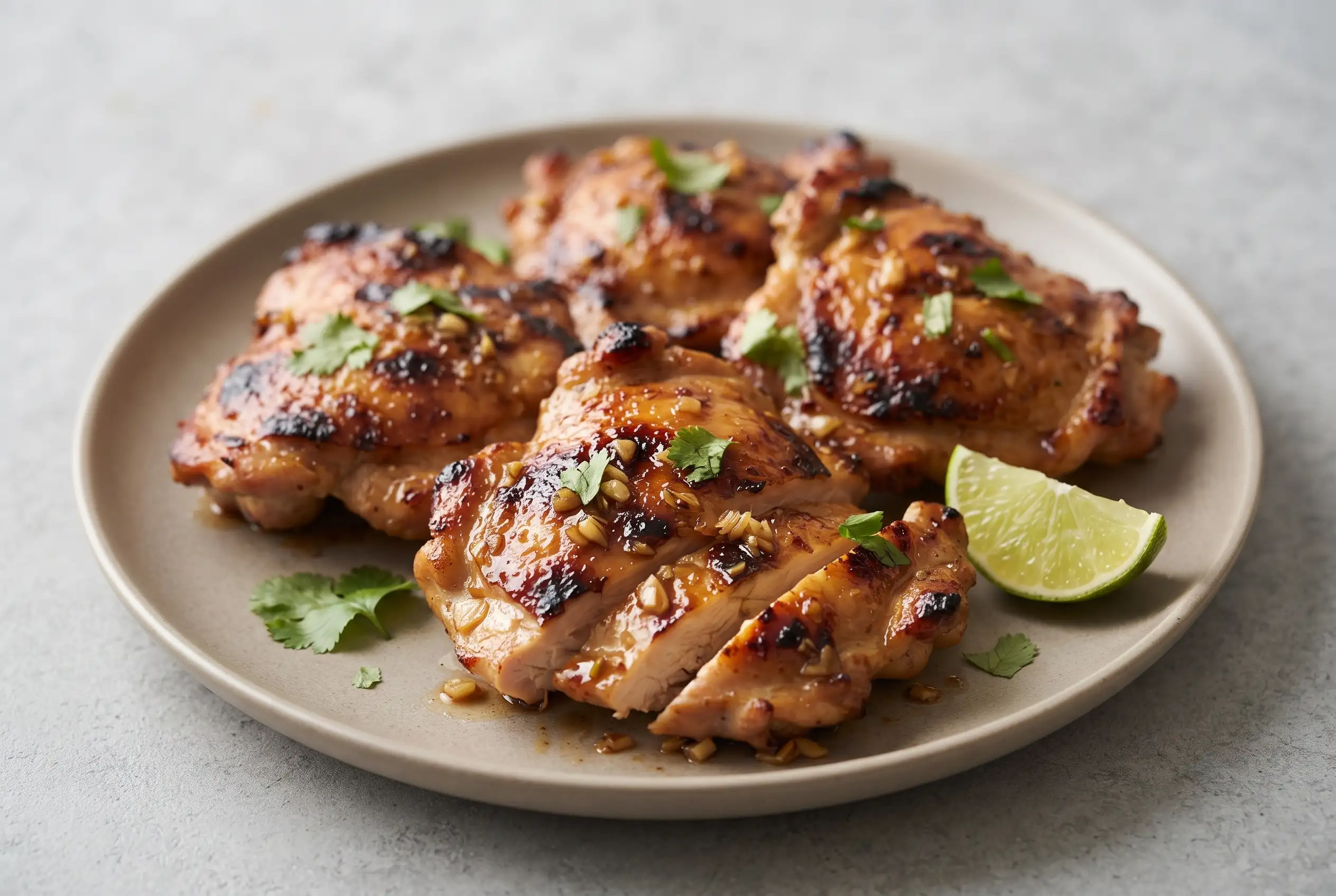
Lemongrass chicken recipe ideas often focus on bold aroma, but this version succeeds because fresh aromatics, fermented umami, and careful searing work together in one balanced dish. The combination of tender chicken thighs, minced lemongrass, garlic, ginger, fish sauce, soy sauce, sugar, and lime creates a bright Southeast Asian-inspired meal with a deeply savory finish.
The easy lemongrass chicken approach centers on preparing the marinade with intention. Pressing the aromatics before mixing the liquid ingredients helps release their essential oils, allowing the chicken to absorb a layered citrus and savory character before it reaches the pan.
Lemongrass Chicken Creates a Bright Savory Marinade
A successful lemongrass chicken recipe depends on the relationship between fragrance, seasoning, and texture. The marinade is not simply a coating on the surface; it brings together sharp citrus notes from lemongrass and lime with the salty depth of fish sauce and soy sauce.
Fresh ginger and garlic reinforce the aromatic foundation, while a small amount of sugar supports browning when the chicken meets high heat. The result is a marinade that prepares the meat for a flavorful exterior while keeping the overall profile balanced.
Vietnamese lemongrass chicken is known for this style of preparation because the aromatics remain prominent without overwhelming the natural flavor of the poultry. Each bite carries a combination of savory, tangy, and fragrant elements that define the dish.
Fresh Lemongrass Cores Shape the Aromatic Profile
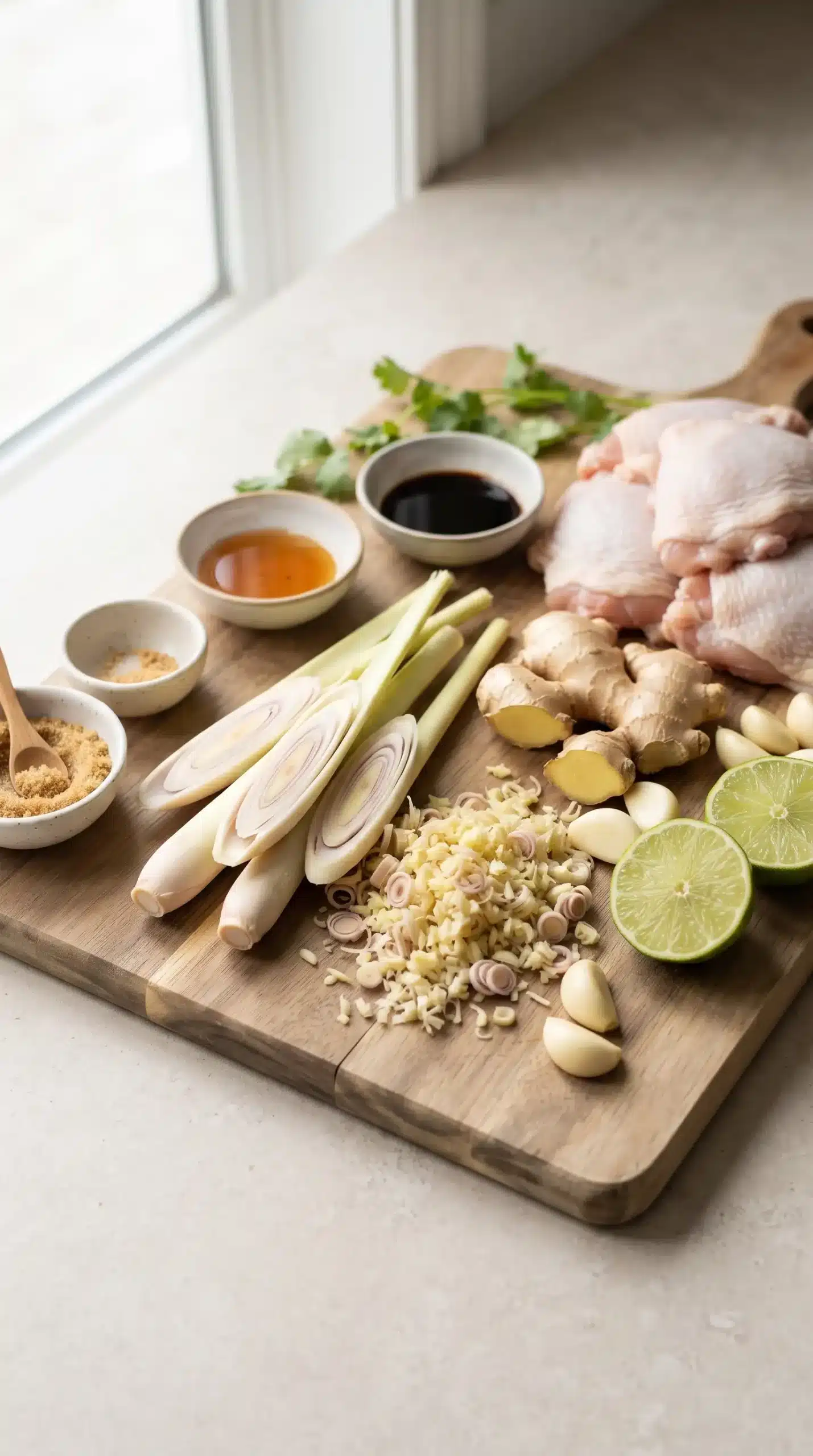
The most important ingredient decision comes from selecting the tender inner portion of the lemongrass stalk. The pale core contains the concentrated aromatic oils responsible for the floral citrus character that makes the dish recognizable.
Preparing the stalk correctly prevents unwanted texture issues. To reach the tender core, cooks should remove the tough outer layers and finely mince the soft interior so the marinade distributes evenly across the chicken instead of leaving fibrous pieces behind.
- Lemongrass core: Provides the signature citrus-floral aroma and should be minced finely for a smooth marinade.
- Fish sauce: Adds concentrated umami depth that strengthens the savory character.
- Lime juice: Brings acidity that balances the richer flavors in the marinade.
- Ginger and garlic: Build a warm aromatic background that supports the brighter notes.
Fish Sauce and Lime Balance the Marinade
The balance of the liquid ingredients determines how the chicken tastes after cooking. Fish sauce contributes glutamate-rich savoriness, while soy sauce adds additional depth without overpowering the citrus elements.
Lime juice creates contrast against the fermented flavors, helping the marinade avoid becoming heavy. The sugar contributes sweetness that becomes more noticeable as the chicken develops a browned exterior during cooking.
| Marinade element | Primary role | Cooking effect |
|---|---|---|
| Lemongrass | Citrus-floral aroma | Creates the signature fragrance |
| Fish sauce and soy sauce | Savory seasoning | Deepens the browned flavor |
| Sugar and lime | Sweet-acid balance | Supports a complex finish |
Searing Conditions Build the Golden Chicken Surface
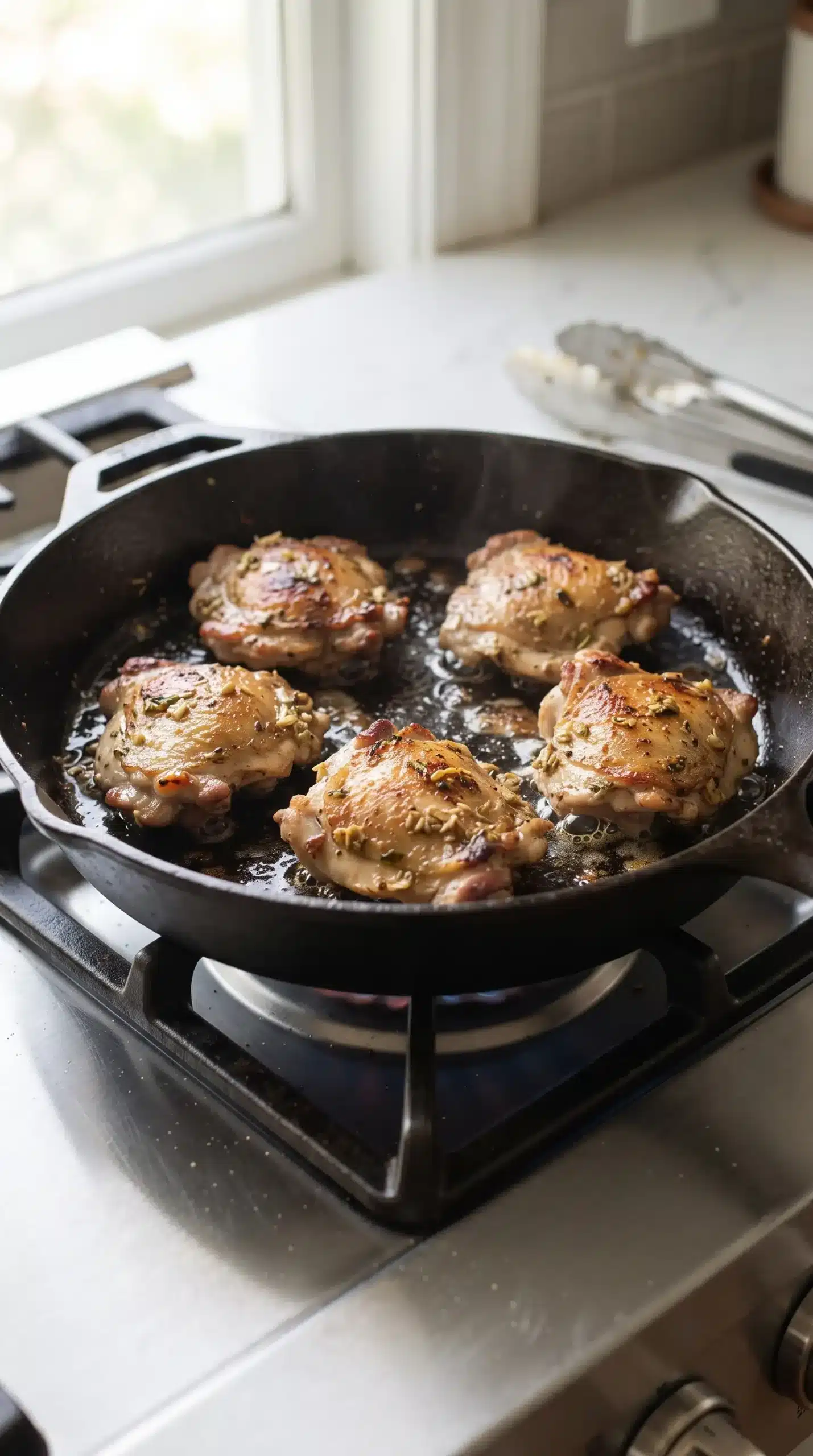
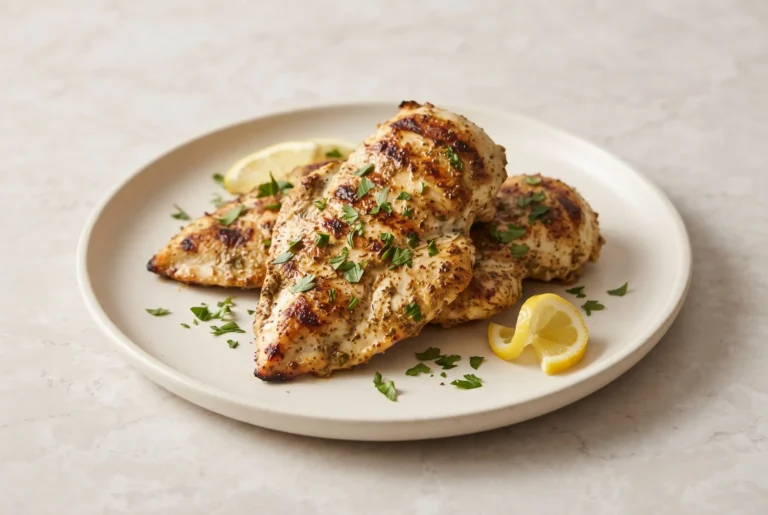
Cooking control separates a deeply browned lemongrass chicken recipe from a pale version with muted flavor. A heavy cast-iron skillet or griddle provides the steady heat needed for a strong sear while protecting the sugars in the marinade from burning.
Overcrowding the pan creates excess moisture and prevents the chicken from developing the desired charred exterior. Working in batches keeps the surface hot enough for browning and allows each piece to maintain direct contact with the cooking surface.
A digital thermometer provides the most reliable confirmation that the chicken has reached a safe internal temperature. The combination of a golden exterior and properly cooked center creates the texture expected from this preparation.
Chicken Thighs Protect the Juicy Texture
Boneless skinless chicken thighs are especially suitable for this dish because their higher fat content helps them remain moist during high-heat cooking. The richer texture complements the sharp aromatics and savory marinade.
High temperatures can quickly dry lean proteins, but chicken thighs offer more protection against moisture loss. Their structure allows the exterior to develop color while the interior stays tender and satisfying.
The cut also supports the bold seasoning style of Southeast Asian-inspired dishes because the meat can carry strong flavors without becoming dominated by the marinade.
Common Lemongrass Chicken Mistakes That Reduce Flavor
Several preparation mistakes can weaken the character of a lemongrass chicken recipe. Most problems come from handling the aromatics incorrectly, managing the pan poorly, or rushing the finishing process.
| Mistake | Why it happens | Better approach |
|---|---|---|
| Tough lemongrass pieces | Woody outer layers remain in the marinade | Use only the tender inner core and mince finely |
| Steamed chicken surface | The pan is overcrowded | Cook in batches to preserve searing heat |
| Dry sliced meat | The chicken is cut immediately after cooking | Allow resting time before slicing |
Attention to these details improves the final texture without requiring extra ingredients or complicated techniques.
Marinade Timing Changes the Flavor Depth
The lemongrass chicken marinade can be adjusted depending on how much flavor development is desired. A shorter resting period creates a lighter aromatic presence, while a longer refrigerated marination allows the flavors to move deeper into the meat. Marinade timing is a key part of tender texture, and yogurt marinated chicken shows how a prepared marinade can shape the final result through careful resting.
Citrus and ginger contribute tenderizing qualities during the marinating process, which is why extended exposure should remain controlled. The chicken benefits from enough time to absorb the seasoning while maintaining its natural texture.
For cooks planning ahead, sealing the chicken with the marinade in a container makes preparation easier and keeps the flavors concentrated until cooking begins.
Serving Ideas Highlight the Citrus Finish
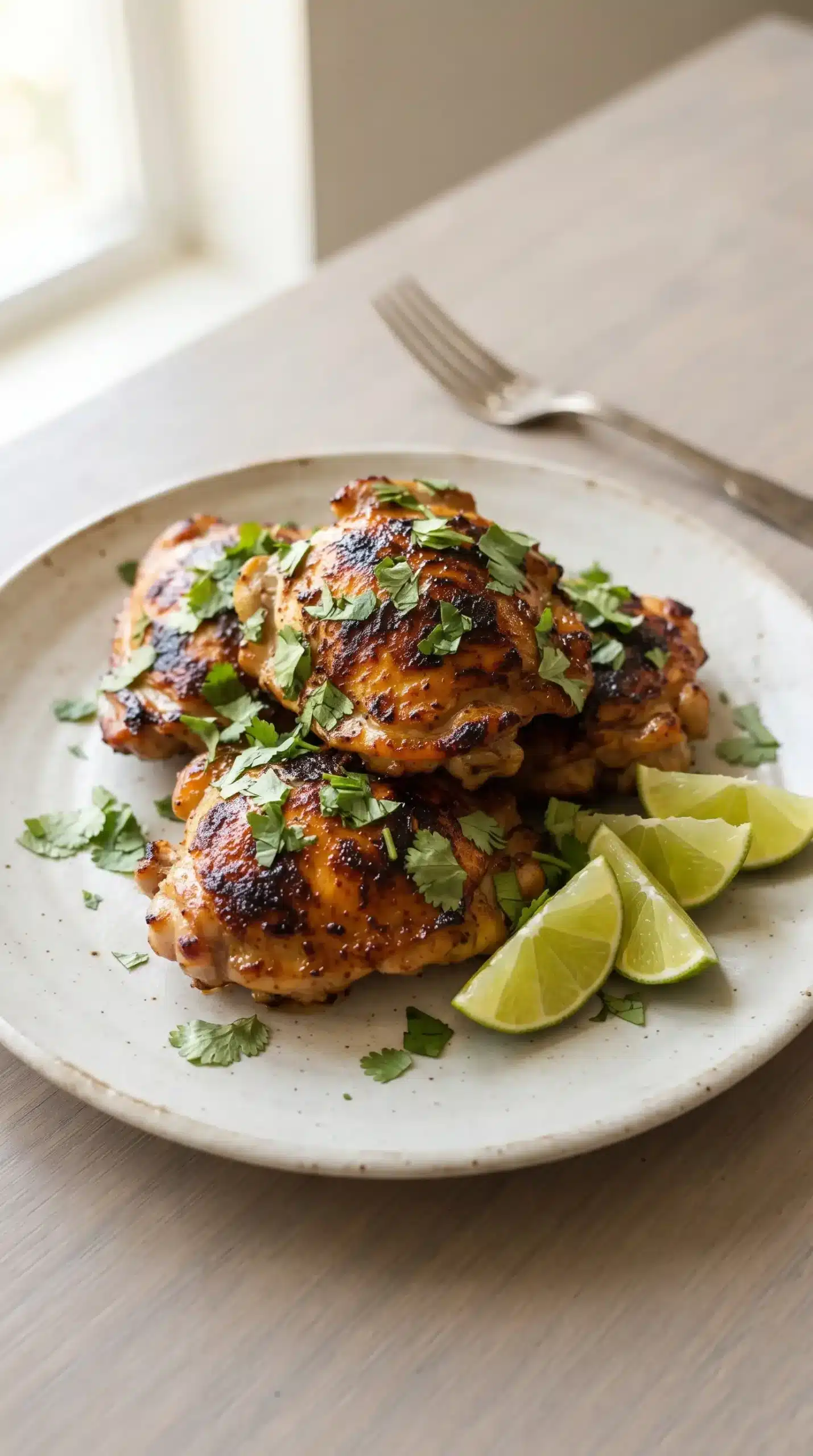
The bright character of easy lemongrass chicken pairs well with simple accompaniments that allow the aromatic crust to remain the focus. Fresh cilantro and extra lime wedges add a finishing touch that reinforces the citrus notes already present in the marinade.
The dish works especially well when served as a complete meal where the savory chicken provides the main flavor anchor. Keeping additional sides clean and uncomplicated helps preserve the contrast between fragrant herbs, caramelized edges, and juicy meat.
Variations Keep Lemongrass Chicken Flexible
Small adjustments can create different versions while preserving the core identity of the dish. The marinade structure provides room for changes in sweetness, spice, or cooking method without losing the main aromatic profile.
- Spicy version: Add finely minced bird’s eye chilies to introduce sharper heat alongside the citrus flavors.
- Honey finish: Replace or increase the sweet element to create a thicker glaze during the final cooking stage.
- Air-fried option: Use an air fryer approach for a lighter preparation while still encouraging browning.
Storage Choices Preserve Lemongrass Chicken Quality
Proper storage helps maintain the delicate aroma of cooked lemongrass chicken. Leftovers should be kept in a shallow airtight container in the refrigerator and used within the recommended storage period provided for the dish.
Reheating works best when moisture is gently restored. A skillet with a small splash of water or chicken broth creates steam that helps warm the meat while reducing the chance of a dry texture.
Freezing is also possible when longer storage is needed, although the freshest texture comes from enjoying the chicken soon after cooking.
Understanding the Searing and Resting Decisions
The cooking process relies on two important finishing choices: developing the crust and protecting the juices. The Maillard reaction during searing creates the savory browned surface that gives the chicken much of its depth.
Resting after cooking allows internal juices to redistribute before slicing. Cutting too soon can release moisture onto the cutting surface, reducing the succulent texture that chicken thighs naturally provide.
These choices explain why careful heat management matters as much as the marinade itself when preparing a reliable lemongrass chicken recipe.
Safe Handling Keeps Poultry Preparation Reliable
Raw poultry requires careful handling from preparation through cooking. Food safety guidance emphasizes avoiding cross-contamination and confirming that cooked chicken reaches a safe internal temperature with a thermometer.
Safe thawing practices also support better results. Keeping poultry properly chilled before cooking protects both food quality and the structure needed for a successful sear.
Following these practices allows the aromatic ingredients and cooking techniques to shine without compromising the meal.
Lemongrass Chicken Delivers Balanced Aromatic Results
Lemongrass chicken brings together fresh aromatics, savory seasoning, and controlled heat in a way that rewards careful preparation. The tender chicken thighs, finely prepared lemongrass, and balanced marinade create a dish where every cooking decision contributes to the finished texture and flavor.
The strongest results come from respecting the ingredients and maintaining control over the pan. When the aromatics are prepared properly and the chicken develops a deep golden surface, the dish achieves the vibrant character that defines this style of cooking.
Lemongrass Chicken Questions About Marinade, Texture, and Cooking
How long should lemongrass chicken marinate for the best flavor?
The chicken can develop flavor from a shorter marinade, while a longer refrigerated period allows the aromatics to become more pronounced. The balance depends on whether you prefer a lighter citrus profile or a deeper infusion.
Can lemongrass paste replace fresh lemongrass in the marinade?
Lemongrass paste can be used when fresh stalks are unavailable. A smaller amount is typically needed, and checking the paste ingredients helps prevent unexpected changes to the seasoning balance.
Why does my lemongrass chicken lack a browned exterior?
A pale surface usually results from insufficient searing conditions or overcrowding the pan. Giving each piece enough space helps moisture escape and allows the chicken to develop a stronger crust.
What makes Vietnamese lemongrass chicken different from other chicken marinades?
Vietnamese lemongrass chicken emphasizes the combination of fresh lemongrass, fish sauce, and aromatic ingredients to create a distinctive savory and citrus-forward flavor profile.
How can I keep leftover lemongrass chicken from becoming dry?
Gentle reheating with a small amount of added moisture helps preserve tenderness. Warming the chicken gradually in a skillet can restore some of the texture lost during refrigeration.
Lemongrass Chicken with Garlic and Ginger Marinade
Ingredients
Method
- Place minced lemongrass, garlic, and ginger in a large non-reactive bowl and lightly press the aromatics to help release their oils.
- Add fish sauce, soy sauce, cane sugar, oil, lime juice, and black pepper to the bowl and whisk until the marinade is combined.
- Add the chicken thighs to the marinade, turning to coat each piece evenly. Marinate for 30 minutes at room temperature or refrigerate in a sealed container for up to 4 hours.
- Heat a heavy skillet or griddle over medium-high heat.
- Cook the marinated chicken thighs in batches if needed for 6–7 minutes per side until browned and the internal temperature reaches 165°F / 74°C.
- Move the cooked chicken to a plate and allow it to rest for 5 minutes before slicing and serving.