Mediterranean Chicken and Rice with Turmeric and Lemon
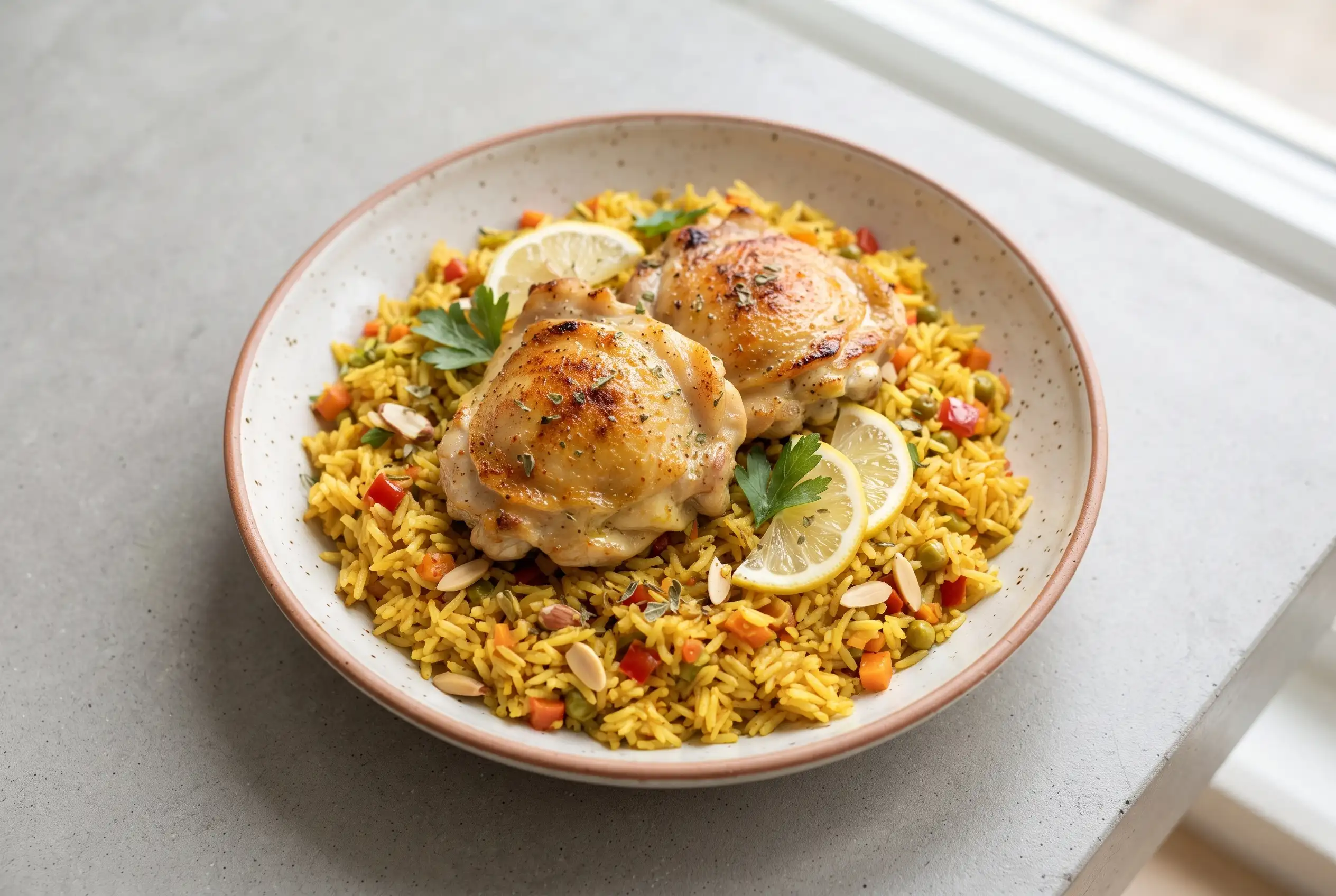
Mediterranean chicken and rice brings together tender seasoned chicken, fragrant grains, and a carefully balanced collection of warm spices in one skillet. The dish succeeds through coordinated cooking: aromatic vegetables build a foundation, chicken develops a golden surface, and long-grain rice absorbs broth infused with turmeric, cumin, lemon, and herbs.
Why One Pan Mediterranean Chicken and Rice Balances Flavor
Creating a memorable one pan mediterranean chicken rice recipe depends on how each layer contributes to the finished pan. The chicken is not simply placed on top of cooked rice; it shares the cooking environment so the grains capture the savory character created during searing.
Precise seasoning helps the meal maintain balance from the first bite to the last. Cumin, paprika, turmeric, oregano, thyme, and black pepper create a warm Mediterranean profile, while lemon juice brings brightness that keeps the spices focused.
Together, the chicken and rice skillet recipe becomes more than a convenient dinner format. The absorption method allows the broth, aromatics, and poultry flavors to move through the rice, creating a cohesive texture where every portion carries the same seasoning foundation.
Mediterranean Rice Aromatics Shape the Dish
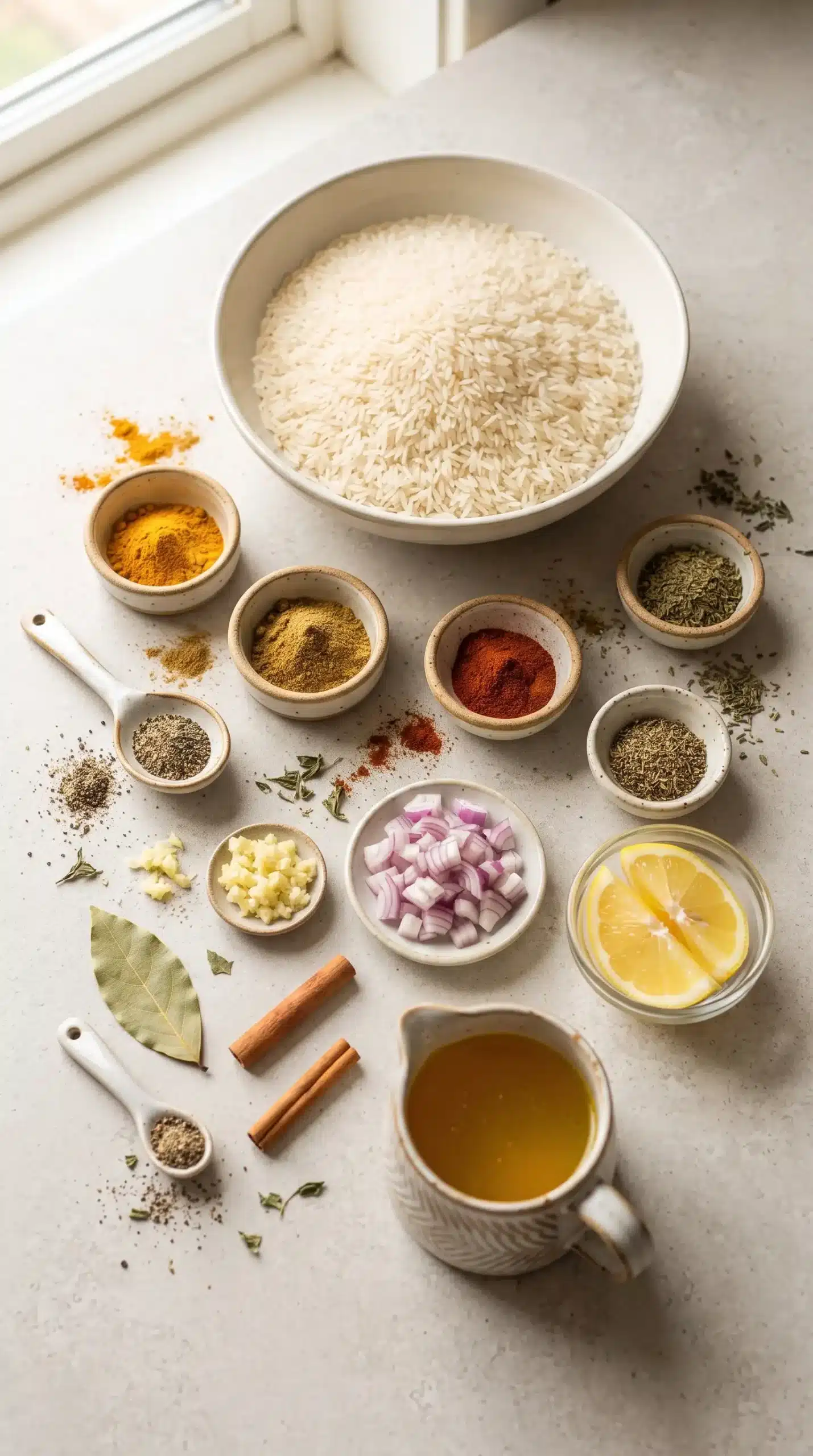
Long-grain white rice provides the structure needed for this preparation because the grains are rinsed and soaked before cooking. That preparation supports a cleaner texture by allowing the rice to absorb liquid evenly during the covered simmer.
Turmeric gives the rice its distinctive golden appearance, while cumin and paprika deepen the savory profile. Garlic, onion, bay leaf, and cinnamon work together with the broth to create a layered aroma that defines the Mediterranean chicken rice dinner.
Cinnamon may seem unexpected in a savory skillet, yet the small amount used here contributes a gentle warmth alongside the other spices. The combination creates a fragrant background without overpowering the chicken or rice.
Skillet Choices Improve One Pan Results
A heavy-bottomed skillet creates the stable cooking surface needed for even heat distribution. The design helps protect the rice from scorching while allowing steam to circulate during the covered cooking stage.
Searing Controls Keep Chicken Moist
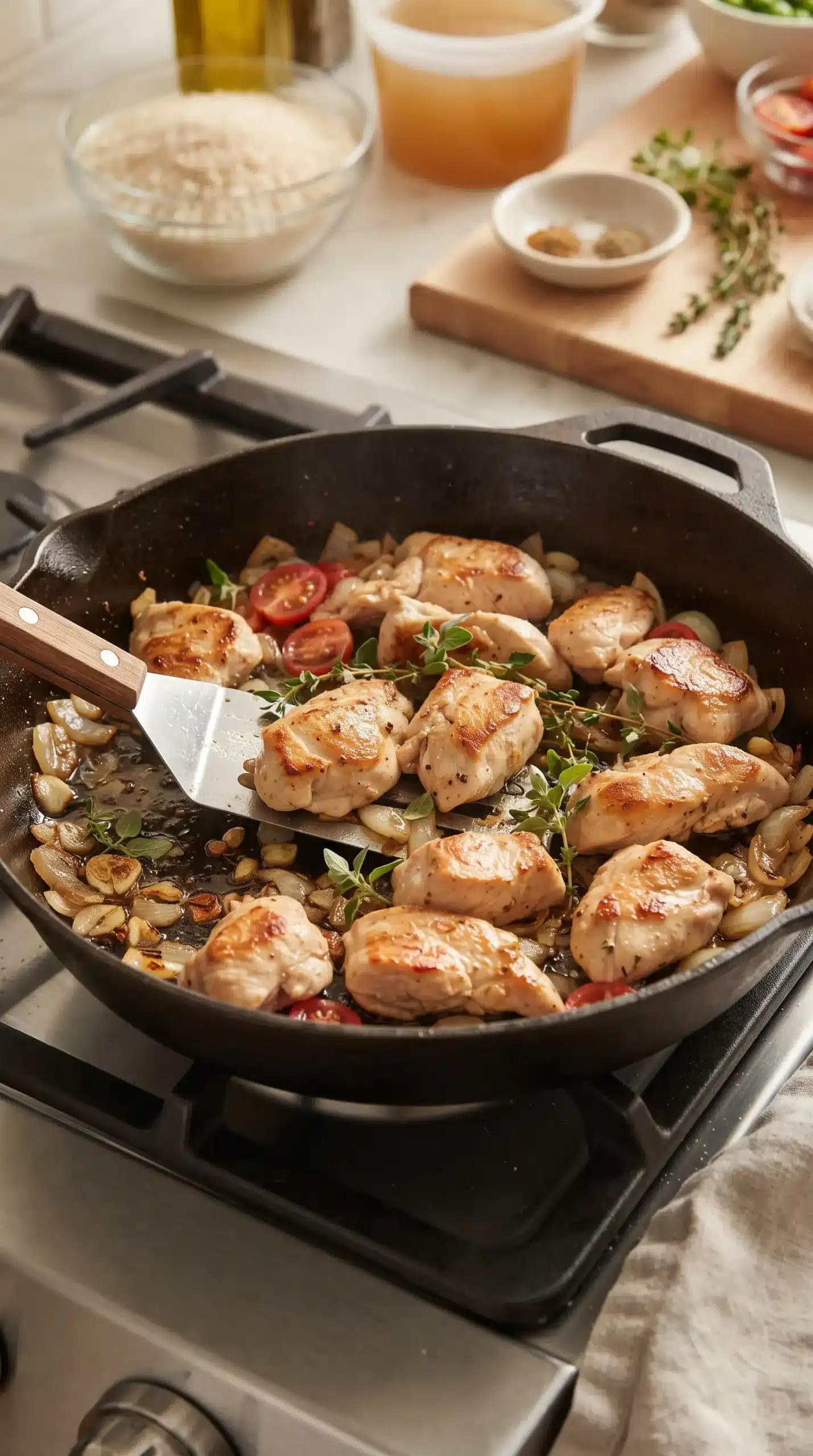
Searing develops the chicken’s exterior before the rice finishes cooking around it. The golden crust formed during this stage adds texture and allows the poultry to continue cooking gently in the moist environment created by the broth and steam.
Steam management plays an important role after the broth is added. Keeping the lid closed during the simmer protects the internal heat needed for the rice to hydrate properly and helps the chicken finish without losing its tenderness.
Covered cooking followed by a resting period gives moisture time to redistribute throughout the skillet. This approach supports separated rice grains and chicken that remains integrated with the flavors surrounding it.
Common Mistakes That Affect One Pan Mediterranean Chicken and Rice
Overlooking small preparation details can change the texture of the finished meal. The most common problems come from excess starch, uneven liquid measurement, and interruptions during the steaming stage.
- Skipping the rinse: Removing surface starch helps prevent sticky rice and supports distinct grains.
- Changing the liquid balance: Accurate broth measurement protects against rice that stays firm or becomes overly soft.
- Lifting the lid: Releasing steam during cooking interferes with the hydration process.
- Adding ingredients too early: Frozen peas are added near the end so they warm through while keeping their texture.
Ignoring the resting period creates another avoidable issue. Allowing the covered skillet to sit after cooking helps the rice settle and improves the final consistency before serving.
Rice Preparation Creates Better Texture
Soaking the rice before cooking allows moisture to reach the center of each grain. This preparation supports even hydration when the rice cooks alongside the chicken and broth.
Broth and Spice Ratios Protect the Finished Pan
Measured broth and a balanced spice blend are central to reliable results. The chicken broth carries the turmeric, cumin, garlic, and herbs through the rice while maintaining the moisture needed for a complete skillet meal.
Variations Expand the Mediterranean Chicken Rice Dinner
Alternative proteins and grains can adjust the character of the dish while following the same overall approach. Boneless, skin-on chicken thighs create a richer result because their rendered fat contributes additional depth to the rice.
Boneless thighs can replace chicken breasts when a deeper poultry flavor is preferred. The rice benefits from the added richness while still using the same aromatic foundation of onion, garlic, spices, and broth.
Vegetable additions can also broaden the meal. Bell peppers or zucchini may be included during the onion sauté stage, while quinoa can replace white rice when a different grain texture is desired.
Storage Habits Preserve Leftover Rice Quality
Stored portions of mediterranean chicken and rice keep their best texture when placed in an airtight container. Reheating with a small amount of broth or water helps restore moisture that rice can lose during storage.
Serving Ideas Complete the Mediterranean Chicken and Rice Meal
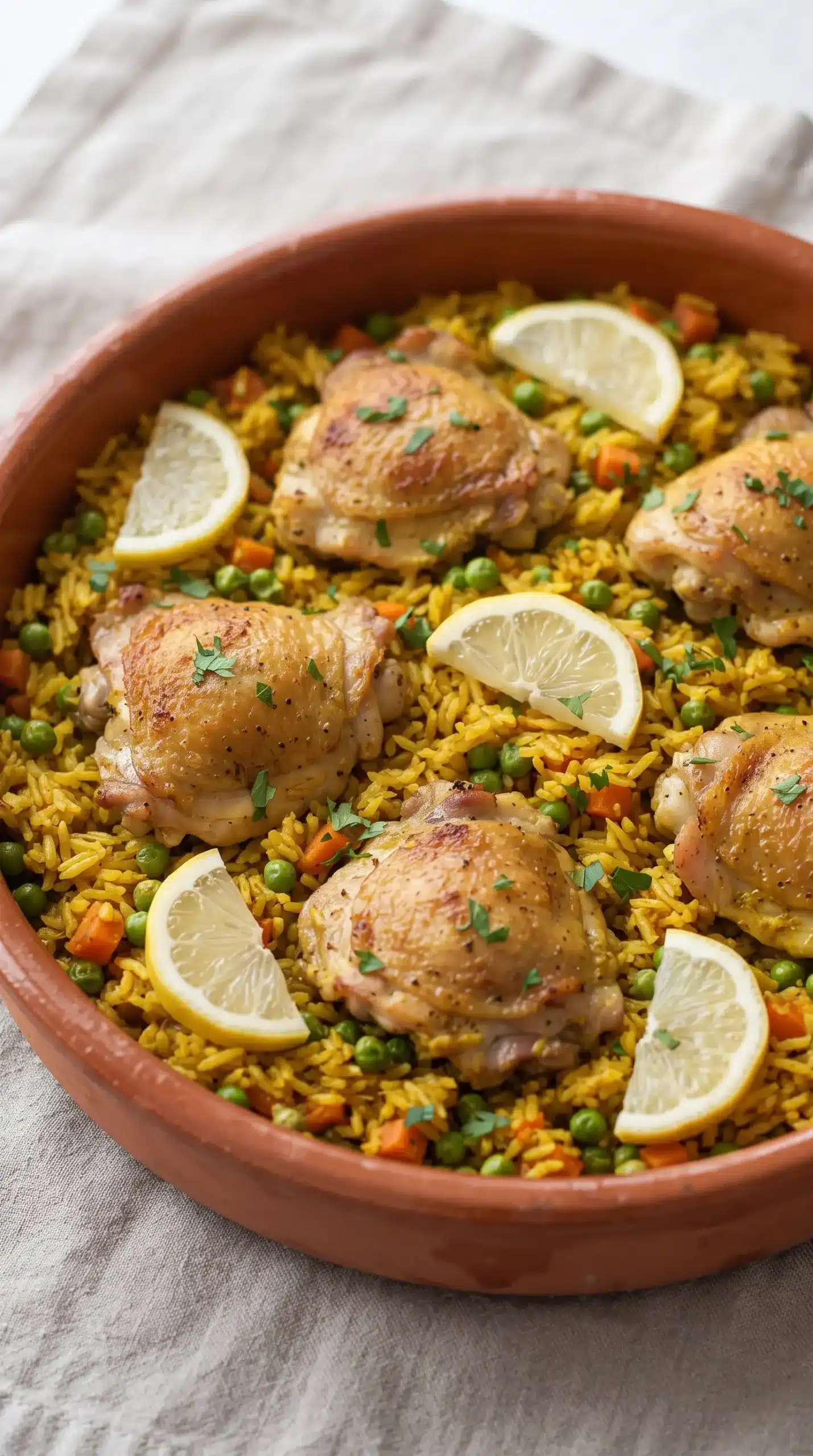
Bright lemon notes make this skillet suitable for simple finishing touches at the table. A fresh citrus element can bring balance to the warm spices and savory grains, much like a lemon-forward chicken dish where acidity helps define the finished flavor. The balanced combination of chicken, rice, peas, and aromatic spices allows the meal to stand on its own without requiring additional preparation.
Resting Builds the Final Texture of the Skillet
Resting the covered pan after cooking is an important texture step because moisture continues moving through the rice and chicken after the heat is removed. The short pause allows the grains to settle and the flavors to become more unified.
Moisture redistribution also supports a cleaner serving texture. Rice grains separate more easily when the absorbed broth has time to balance throughout the pan instead of remaining concentrated in one area.
Cleanly finished portions come from combining the cooking stages instead of rushing them. The aromatic base, seared chicken, seasoned broth, and resting phase each influence the final quality of the mediterranean chicken and rice.
Mediterranean Chicken Rice Dinner Fits Weeknight Cooking
| Cooking choice | Purpose | Result in the skillet |
|---|---|---|
| Rice soaking | Hydrates grains before cooking | More even texture |
| Chicken searing | Builds exterior color | More developed savory flavor |
| Covered simmering | Controls steam and moisture | Rice cooks with chicken aromatics |
Simple preparation makes this chicken and rice skillet recipe a practical choice when a complete meal is needed from one cooking vessel. The combination of protein, grains, and vegetables creates a balanced dinner built around efficient technique.
Mediterranean Chicken and Rice Depends on Balanced Steam and Flavor
Mediterranean chicken and rice reaches its best texture when heat, liquid, and seasoning remain carefully connected. The soaked rice absorbs the spiced broth, while the chicken finishes gently after developing its initial golden crust.
Balanced steam turns individual ingredients into a unified skillet meal. The aromatic base, precise broth amount, and resting stage create a dependable result where the rice stays distinct and the chicken carries the surrounding Mediterranean flavors.
Rice Texture Questions for One Pan Mediterranean Chicken and Rice
Why should the rice be rinsed and soaked before cooking?
Rinsing removes excess starch from the outside of the grains, and rice rinsing removes surface starch before cooking. Together with soaking, this preparation helps the grains absorb moisture more evenly before entering the skillet, supporting a lighter texture with better separation after cooking.
Can brown rice replace the white rice in mediterranean chicken and rice?
Brown rice can be used, but it requires a longer simmer and additional liquid because the grain structure takes more time to soften. The chicken timing must also be adjusted so it does not become overcooked during the extended cooking period.
How can the chicken stay tender in a skillet meal?
The chicken stays tender because it is first seared for surface flavor and then finishes in the steamy environment created by the broth and rice. This combination reduces the need for prolonged dry heat exposure.
What makes the spice blend work with the rice?
The spice combination balances earthy, warm, and aromatic notes. Turmeric and cumin provide the foundation, while paprika, oregano, thyme, garlic, and lemon create contrast throughout the finished dish.
How should leftovers be reheated without drying the rice?
Reheating with a small amount of broth or water and using gentle covered heat helps bring moisture back into the rice. Lower heat is preferred because aggressive reheating can make both rice and chicken less pleasant.
Mediterranean Chicken and Rice with Turmeric and Lemon
Ingredients
Method
- Combine the salt, cumin, garlic powder, paprika, turmeric, dried thyme, dried oregano, and cracked black pepper in a small bowl to create the spice mixture.
- Warm the olive oil in a wide heavy-bottomed skillet over medium heat. Add the onion and garlic and cook for about 3 minutes until softened.
- Season the chicken cutlets with half of the spice mixture, then sear them in the skillet for 3 minutes per side until browned. Set them aside while they finish cooking later.
- Place the chicken around the edges of the skillet and add the rinsed soaked rice to the center. Toast the rice for 60 seconds.
- Pour in the chicken broth, add 2 teaspoons of lemon juice, the remaining spice mixture, bay leaf, and cinnamon stick, then stir once and bring the liquid to a boil.
- Lower the heat, cover the skillet tightly, and simmer the rice and chicken for 15 minutes without removing the lid.
- Spread the frozen peas over the rice, cover the skillet again, and cook for 3 more minutes until the chicken reaches 165°F / 74°C.
- Remove the skillet from the heat, keep it covered, and let it rest for 5 minutes before removing the bay leaf and cinnamon stick.
- Add the remaining 2 teaspoons of lemon juice over the chicken and rice, then fluff the rice with a fork before serving.