Chicken with Buttered Noodles One-Pan Skillet Recipe
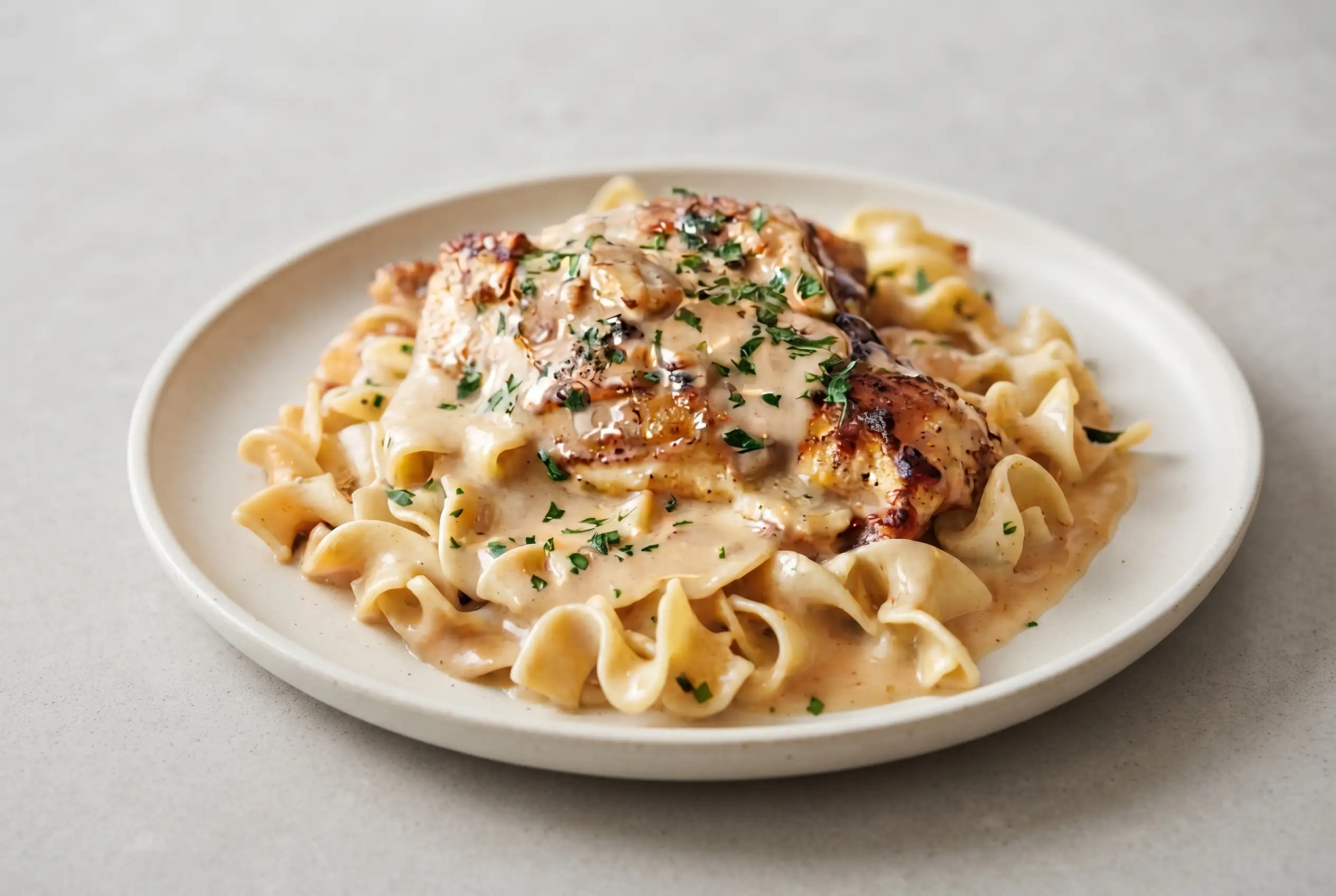
One-Pan Chicken with Buttered Noodles creates a comforting skillet meal where seared chicken, garlic butter, and egg noodles work together through a focused cooking process. The dish transforms familiar pantry ingredients by using the browned flavors left in the pan and allowing the noodles to absorb a concentrated broth-based sauce.
Cooking everything in one vessel gives the chicken with buttered noodles its defining character. The noodles do not simply receive a sauce after cooking; they develop their flavor while surrounded by chicken juices, aromatic butter, and the savory foundation created during searing.
One-Pan Chicken with Buttered Noodles Builds Flavor Through Layered Cooking
Single-skillet cooking succeeds because each stage contributes to the next. The chicken develops a golden exterior first, leaving behind flavorful browned bits that become part of the sauce. Once broth enters the pan, those concentrated pieces dissolve into the cooking liquid and create depth throughout the noodles.
Unlike a traditional pasta approach, the egg noodles remain connected to the flavors created earlier in the skillet. The starch released during simmering helps bring butter and broth together, producing a smooth coating that clings to each noodle strand.
Home cooks looking for an easy chicken noodle skillet benefit from this efficient structure because fewer cooking vessels are needed while the important flavor-building steps remain intact. The finished meal feels carefully prepared without requiring complicated techniques.
Ingredient Choices Shape the Chicken with Buttered Noodles Texture
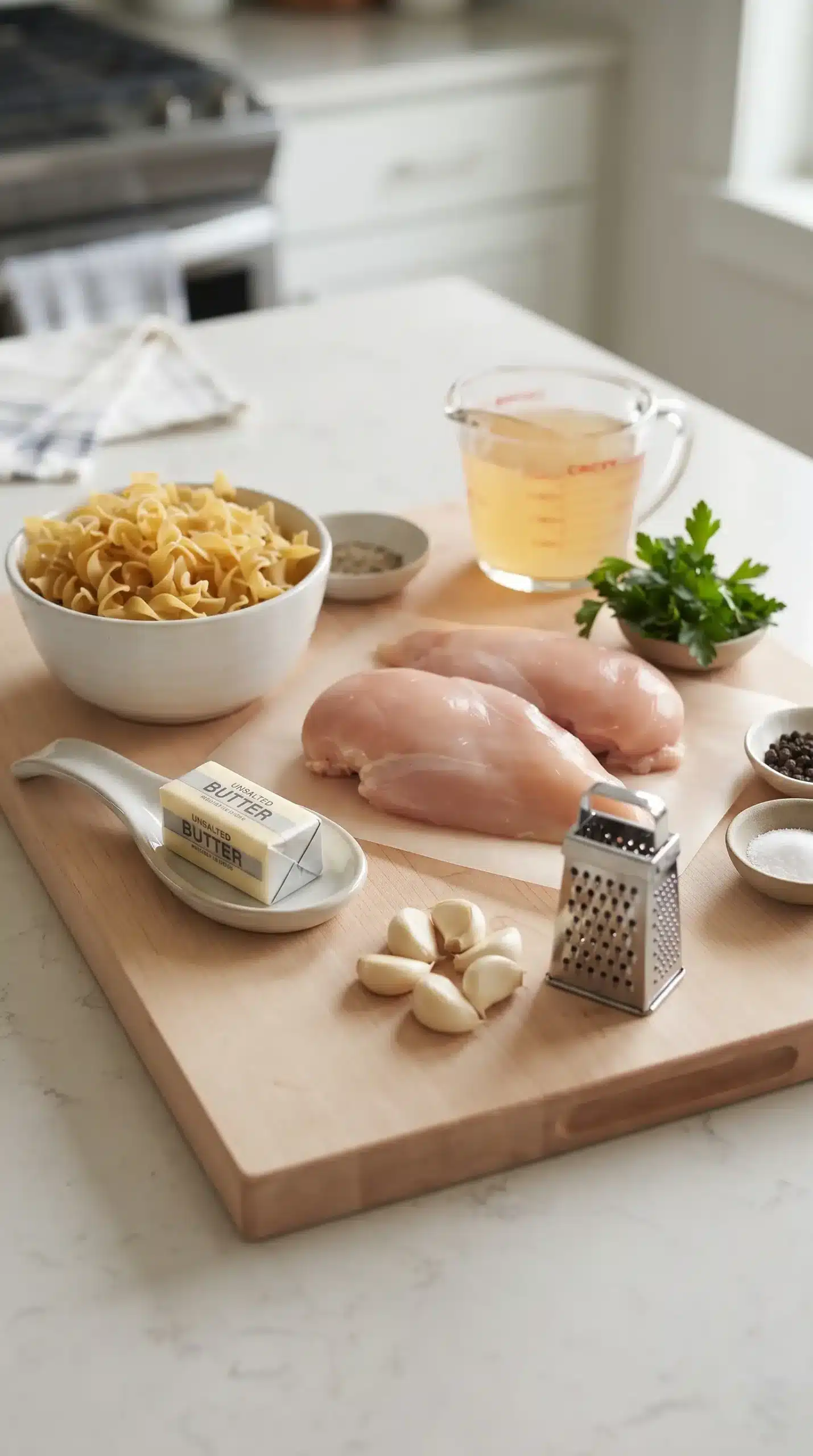
Wide egg noodles are the most important ingredient decision because their broad surface captures the buttery sauce and supports the tender chicken. Their texture works especially well with the reduced broth because they hold onto the concentrated flavors developed in the skillet.
Quality broth also plays a major role in the finished dish. Since the noodles absorb the cooking liquid, the broth becomes part of the seasoning foundation instead of remaining behind after draining. A flavorful chicken broth helps create a richer result.
- Butter selection: Unsalted butter allows the seasoning level to remain controlled while creating the silky base for the noodles.
- Garlic preparation: Finely grated garlic spreads its flavor evenly through the butter without creating large pieces.
- Chicken thickness: Halving the chicken breasts helps create more even cooking and a consistent seared surface.
Fond Capture Creates the Signature Skillet Sauce
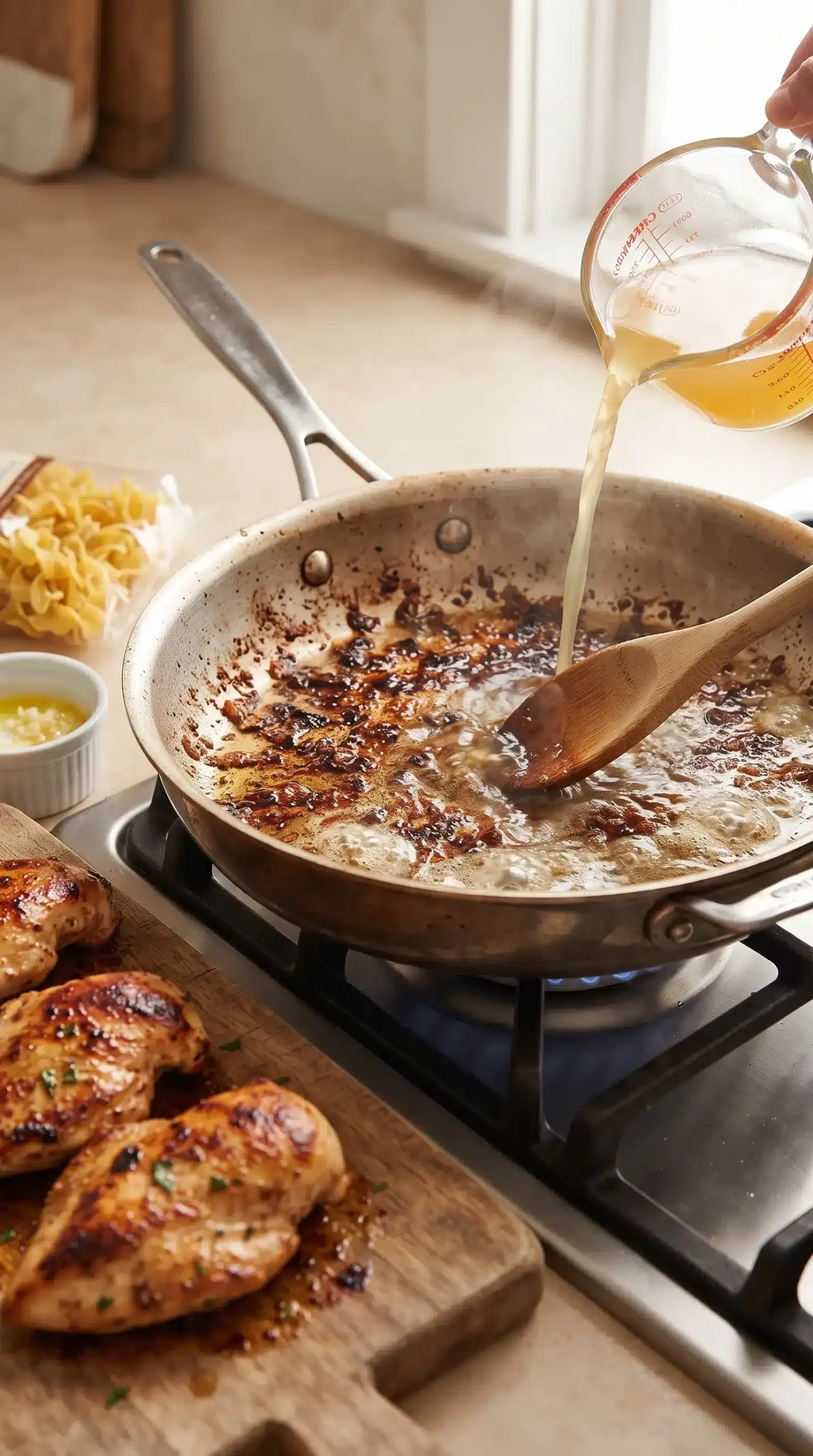
The browned residue left after cooking the chicken is one of the defining elements of chicken with buttered noodles. This fond and deglazing technique releases concentrated savory flavors when the caramelized pieces are loosened with liquid and incorporated into the sauce.
Adding butter after reducing the heat helps create an aromatic base for the garlic while protecting the delicate solids from excessive browning. A wooden spoon can lift the fond from the pan surface so it becomes incorporated into the sauce.
During simmering, the broth carries those flavors into the noodles. The starch released from the egg noodles helps bind the liquid and fat into a cohesive coating, creating the signature finish associated with this buttered noodles recipe with chicken.
Searing Decisions Protect the Chicken Texture
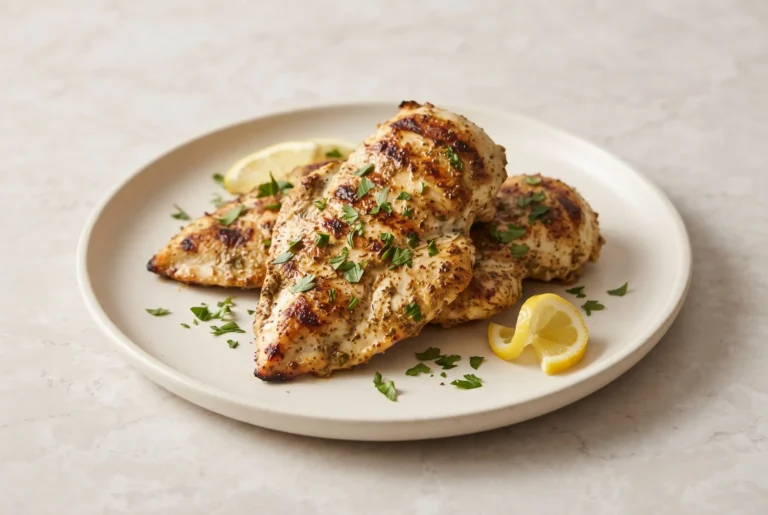
Chicken quality depends heavily on the searing stage. A properly heated heavy-bottomed skillet encourages a deep golden crust while allowing the interior to remain tender.
Resting the chicken after searing is an important control point. Waiting before slicing allows moisture to redistribute, helping the pieces retain more of their natural juices when they return to the skillet.
Broth Absorption Keeps Buttered Noodles Rich and Balanced
The noodle cooking method changes the character of the entire meal. Simmering the egg noodles directly in the broth allows the starch, butter, garlic, and chicken flavors to become connected as the liquid reduces.
Monitoring the skillet near the end of cooking helps preserve the ideal noodle texture. The sauce should become concentrated enough to coat the noodles while leaving them tender and pleasantly structured.
Easy Chicken Noodle Skillet Timing Prevents Texture Problems
Timing matters because the components finish at different stages. The chicken needs enough time to build a browned exterior, while the egg noodles need attention near the end of simmering because they cook quickly.
Careful observation provides the best results. A skillet that reduces too aggressively may need additional broth, while noodles that remain unattended can absorb too much liquid and lose their preferred texture.
Common Mistakes That Hurt Chicken with Buttered Noodles Results
Small preparation choices can determine whether the skillet delivers its intended balance. Avoiding common errors keeps the sauce smooth, the noodles properly textured, and the chicken tender.
- Slicing too soon: Cutting chicken immediately after searing can release juices before they are redistributed.
- Overcooking noodles: Leaving egg noodles unattended during the last stage can create a soft, heavy texture.
- Skipping pan scraping: Leaving browned bits behind removes a major source of savory flavor.
- Using poor liquid quality: Since broth becomes part of the sauce, weak flavor in the cooking liquid affects the entire skillet.
Storage Practices Preserve Chicken with Buttered Noodles
Leftover chicken with buttered noodles should be stored in an airtight container to help maintain moisture and flavor. The noodles will continue absorbing liquid as they rest, so the texture naturally becomes softer over time.
Reheating works best when moisture is added back to the skillet. A small amount of broth or water helps loosen the sauce while gentle heat allows the butter emulsion to come together again.
Variations Expand the One Pan Chicken with Noodles Approach
The core technique provides room for additions that fit the same skillet structure. Vegetables, cheese, or mushrooms can be incorporated without changing the foundation of the meal.
Frozen peas or fresh baby spinach can be added near the end of noodle cooking so they warm through with minimal extra preparation. Parmesan can introduce additional savory character when stirred in during the final combination stage.
Mushrooms offer another direction by adding earthy notes. Sautéing sliced cremini mushrooms with the garlic creates another layer of flavor while keeping the one-pan format intact.
Serving Ideas Highlight the Buttered Noodles Recipe with Chicken
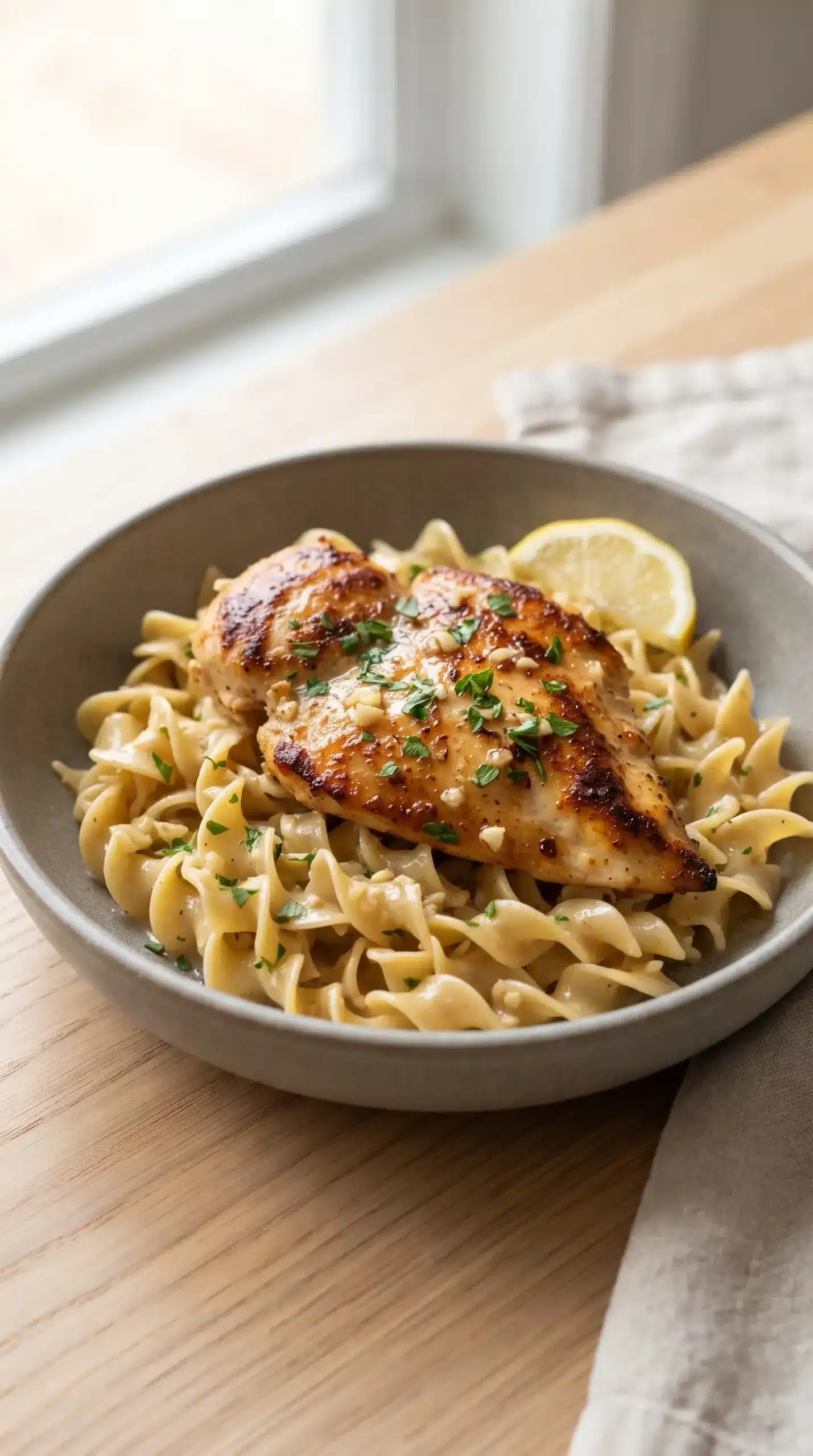
Fresh parsley provides a bright finish that contrasts with the rich butter-based sauce. The garnish adds color and a fresh herbal note without distracting from the skillet’s main flavors.
A small amount of fresh lemon juice can also bring balance to the finished dish. The acidity helps lighten the richness of the butter and highlights the savory chicken flavors.
Kitchen Tools Support Consistent Skillet Results
A heavy-bottomed stainless steel or cast-iron skillet provides the stable cooking surface needed for browning the chicken and developing fond. A wooden spoon is useful for releasing the flavorful browned pieces after adding butter and broth.
Simple tools make the cooking process easier to control. A cutting board allows the chicken to rest properly, while careful skillet monitoring helps protect the noodles from overcooking.
Flavor Balance Keeps the Finished Chicken with Buttered Noodles Focused
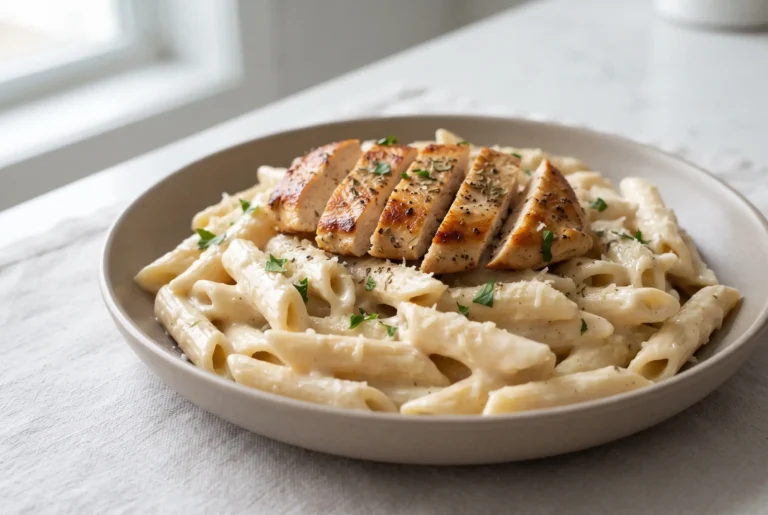
Rich ingredients need structure to remain enjoyable. The combination of butter, garlic, broth, and egg noodles creates a comforting profile, while seasoning and optional brightness keep the dish from feeling one-dimensional. Creamy pasta preparations such as Chicken Garlic Parmesan Pasta rely on balancing sauce richness with the starch component to maintain a smooth coating.
The strength of chicken with buttered noodles comes from contrast. The browned chicken surface, silky sauce, soft noodles, and fresh garnish each contribute a different quality to the final plate.
Troubleshooting Chicken with Buttered Noodles Before Serving
If the noodles begin sticking, the first adjustment is checking the available liquid. Adding a small splash of broth or water can help restore the smooth coating that defines the dish.
If the sauce seems too rich, a touch of lemon juice can provide balance. If the chicken needs more flavor after returning to the pan, tossing it with the reduced sauce and resting juices helps reconnect the components.
Chicken with Buttered Noodles Succeeds Through Absorption and Searing
Chicken with buttered noodles works because the skillet preserves every important flavor-building stage. The browned chicken creates the base, the broth carries those flavors into the egg noodles, and the starch helps form a sauce that brings everything together.
The finished dish demonstrates how a simple one-pan method can create a deeply satisfying meal. By paying attention to browning, liquid absorption, and texture control, the skillet delivers comfort through technique instead of unnecessary complexity.
Chicken with Buttered Noodles Questions About Storage, Texture, and Preparation
Can chicken with buttered noodles be made ahead of time?
Yes, the dish can be prepared in advance and stored properly, but the noodles will continue absorbing moisture as they sit. Gentle reheating with added broth or water helps bring back a smoother sauce consistency.
Why do wide egg noodles work best for this skillet meal?
Wide egg noodles provide a broad surface that captures the buttery sauce efficiently. Their texture complements the tender chicken and supports the concentrated flavors created during the broth absorption process.
How can the noodles stay from becoming mushy?
Watching the skillet closely during the last portion of cooking helps maintain noodle texture. Egg noodles cook faster than many standard pasta varieties, so checking tenderness as the broth reduces is important.
Can the buttered noodles recipe with chicken be made without dairy butter?
A plant-based butter alternative or olive oil can replace the butter if needed. The sauce texture will change slightly, but the starch-emulsion technique can still create a cohesive coating.
Chicken with Buttered Noodles One-Pan Skillet Recipe
Ingredients
Method
- Season the halved chicken breasts with dried Italian seasoning, fine sea salt, and black pepper.
- Heat 1 tablespoon neutral cooking oil in a large skillet over medium-high heat, then cook the chicken for 5–7 minutes per side until browned and the internal temperature reaches 165°F (74°C).
- Move the chicken to a cutting board, allow it to rest for 5 minutes, then slice it into pieces.
- Lower the skillet heat to medium, add the butter, and loosen the browned bits from the pan as the butter melts.
- Stir the garlic into the melted butter and cook for about 60 seconds until fragrant.
- Add the chicken broth to the skillet, bring it to a boil, and stir in the wide egg noodles.
- Lower the heat slightly and simmer the noodles uncovered, stirring occasionally, until tender and the broth has reduced into a smooth sauce.
- Add the sliced chicken and any collected juices back to the skillet, then toss with the buttered noodles until coated with the sauce.
- Finish the dish with chopped fresh Italian parsley and serve.