Chicken Garlic Parmesan Pasta with Creamy Parmesan Sauce
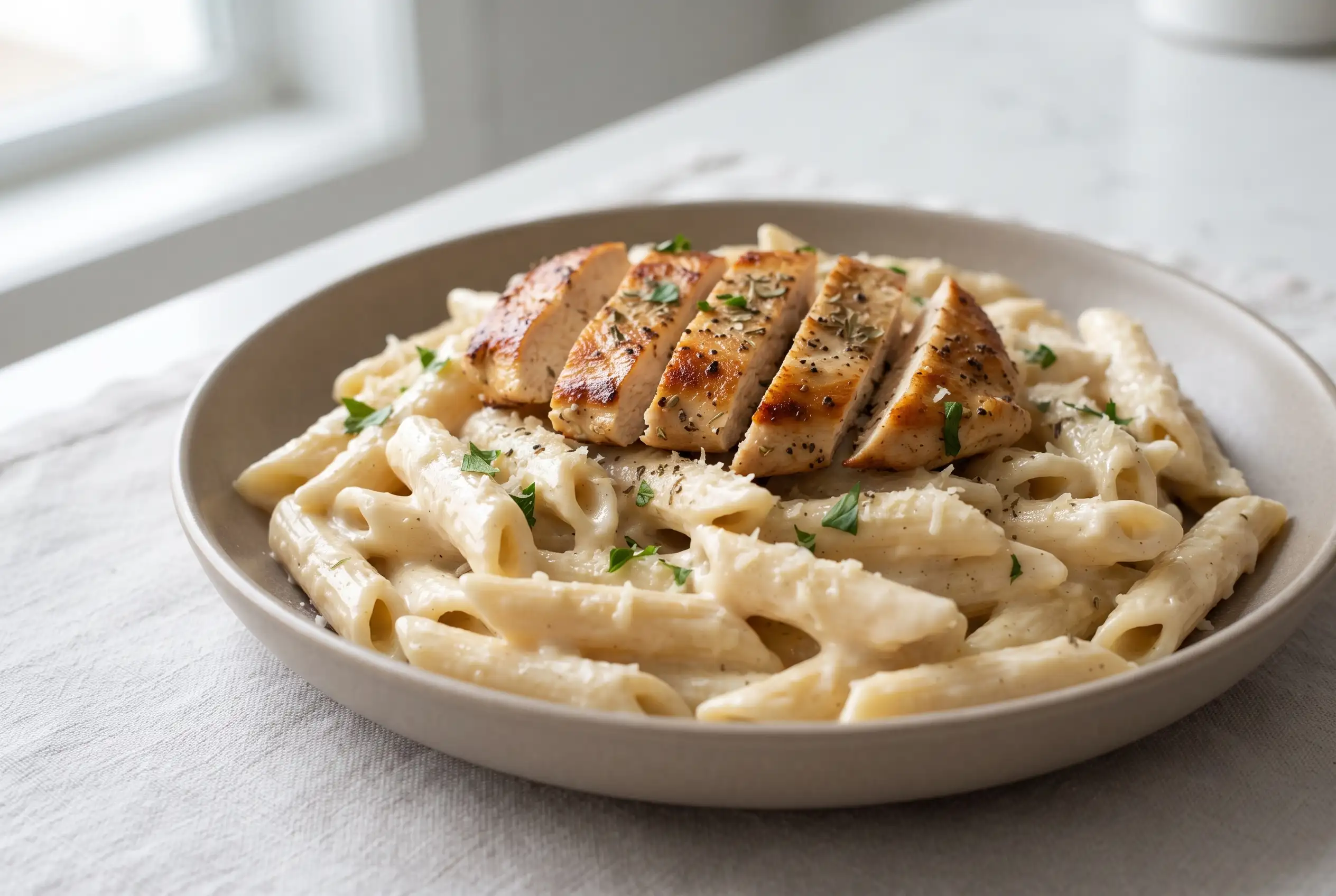
Chicken garlic parmesan pasta brings together seared chicken, pasta, and a stabilized Parmesan cream sauce built around a roux and reserved pasta water. The cooking approach focuses on keeping the cheese, dairy, and starch connected so the finished sauce coats the pasta evenly while carrying the savory flavor created during the chicken sear.
Chicken Garlic Parmesan Pasta Builds a Stable Creamy Sauce
The defining feature of chicken garlic parmesan pasta is the way the sauce is structured. Butter and flour create a light roux that supports the heavy cream and aged Parmesan, allowing the dairy mixture to hold together as it coats each piece of pasta.
Many creamy pasta preparations depend only on reducing cream, but this approach uses flour and pasta starch to create a more controlled texture. The reserved pasta water contributes additional starch that helps the sauce cling to Farfalle, Penne, or Rigatoni.
The chicken adds another layer of flavor through seasoning and browning. A herb-based coating and a golden skillet sear create a savory contrast against the smooth Parmesan sauce.
Aged Parmesan and Roux Choices Shape Sauce Texture
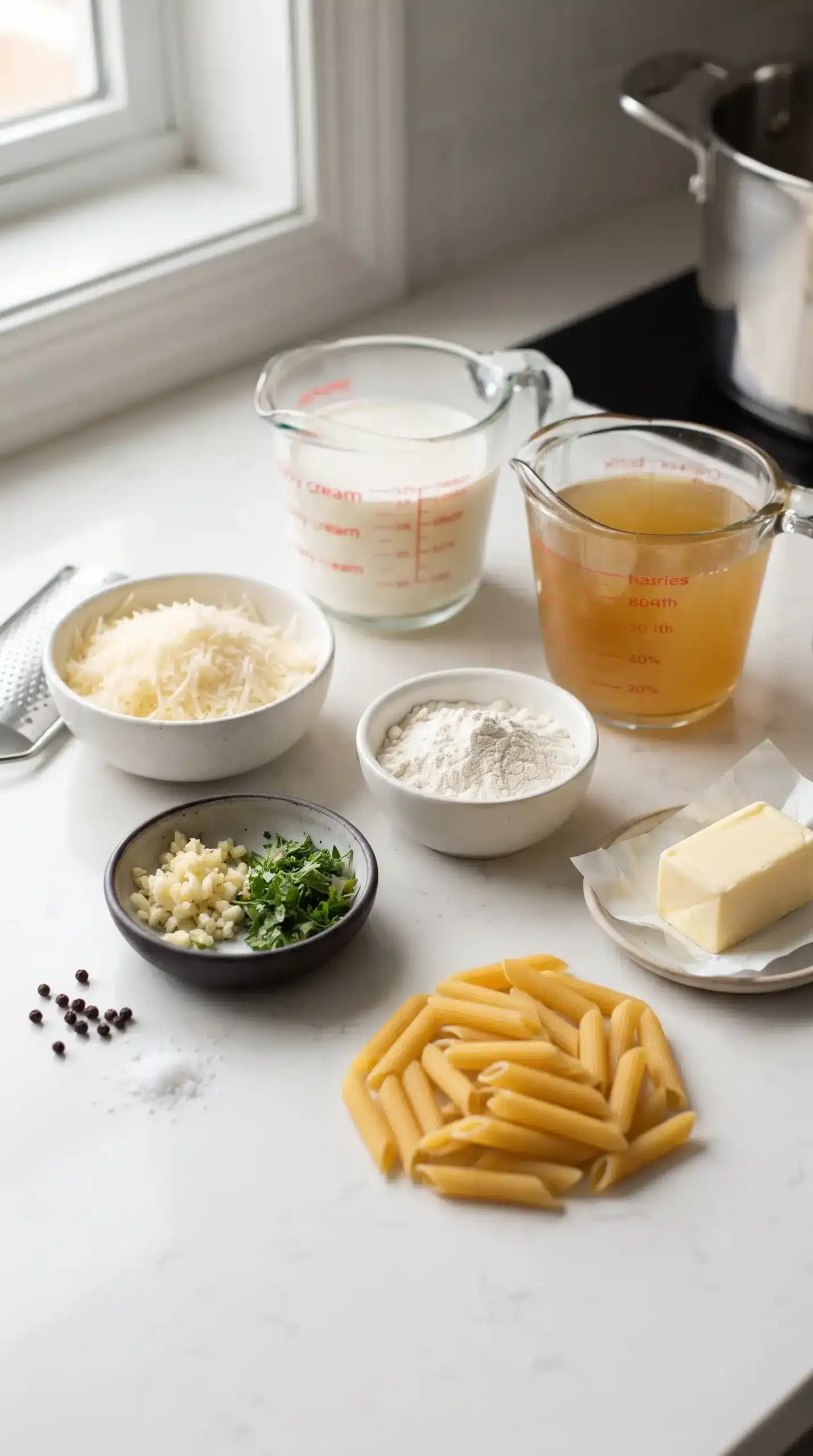
The cheese and sauce foundation determine how the finished dish behaves. Freshly shredded aged Parmesan melts into the warm cream mixture more smoothly than convenient pre-shredded alternatives that may contain anti-clumping agents.
Building the roux before adding liquid gives the sauce a framework that can carry the richness of Parmesan and cream. Gradual additions of broth and cream help the mixture stay smooth as it thickens.
The combination of butter, flour, chicken broth, heavy cream, and Parmesan creates the signature texture behind a creamy chicken parmesan pasta recipe without relying on a loose cream coating.
Chicken Searing Creates the Savory Foundation
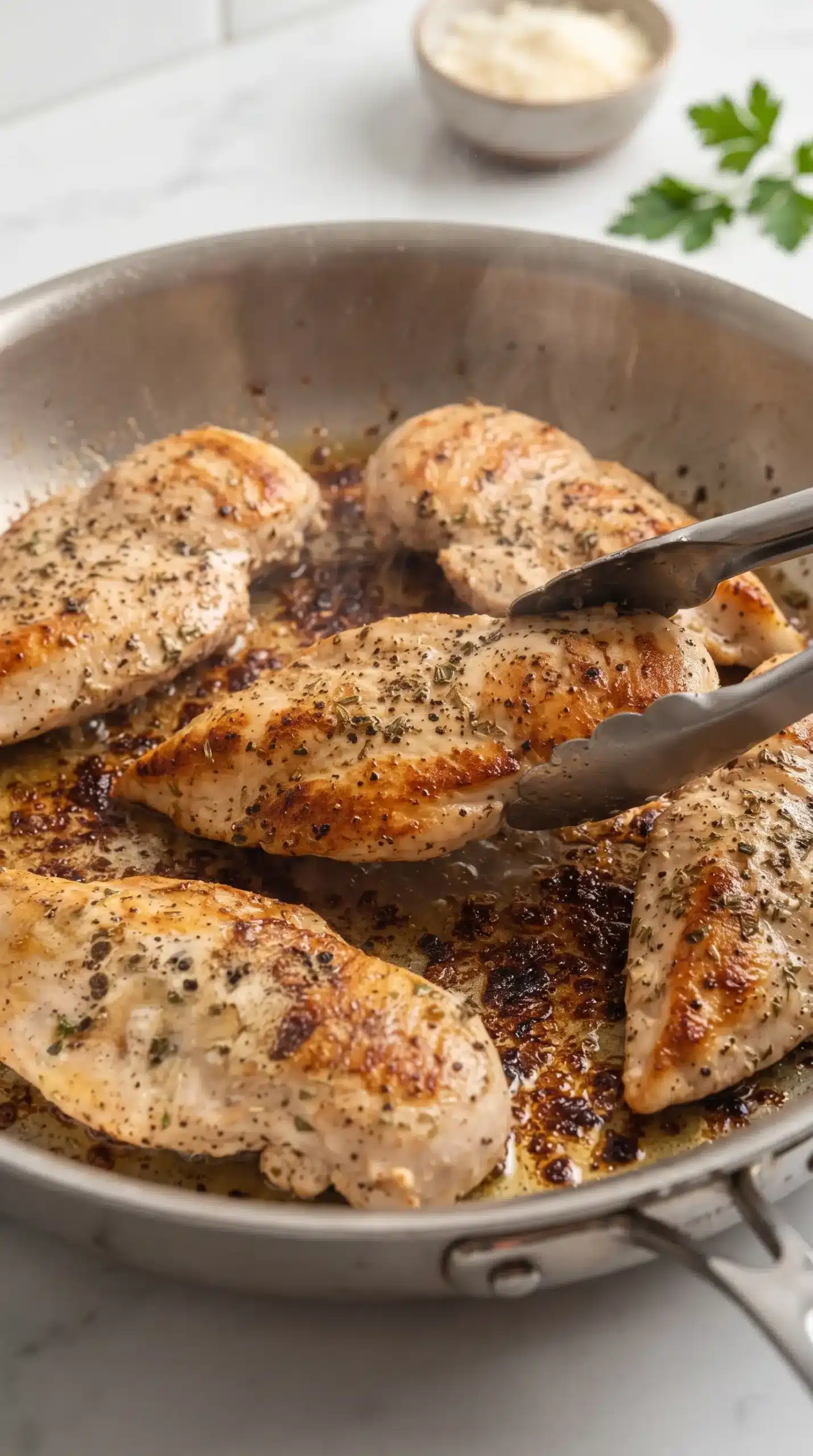
The seasoned chicken develops its deepest flavor during the skillet sear. Browning the cutlets creates a golden exterior while leaving behind flavorful browned bits that become part of the sauce foundation later in cooking.
Pasta Starch Controls the Creamy Coating
Reserved pasta water has an important role after the noodles are cooked because pasta cooking water starch helps connect the sauce with the pasta surface, preventing the creamy mixture from settling away from the noodles.
Adding the starchy water gradually also allows the cook to adjust thickness after Parmesan has melted into the sauce. A sauce that becomes too dense can loosen while maintaining its ability to coat the pasta.
The pasta choice influences how that sauce is carried. Farfalle provides folds that capture the creamy mixture, while Penne and Rigatoni offer tubular surfaces that hold the Parmesan sauce.
Garlic Parmesan Pasta Sauce Avoids Common Separation Issues
The flour-based sauce structure helps keep the fats from separating during cooking. Continuous whisking while the broth and cream are incorporated creates a smoother base before the cheese is added.
Chicken Garlic Parmesan Pasta Cooking Controls Protect Texture
Good execution depends on controlling heat at each stage. The chicken needs enough heat to develop a browned surface, but finishing gently keeps the meat from losing moisture.
The sauce requires a different approach. Once the roux, broth, and cream have thickened, lowering the heat before adding Parmesan allows the cheese to melt into the sauce without unnecessary stress on the emulsion.
Resting the chicken before slicing also affects the final texture. Allowing the cooked cutlets to sit briefly helps retain juices before the meat returns to the pasta and sauce.
Mistakes That Affect Chicken Garlic Parmesan Pasta Results
Several small choices can change the outcome of garlic parmesan chicken pasta. Avoiding these problems keeps the sauce smooth and the chicken properly textured.
- Skipping pasta water: Without the reserved starch, the sauce loses a key element that helps it attach to the noodles.
- Using dry cheese products: Pre-shredded Parmesan may not melt with the same smooth texture as freshly shredded cheese.
- Slicing too soon: Cutting the chicken immediately after cooking can release juices before the meat has a chance to settle.
- Adding cream too quickly: Rapidly combining liquid with the roux can create lumps instead of a silky sauce.
Correcting these issues begins with observing texture. A sauce that slides off pasta needs starch adjustment, while a sauce with visible lumps needs more careful whisking during the thickening stage.
Pasta Shapes Change How Sauce Clings
The pasta format changes the eating experience because different shapes interact with the creamy Parmesan coating in different ways. Shapes with folds or openings capture more sauce, creating a balanced bite with chicken and noodles together.
Variations Adjust Chicken Garlic Parmesan Pasta Without Changing Balance
Small adjustments can change the character of chicken garlic parmesan pasta while preserving the sauce structure, including variations such as Marry Me Chicken Pasta that pair chicken and pasta with a rich creamy sauce.
- Spinach addition: Fresh baby spinach can be folded in during the final toss so residual heat softens the greens.
- Chicken thigh option: Boneless chicken thighs provide a richer alternative to chicken breast while pairing well with Parmesan.
- Spicy version: Red pepper flakes added during the aromatic stage create a sharper garlic-forward variation.
Storage Keeps Chicken Garlic Parmesan Pasta Ready for Reheating
Proper storage helps maintain the creamy texture after cooking. Chicken garlic parmesan pasta should be placed in an airtight container when saved for later use.
Gentle reheating is important because high heat can affect the cream sauce structure. Warming the pasta slowly in a skillet with a small splash of milk or chicken broth helps loosen the sauce.
The stored pasta is best handled with the same care used during cooking. Slow temperature changes protect the connection between Parmesan, cream, and starch.
Serving Decisions Highlight the Creamy Parmesan Finish
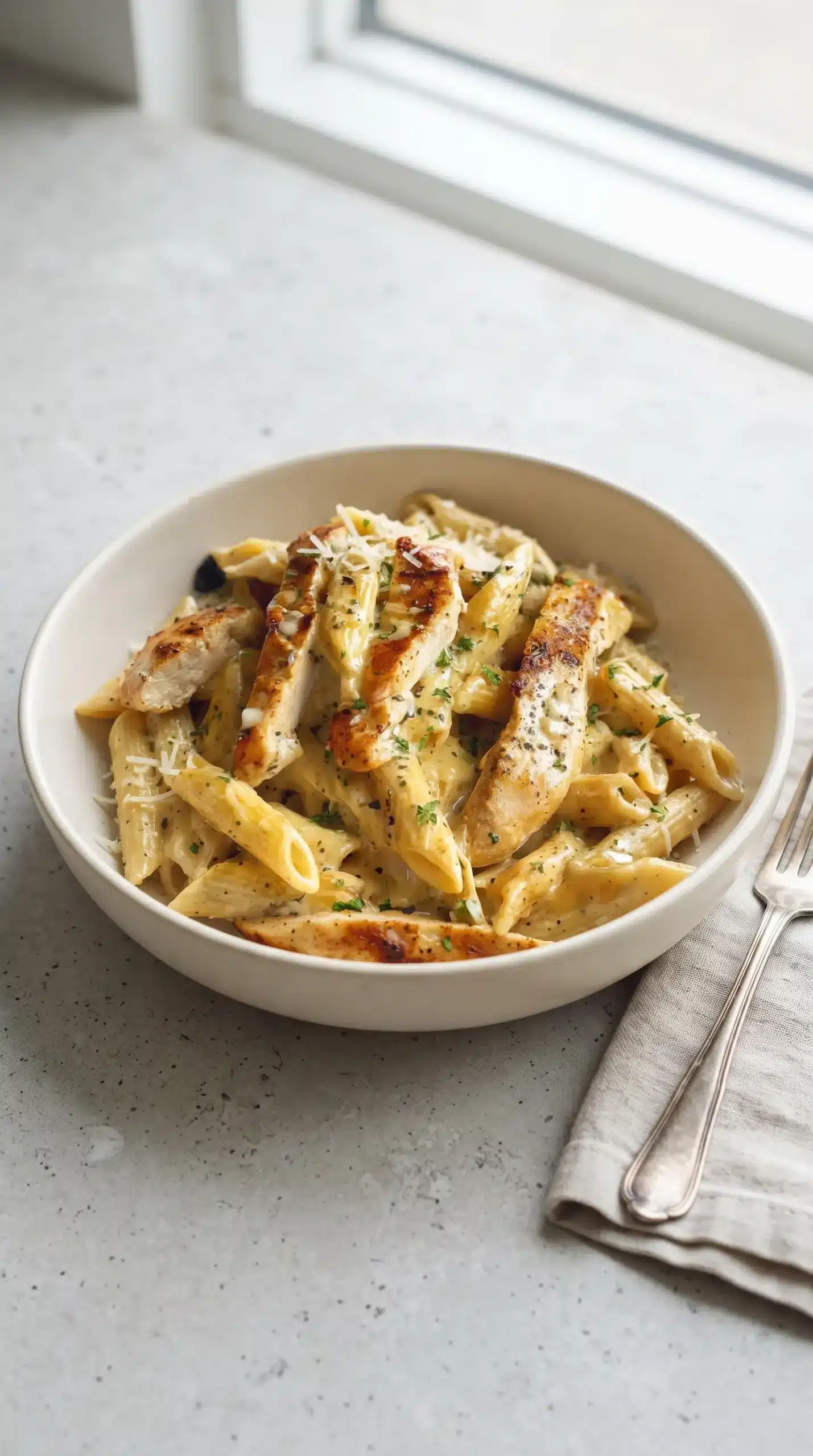
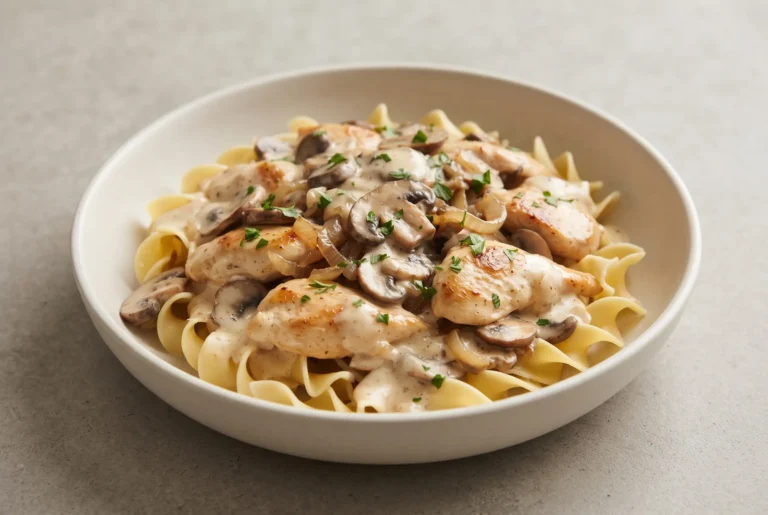
The finished pasta is designed around the relationship between tender chicken pieces, smooth sauce, and noodles that hold the coating. Keeping those elements together creates the intended balance of the dish.
Chicken Pasta With Creamy Parmesan Sauce Uses Layered Technique
A successful chicken pasta with creamy parmesan sauce depends on several connected decisions instead of a single ingredient. The chicken seasoning creates the first layer of flavor, while the skillet fond contributes depth to the sauce.
The roux provides structure, but the pasta starch completes the connection between sauce and noodles. Each component supports the next stage of cooking, creating a consistent texture from pan to plate.
This layered method also explains why the dish differs from a simple cream sauce pasta. The Parmesan is integrated into a prepared base that carries flavor from the chicken, aromatics, and cooking liquid.
Reserved Pasta Water Preserves Sauce Consistency
The reserved pasta water is a small but important cooking decision. Adding it when needed gives the sauce flexibility and helps maintain the coating quality after the pasta and cheese come together.
Chicken Garlic Parmesan Pasta Reveals the Importance of Balance
Chicken Garlic Parmesan Pasta succeeds because each cooking choice supports the next. The seared chicken provides savory depth, while the roux and pasta starch create a sauce that stays attached to the noodles.
The most important judgment comes from managing texture. Careful cheese integration, controlled heat, and proper handling of the chicken allow the finished dish to keep its creamy Parmesan character from preparation through serving.
Chicken Garlic Parmesan Pasta Questions About Sauce and Storage
How can I keep the sauce smooth when reheating chicken garlic parmesan pasta?
Reheat gently over low heat and add a small amount of milk or chicken broth to loosen the cream sauce. Slow warming helps maintain the texture created by the roux and Parmesan.
Why does the pasta water matter in this creamy sauce?
The reserved water contains starch from the pasta cooking process. That starch helps the sauce connect with the noodles so the creamy coating stays evenly distributed.
Can I use Penne or Rigatoni instead of Farfalle?
Yes. Penne and Rigatoni work well because their shapes provide surfaces and spaces that hold the Parmesan cream sauce alongside the chicken.
What cheese works best for garlic parmesan chicken pasta?
Freshly shredded aged Parmesan is the preferred choice because it melts more smoothly into the sauce compared with pre-shredded products containing anti-clumping ingredients.
Chicken Garlic Parmesan Pasta with Creamy Parmesan Sauce
Ingredients
Method
- Boil the pasta in generously salted water until al dente. Save 1/4 cup of the pasta cooking water, then drain the noodles.
- Combine paprika, oregano, garlic powder, thyme, sea salt, and black pepper. Coat the chicken cutlets evenly with the seasoning blend.
- Warm olive oil in a heavy skillet over medium-high heat. Sear the seasoned chicken for 5 minutes on each side until browned.
- Lower the heat, cover the skillet, and cook the chicken for 10–12 minutes more until the internal temperature reaches 165°F / 74°C. Move the chicken to a plate and allow it to rest for 5 minutes.
- Melt the butter in the same skillet. Cook the dried shallots, garlic powder, and Italian seasoning for 60 seconds, then whisk in the flour to create a light roux.
- Gradually blend the chicken broth and heavy cream into the roux. Cook over medium heat while stirring until the sauce thickens and starts to simmer.
- Turn the heat to low and stir in the Parmesan cheese until melted. Add the cooked pasta and reserved pasta water, mixing until the sauce evenly coats the noodles.
- Slice the rested chicken against the grain. Return it to the skillet and gently combine it with the pasta and sauce before serving.