Sour Cream and Onion Chicken with Creamy Skillet Sauce
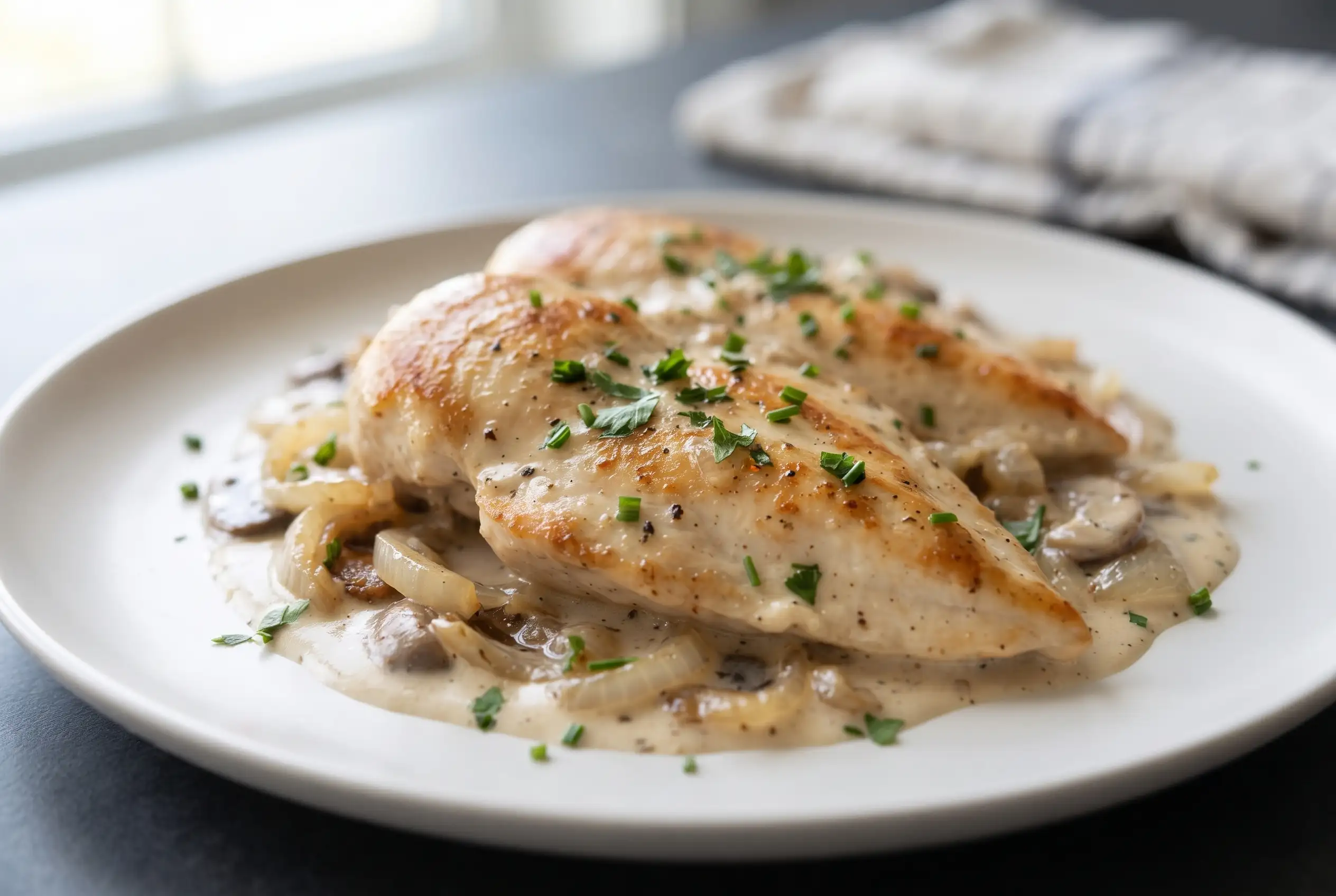
sour cream and onion chicken transforms familiar skillet ingredients into a rich comfort meal built around careful heat control. Seared chicken breasts develop a browned exterior before joining a smooth sour cream sauce enriched with sautéed onion flavors. The result is a creamy, savory dish where simple ingredients rely on technique to create depth.
The appeal of this creamy skillet comes from the contrast between the golden chicken surface and the soft dairy-based sauce. Each stage has a purpose: browning creates flavor, onions create sweetness, and gentle finishing protects the texture of the sour cream. Understanding those choices helps home cooks create a dependable dinner with a polished finish.
Sour Cream and Onion Chicken Builds Comfort Through Technique
Chicken and sour cream create a classic pairing because the mild poultry provides a neutral foundation for stronger flavors. In this preparation, the chicken is not simply covered with sauce; it becomes part of the sauce-building process through the browned pieces left in the skillet after searing.
The pan surface collects caramelized bits during cooking, and those concentrated flavors become part of the onion and sour cream mixture. This approach gives the creamy onion chicken skillet a deeper taste than a sauce prepared separately, because the finished dish carries the savory character created during the initial browning stage.
Texture also separates a successful skillet meal from an ordinary one. The chicken remains the centerpiece while the sauce provides a smooth coating that clings to each portion. Maintaining gentle heat during the dairy stage allows the ingredients to combine without losing the silky quality that defines the dish.
The Dairy and Onion Choices Shape the Skillet’s Character
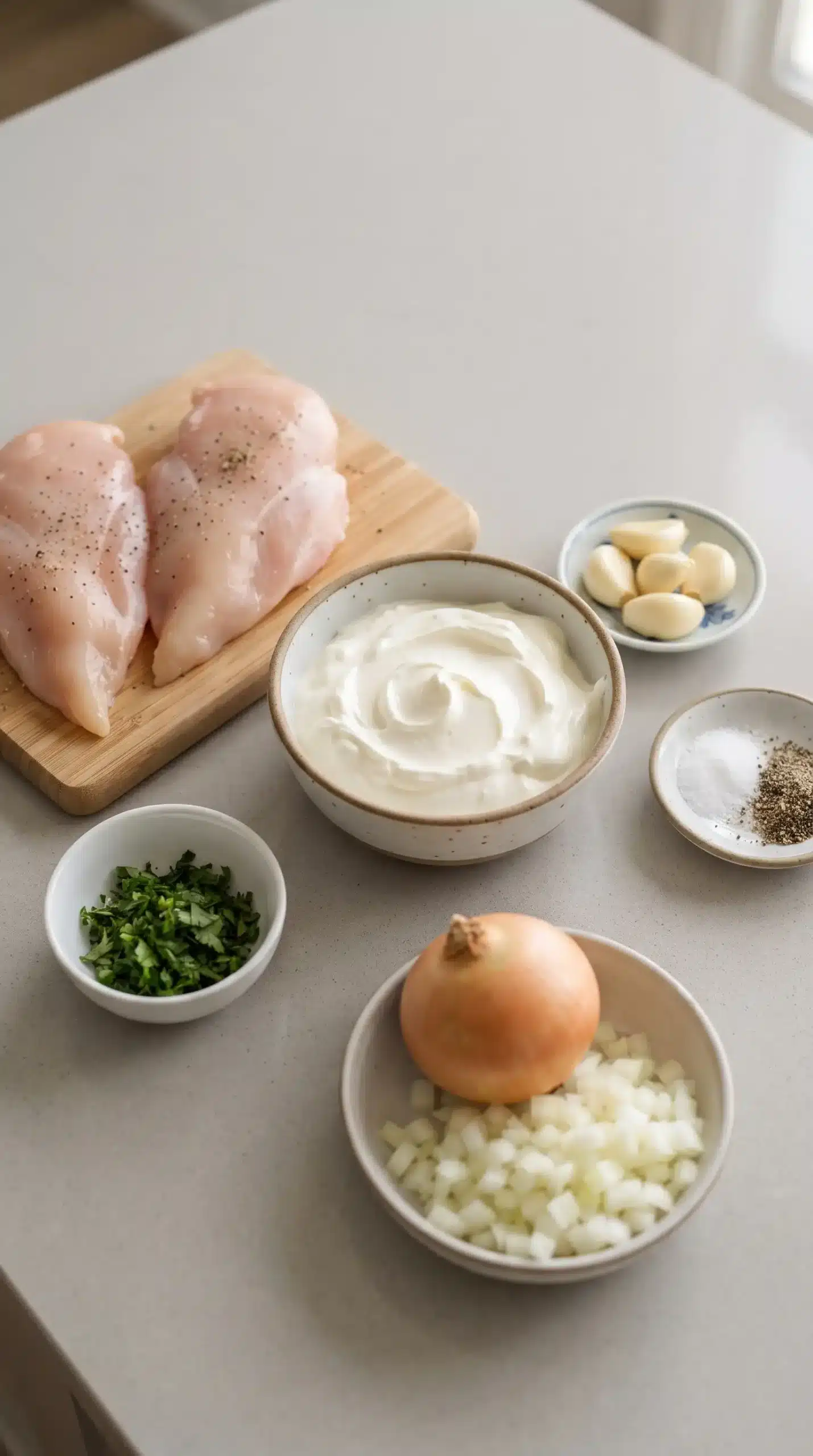
Ingredient selection has a direct effect on the final texture and flavor of sour cream and onion chicken. Full-fat sour cream is especially important because it provides the richness needed for a stable sauce. Lower-fat alternatives contain more water and can be more likely to separate when heated.
A large yellow onion supplies the aromatic foundation. Finely diced pieces cook down in the same skillet used for the chicken, allowing their natural sweetness to develop while they absorb the savory flavors remaining from the sear.
Several small choices influence how the finished dish feels on the plate:
- Full-fat sour cream: Supports a smoother, richer sauce consistency during gentle heating.
- Yellow onion: Creates the sweet, savory base that balances the tang of the dairy.
- Fresh parsley: Adds a bright finishing note after the creamy sauce is complete.
Searing Control Creates the Foundation for the Sauce
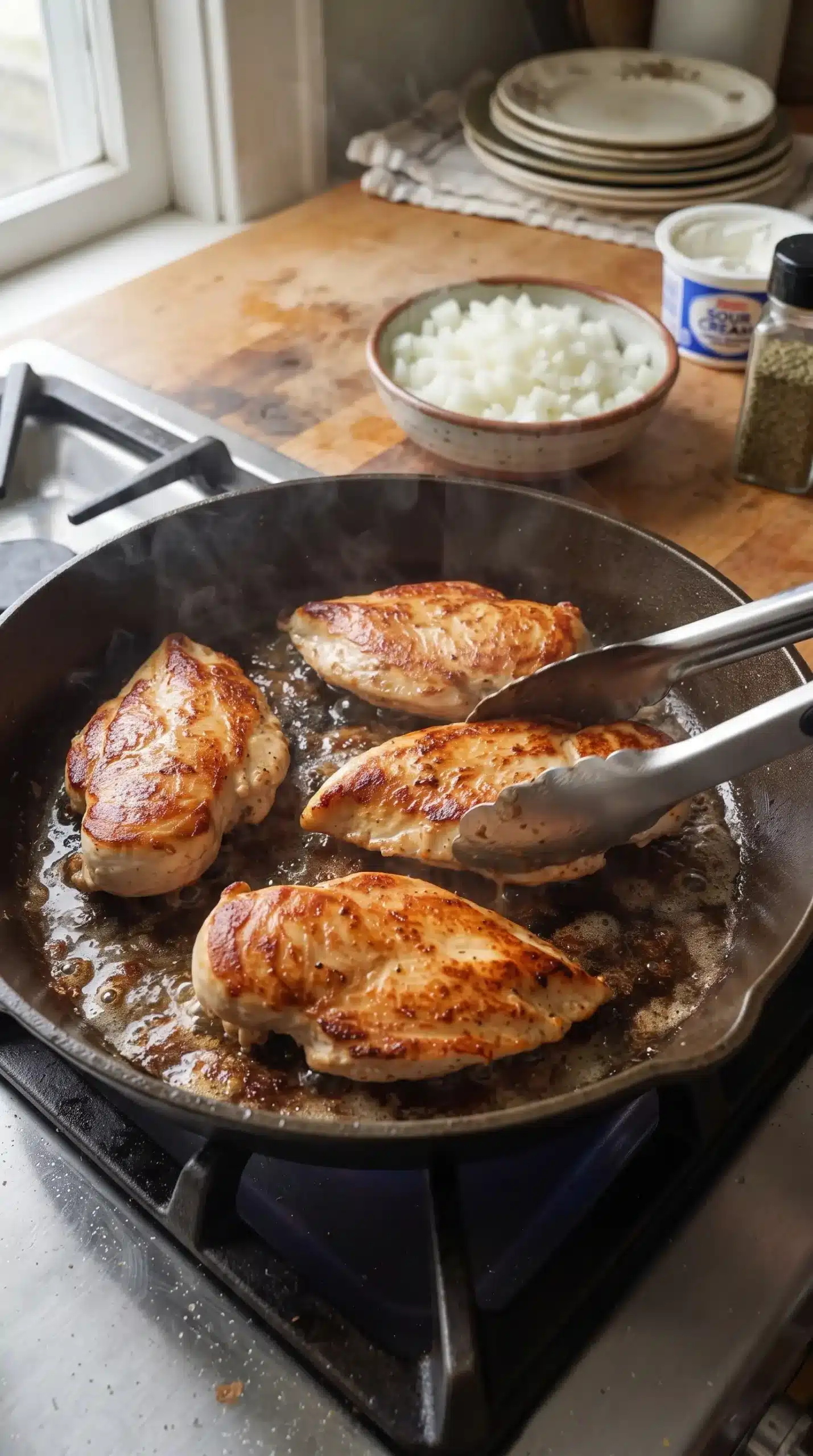
The chicken sear determines much of the dish’s flavor before the creamy element is added. Drying the chicken surface before cooking helps encourage browning, allowing the skillet to develop the deeper roasted notes that support the sauce.
Uniform chicken thickness also improves consistency. Flattening thicker areas helps the meat cook more evenly, reducing the chance that thinner edges become dry before the center reaches the proper internal temperature.
Once the chicken is removed, the skillet becomes a flavor source. The onions are cooked directly in the remaining cooking fats while the browned bits on the pan surface are loosened into the developing sauce foundation. This connection between stages is what gives the dish its layered taste.
Why Sour Cream and Onion Chicken Sauce Stays Smooth
Sour cream requires more careful handling than many other sauce ingredients because high heat can affect its texture. A gentle finishing environment helps maintain the creamy consistency instead of creating a broken or grainy sauce.
Temperature management is the central skill during the sauce stage. The sour cream should be incorporated slowly and stirred with the onion juices so the mixture becomes glossy and cohesive. Boiling is avoided because excessive heat can cause the dairy proteins to separate.
| Cooking stage | Main purpose | Important texture decision |
|---|---|---|
| Chicken searing | Develop browned flavor | Keep enough surface heat for a golden crust |
| Onion sautéing | Build sweetness and aroma | Cook until softened and lightly caramelized |
| Sour cream finishing | Create the creamy coating | Use low heat to protect the sauce |
Mistakes That Can Ruin Sour Cream and Onion Chicken
Several problems can change the character of this skillet meal, but each has a clear cause connected to the cooking process. Paying attention to the sauce temperature and chicken preparation prevents the most common issues.
- Adding sour cream over high heat: Excessive heat can make the sauce separate. Lower the temperature before incorporating the dairy.
- Skipping surface drying: Moist chicken does not brown as effectively, reducing the depth created by the sear.
- Using uneven chicken pieces: Different thicknesses can lead to inconsistent cooking. Flatten thicker portions before cooking.
- Overlooking pan flavors: Removing the chicken without using the browned skillet base leaves valuable flavor behind.
Preparation Decisions That Improve Sour Cream and Onion Chicken Results
Small preparation choices have a large effect on the finished skillet. Bringing the sour cream closer to room temperature before use makes it easier to blend smoothly with the warm pan mixture.
A simple tempering step can also support a better sauce texture. Whisking a small amount of warm pan juices into the sour cream before adding it to the skillet uses the same approach as tempered sour cream with warm pan juices, helping the dairy adjust gradually to the cooking environment.
The chicken itself benefits from attention before it reaches the pan. Creating an even thickness encourages balanced cooking and helps preserve a tender interior while the exterior develops its browned surface.
Variations That Change the Chicken Experience
The structure of sour cream and onion chicken allows several adjustments while keeping the central idea intact. Different proteins, herbs, or vegetables can shift the flavor profile without changing the creamy skillet style.
Mushrooms can deepen a creamy skillet by adding earthy notes and extra savory character alongside the onion base. A sauce-focused variation such as creamy mushroom chicken shows how mushrooms can become part of a rich chicken preparation without changing the comfort-food character of the dish.
| Variation | Change | Resulting character |
|---|---|---|
| Chicken thighs | Replace breasts with boneless, skinless thighs | A richer bite with more natural juiciness |
| Fresh herbs | Add dill or chives near the end | A brighter finish against the creamy sauce |
| Cremini mushrooms | Add sliced mushrooms during onion cooking | Extra earthy depth and savory flavor |
A plain full-fat Greek yogurt substitution can also work when handled carefully. Because yogurt is even more sensitive to heat than sour cream, it should be stirred in after removing the pan from direct heat.
Storage Choices Protect the Creamy Onion Chicken Skillet
Leftover sour cream and onion chicken needs gentle handling because the sauce texture can change as it cools. Keeping portions in a shallow airtight container helps preserve quality while stored in the refrigerator.
Freezing is possible, although dairy-based sauces may experience slight texture changes after thawing. Slow reheating helps restore a smoother consistency by allowing the sauce to warm gradually.
For reheating, a skillet over low heat provides the best control. Adding a small amount of water or milk can loosen the thickened sauce, while continuous stirring helps prevent separation. High microwave heat is less suitable because it can affect both the sauce texture and chicken tenderness.
Serving Ideas for a Complete Meal
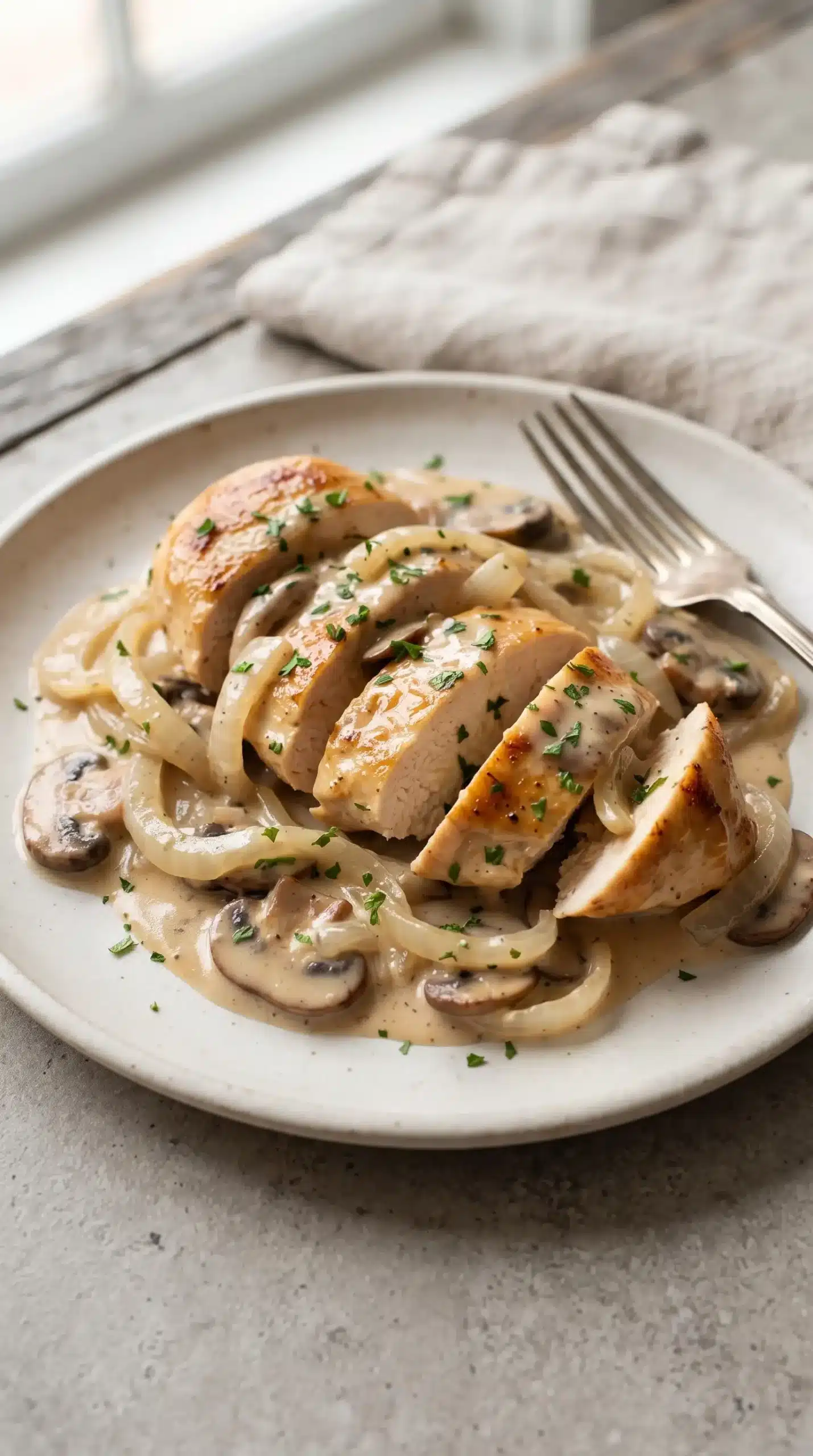
The creamy sauce makes this chicken especially suited for sides that can carry its rich flavors. The smooth consistency pairs naturally with simple accompaniments that allow the onion and dairy notes to remain noticeable.
A balanced plate can focus on contrast: the tender chicken and sauce provide richness, while fresh or lightly seasoned sides add another texture. The parsley garnish contributes a small burst of color and freshness when the skillet reaches the table.
Because the sauce coats the chicken thoroughly, the dish works well as a comforting centerpiece without requiring complicated additions. Keeping the supporting elements simple allows the carefully developed skillet flavors to stand out.
Sour Cream and Onion Chicken Texture Depends on Careful Handling
The texture of this dish is shaped by decisions made before serving. A properly browned chicken surface, softened onions, and a gently finished sour cream sauce work together to create a cohesive result.
Small details continue to matter after cooking. Warming the chicken gradually, avoiding aggressive reheating, and maintaining the sauce’s smooth consistency preserve the qualities developed in the skillet.
Sour Cream and Onion Chicken Proves Heat Control Defines the Dish
Sour cream and onion chicken succeeds because each cooking choice supports the next one. The browned chicken creates the foundation, the onions build savory sweetness, and controlled dairy handling produces the creamy finish that brings everything together.
Careful temperature management turns a short ingredient list into a refined comfort meal. The dish demonstrates how attention to texture and timing can elevate a simple skillet preparation into something memorable.
Sour Cream and Onion Chicken Sauce Questions and Answers
Can sour cream and onion chicken sauce be made thicker?
A thicker sauce can be created by adding a small amount of flour to the onions before incorporating the sour cream. The flour forms a light thickening base that helps support a heavier consistency.
Why does my sour cream sauce separate?
Sauce separation usually happens when dairy is exposed to excessive heat. Keeping the skillet on low heat during the sour cream stage helps maintain a smooth texture.
Can I use chicken thighs for sour cream and onion chicken?
Boneless, skinless chicken thighs can replace chicken breasts. Their higher fat content creates a more succulent texture while still working well with the onion and sour cream sauce.
How can I prevent the chicken from drying out?
Even chicken thickness helps the meat cook consistently. Flattening thicker areas before searing reduces uneven cooking and supports a more tender result.
What is the best way to reheat the sauce?
Low skillet heat is the preferred approach because it warms the sauce gradually. A small splash of water or milk can help loosen the chilled mixture while stirring keeps the texture even.
Sour Cream and Onion Chicken with Creamy Skillet Sauce
Ingredients
Method
- Pat the chicken breasts dry, then season both sides with garlic powder, sea salt, and black pepper.
- Warm the olive oil in a heavy-bottomed skillet over medium-high heat and sear the chicken breasts for 6–7 minutes per side until browned and the internal temperature reaches 165°F / 74°C.
- Transfer the chicken from the skillet and cover loosely with foil while making the sauce.
- Add the diced onion to the same skillet and cook over medium heat for about 5 minutes, stirring and scraping the browned pieces from the pan, until the onions are translucent and lightly caramelized.
- Lower the heat and mix the sour cream into the skillet with the onion juices, gently whisking until the sauce is smooth.
- Place the chicken and any collected juices back into the skillet, spoon the sour cream and onion sauce over the chicken, and heat for 2–3 minutes.
- Finish with chopped fresh parsley and serve.