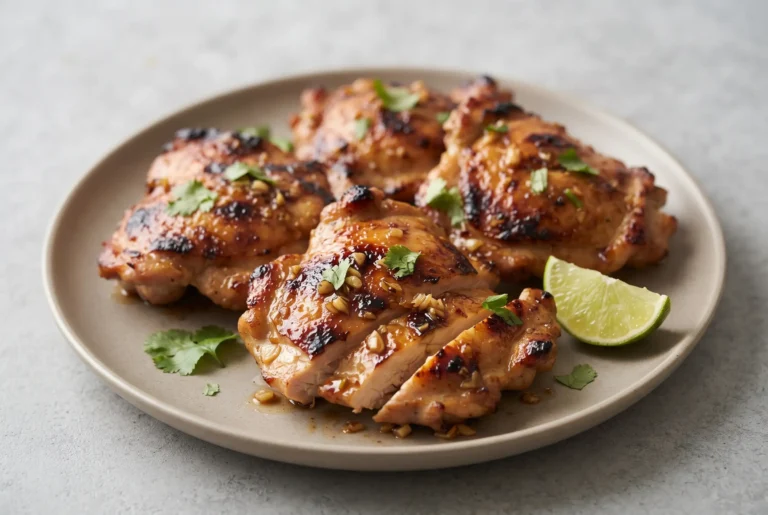
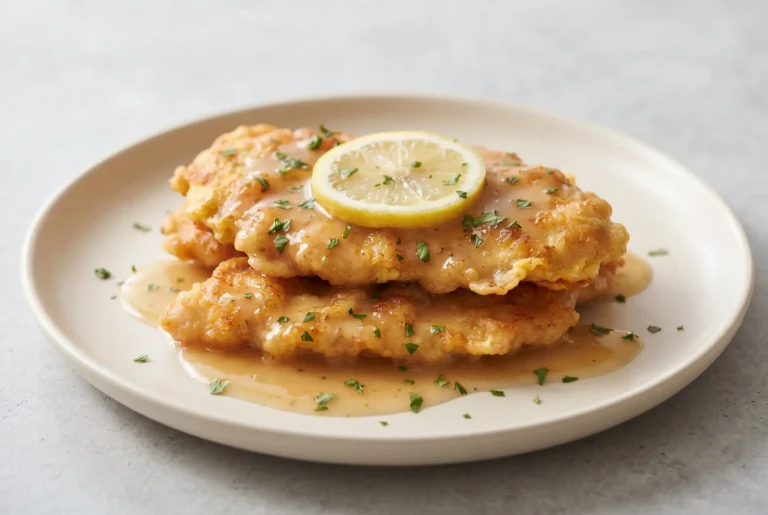
Lemon Chicken Recipe with Parmesan Crust and Pan Sauce
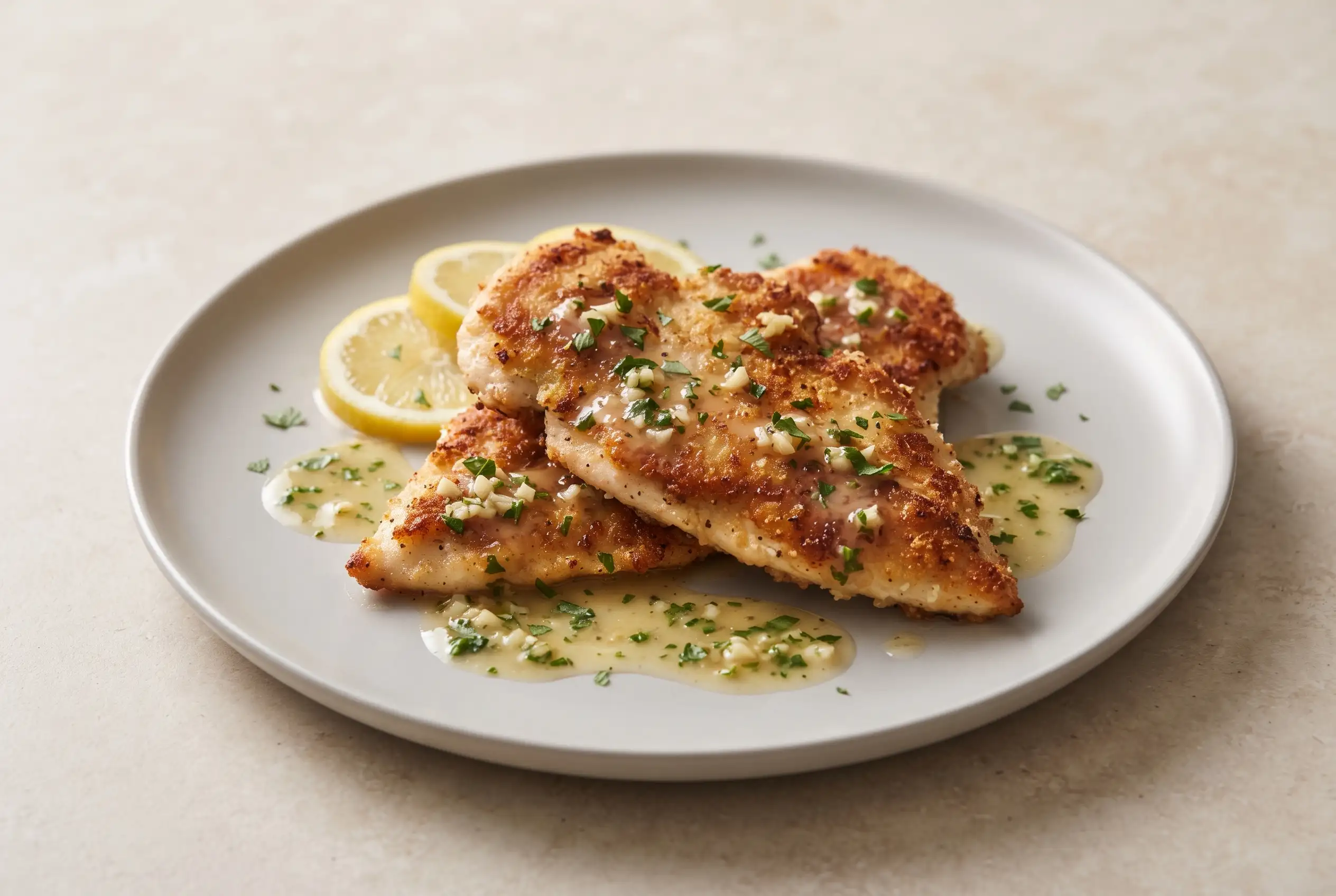
Lemon chicken recipe fans often look for a dish that feels fresh without becoming sharp, and this version delivers that balance through tender chicken, a golden Parmesan coating, and a silky lemon-garlic pan sauce. The technique combines a crisp stovetop sear with gentle oven finishing so the chicken stays succulent while absorbing the bright flavors surrounding it.
The appeal of an easy lemon chicken recipe comes from the contrast between textures and flavors. A savory crust forms on the outside of the cutlets, while butter, broth, garlic, and fresh citrus create a sauce that carries both richness and acidity. Each cooking stage contributes something important to the finished plate.
Lemon Chicken Recipe Creates a Bright Parmesan Crust
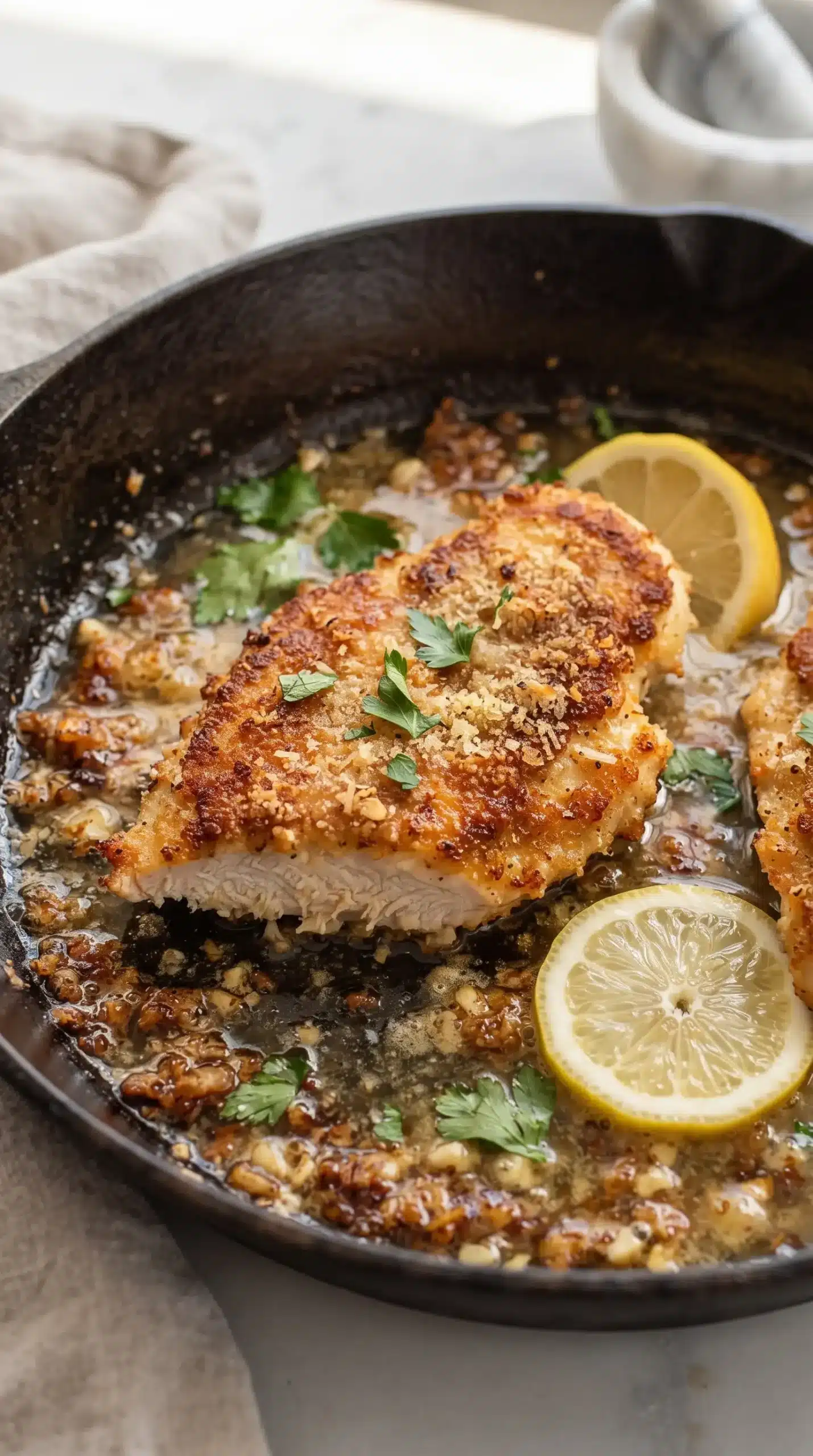
The defining feature of this lemon chicken recipe is the relationship between the Parmesan-flour coating and the lemon pan sauce. The cheese creates a delicate savory layer that browns during searing, giving the chicken a structured surface that can hold onto the liquid sauce. This creates the signature combination of crisp exterior and moist interior.
Chicken breasts can become dry when exposed to uneven heat, which is why the cutlet approach matters. Halving the breasts creates thinner portions that cook more consistently, allowing the crust to develop before the meat is finished in the oven. The result is a crispy lemon chicken breast with a tender center.
Fresh citrus keeps the dish lively after the richness of butter and cheese enters the skillet. The lemon juice brightens the browned flavors collected during cooking, while garlic adds aromatic depth that connects the crust and sauce into one cohesive dish.
Parmigiano and Citrus Define the Dish’s Flavor Balance
The ingredient choices in lemon chicken recipe preparation determine how the finished dish feels on the plate. Freshly grated Parmigiano-Reggiano is especially important because it blends with flour to create the coating used for browning. Its savory character gives the chicken a deeper flavor than flour alone can provide.
Fresh lemons are another essential choice because the juice becomes part of the sauce created in the skillet. The acidity cuts through the butter and olive oil, preventing the dish from feeling overly rich. Lemon zest can also be added to the coating when a stronger citrus aroma is desired.
Garlic, chicken broth, and cold butter work together after searing. The broth loosens the concentrated browned bits left in the pan, while butter adds a smooth finish. Together, these elements create a lemon garlic chicken recipe style sauce that complements the Parmesan crust.
| Component | Cooking role | Result in the dish |
|---|---|---|
| Parmigiano-Reggiano and flour coating | Creates a searing surface | Golden savory crust |
| Fresh lemon juice | Balances rich flavors | Bright citrus finish |
| Garlic and chicken broth | Builds the skillet sauce | Deep aromatic flavor |
Fresh Lemon and Garlic Shape the Pan Sauce
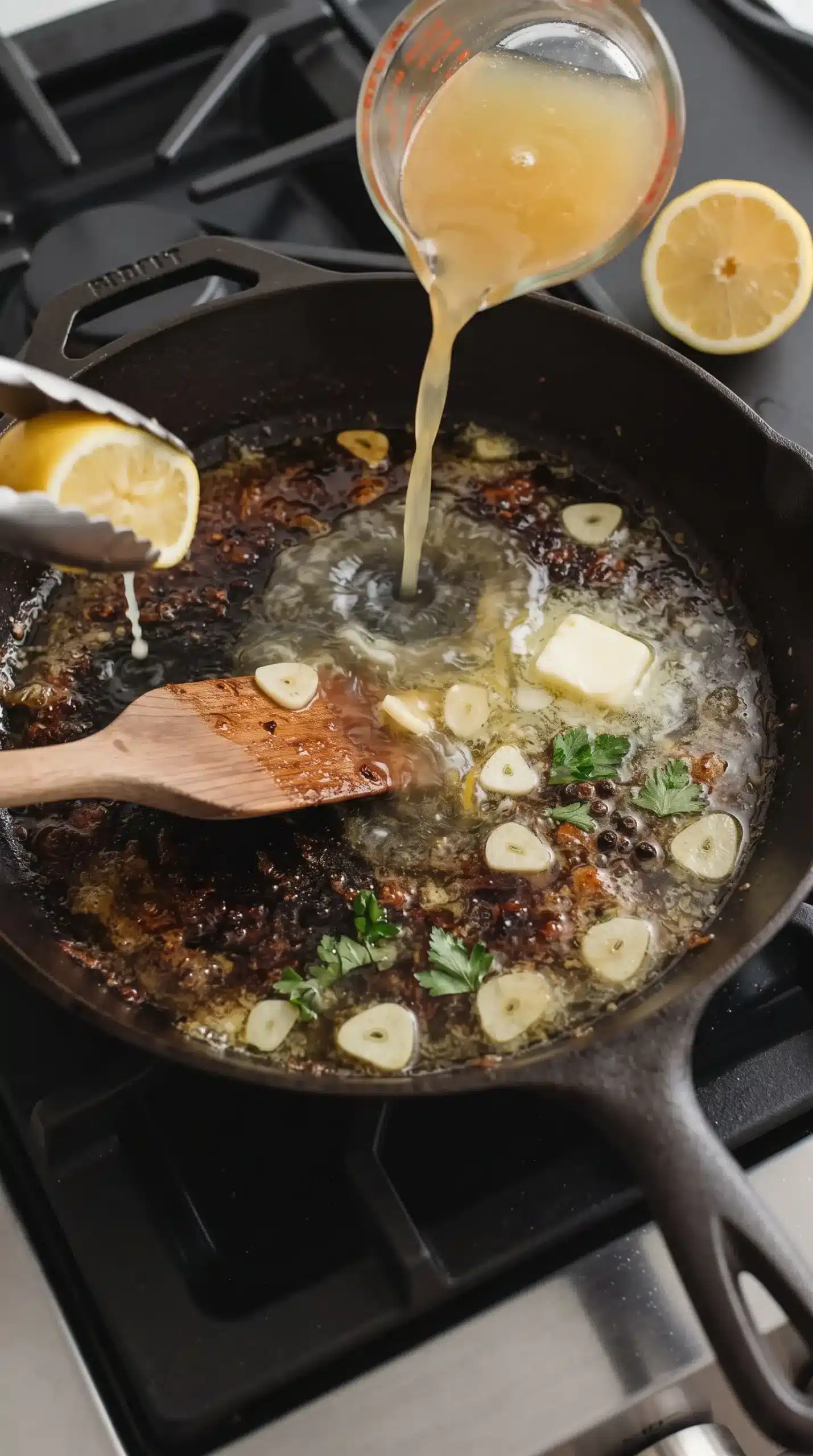
The skillet sauce develops its character from what remains after the chicken is seared. Browned pieces from the crust and chicken collect on the pan surface, and deglazing the pan with broth and lemon juice transforms those concentrated flavors into a smooth coating that surrounds each cutlet.
Searing Decisions Build Crispy Lemon Chicken Breast Texture
Strong heat management separates a delicate crust from a coating that turns soft. The chicken needs enough time in the skillet for the Parmesan mixture to caramelize and form a golden exterior. Moving the cutlets too early can prevent the surface from developing the texture associated with crispy lemon chicken breast.
Using an oven-safe skillet creates a seamless transition after the stovetop stage. Once the sauce ingredients are combined, the chicken returns to the pan so the oven can finish cooking while the meat remains surrounded by flavorful liquid.
Temperature awareness matters throughout the process. A thermometer provides a reliable way to judge when the chicken is properly cooked, helping protect the lean breast meat from extended exposure to heat. Careful monitoring keeps the interior juicy while maintaining the browned coating.
Avoiding Lemon Chicken Recipe Mistakes That Weaken the Crust
Several small errors can change the texture and flavor of lemon chicken recipe results. One common issue is adding garlic while the pan is still at maximum searing heat. Garlic can darken quickly under intense heat, creating bitterness instead of the fragrant base needed for the sauce.
Another problem occurs when the coating is not pressed firmly onto the chicken. The Parmesan and flour mixture needs contact with the surface so it can create a stable crust during cooking. Loose coating may separate before the sauce can cling to it.
Using bottled lemon juice can also affect the character of the dish. Fresh lemon provides the clean citrus profile expected from this preparation, while fresh zest offers aromatic oils that juice alone cannot provide. Choosing quality cheese and citrus supports the intended balance.
Oven Finishing Protects Chicken Breast Moisture
The oven stage completes the cooking process by surrounding the seared chicken with gentle heat and lemon-garlic sauce. This approach allows the center of the cutlet to cook evenly after the exterior has already developed flavor, creating a more balanced texture than relying on pan heat alone.
Small Variations Change the Lemon Garlic Chicken Recipe
The base preparation can adapt to different preferences while keeping its central character. Adding dried thyme or rosemary to the flour mixture introduces an herbal note that works with the citrus profile. These additions change the aroma without replacing the Parmesan crust foundation.
Chicken thighs can also be used when a richer result is preferred. Bone-in, skin-on thighs contain more fat and require additional oven time to become tender. This variation changes the texture and cooking approach while maintaining the same lemon-forward sauce concept.
Chicken cutlets with a lighter sauce treatment can emphasize the tender texture created by thinly portioned breasts; the lemon chicken cutlets preparation keeps the focus on a delicate coating and bright citrus finish.
A small amount of red pepper flakes added during the garlic sauté introduces gentle heat. The spice creates contrast with the bright citrus flavor and gives the skillet sauce a warmer finish without overwhelming the other elements.
- Herb option: Add thyme or rosemary to the coating for an earthy variation.
- Protein option: Choose chicken thighs for a richer texture and longer bake.
- Heat option: Include red pepper flakes for a spicy citrus finish.
Serving Choices Highlight the Golden Skillet Finish
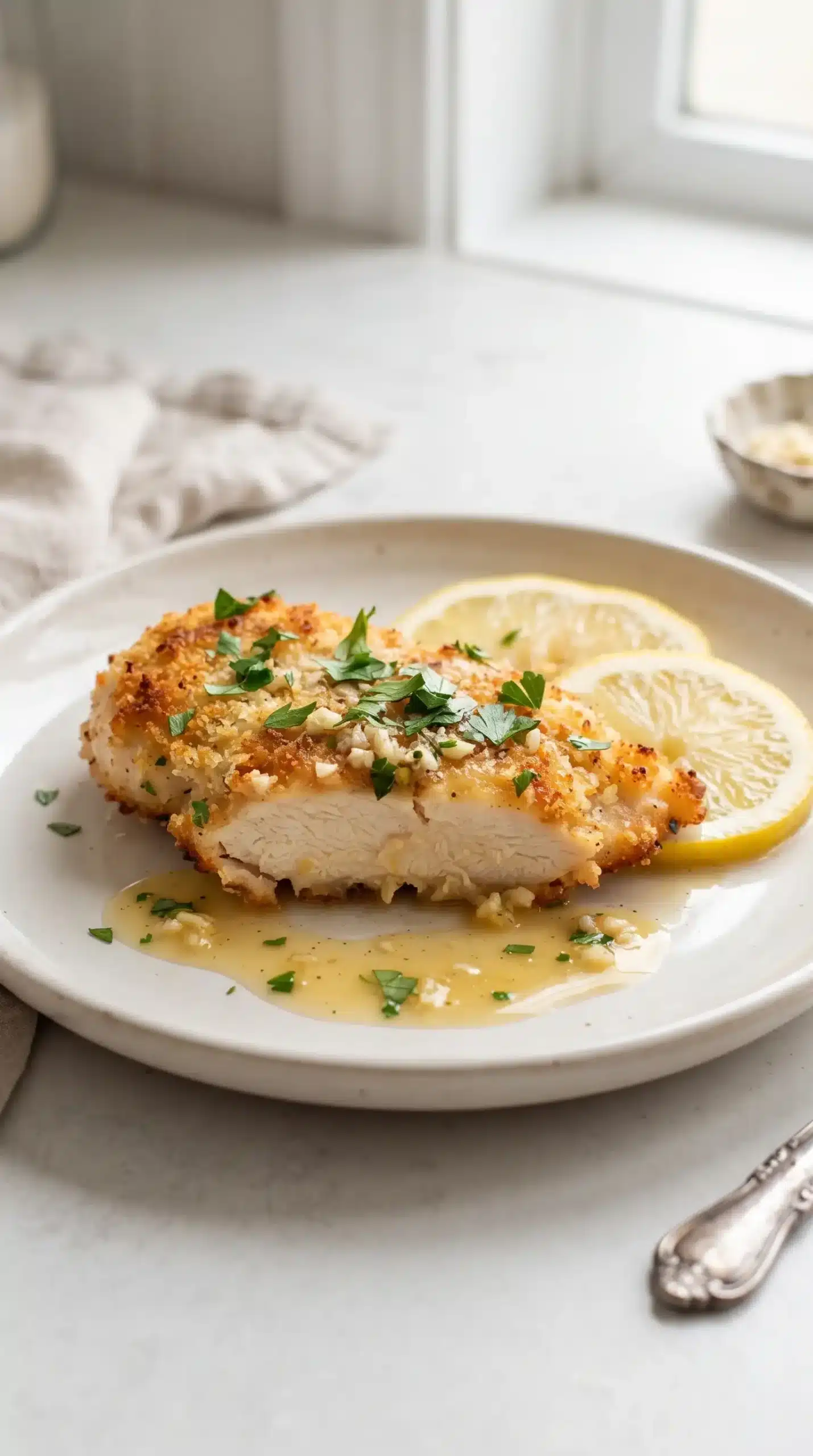
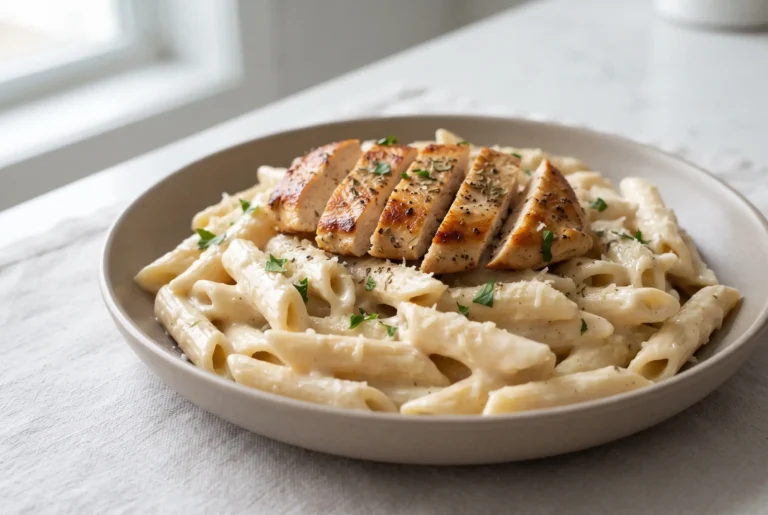
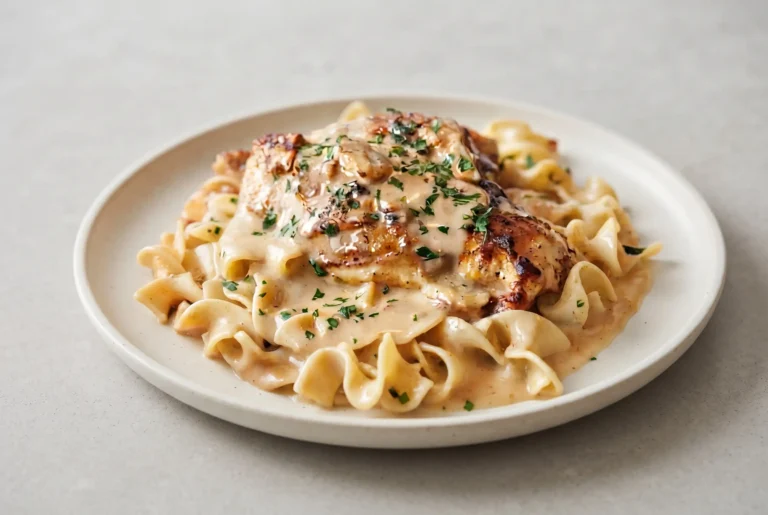
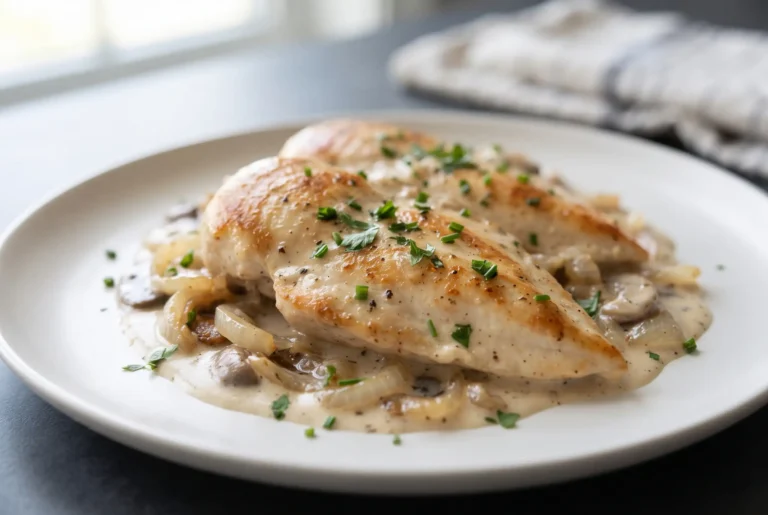
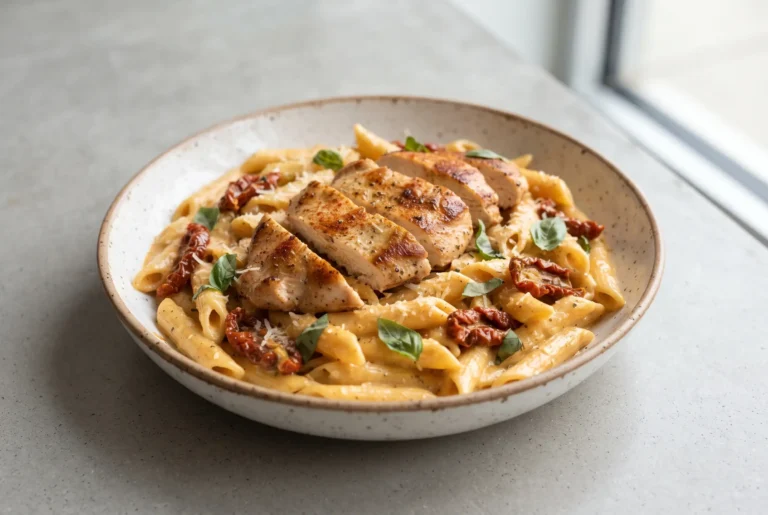
Lemon chicken is best served while the sauce remains smooth and the Parmesan crust still has its browned character. A garnish of fresh Italian parsley adds color and a fresh herbal note that matches the citrus-driven profile of the plate.
Storage Keeps Lemon Chicken Ready for Another Meal
Leftover lemon chicken can be stored in an airtight glass container for up to three days. As the dish cools, the sauce naturally thickens and the crust changes texture, so careful reheating helps preserve the best qualities of the meal.
Low heat in a skillet is the preferred reheating method because it allows the sauce to loosen gradually. Adding a splash of chicken broth can restore some of the sauce’s smooth consistency while helping the chicken remain moist.
Microwave reheating can soften the Parmesan coating and affect the texture of the chicken. Gentle stovetop warming gives better control over the crust and sauce relationship that defines the dish.
Thermal Details Guide Safe Lemon Chicken Results
Monitoring internal temperature is a key cooking decision for chicken breast. The oven finish should bring the meat to a safe temperature while avoiding unnecessary cooking time that could reduce tenderness.
Make Ahead Choices Support Lemon Chicken Recipe Planning
Preparation can be organized around the elements that influence texture most. The chicken cutlets can be portioned and seasoned before cooking, while the coating ingredients can be combined when ready to begin the searing stage.
The sauce components also benefit from simple organization. Measuring the broth, lemon juice, garlic, and butter before heating the skillet allows attention to remain on the chicken’s crust development.
When preparing a lemon chicken recipe for a meal plan, keeping the crust and sauce in good condition during storage becomes the main consideration. Gentle reheating preserves more of the original balance between crisp coating and bright sauce.
Citrus Notes Complete the Dish’s Character
The combination of fresh lemon, garlic, butter, and Parmesan creates the recognizable identity of this chicken preparation. Bright acidity meets savory richness, producing a dish that feels refined while relying on straightforward cooking choices.
Lemon Chicken Recipe Proves Balanced Cooking Comes From Control
Lemon chicken recipe success depends on managing each transition: creating a browned Parmesan crust, capturing skillet flavors, and finishing the chicken with controlled heat. When those choices work together, the result is a dependable meal with crisp texture, fresh citrus brightness, and a satisfying savory finish.
Lemon Chicken Recipe Questions About Crust and Cooking
What makes the Parmesan coating stick to the chicken?
The coating adheres because the chicken surface is pressed firmly into the Parmesan and flour mixture before cooking. This creates contact between the cutlet and the cheese blend, allowing the crust to develop during searing.
Can lemon chicken recipe preparation use chicken thighs instead of breasts?
Chicken thighs can replace breasts for a juicier variation. Bone-in, skin-on thighs require more oven time, but they maintain the same lemon, garlic, and butter flavor direction.
How can the crust stay crisp after cooking?
The crust is best immediately after the skillet and oven stages. For leftovers, gentle skillet reheating helps protect the coating better than methods that introduce rapid moisture and soften the Parmesan layer.
Why should fresh lemon be used instead of bottled juice?
Fresh lemon provides the clean citrus flavor and aromatic qualities expected from the dish. The juice and optional zest contribute brightness that supports the butter, cheese, and garlic flavors.
How do I keep garlic from becoming bitter?
Garlic should be added after the chicken has been removed from the hottest stage of cooking. Brief sautéing in the butter allows the aroma to develop without excessive browning.
Lemon Chicken Recipe with Parmesan Crust and Pan Sauce
Ingredients
Method
- Preheat the oven to 400°F / 205°C.
- Mix the Parmesan and flour in a shallow dish. Season the chicken cutlets with salt and black pepper, then coat both sides evenly in the Parmesan mixture.
- Warm the olive oil and 1 tablespoon butter in a large oven-safe skillet over medium-high heat. Cook the coated chicken for 3–4 minutes per side until the crust is browned, then move the chicken to a plate.
- Place the remaining 1 tablespoon butter and garlic in the skillet. Cook for about 60 seconds, then pour in the chicken broth and lemon juice while loosening the browned bits from the pan.
- Put the chicken back into the skillet and cover the cutlets with the lemon-garlic sauce.
- Move the skillet to the oven and bake for 10–12 minutes until the chicken reaches an internal temperature of 165°F / 74°C.
- Finish the lemon chicken with chopped parsley and serve immediately.