Char Siu Chicken with Buttery Glaze and Hoisin Sauce
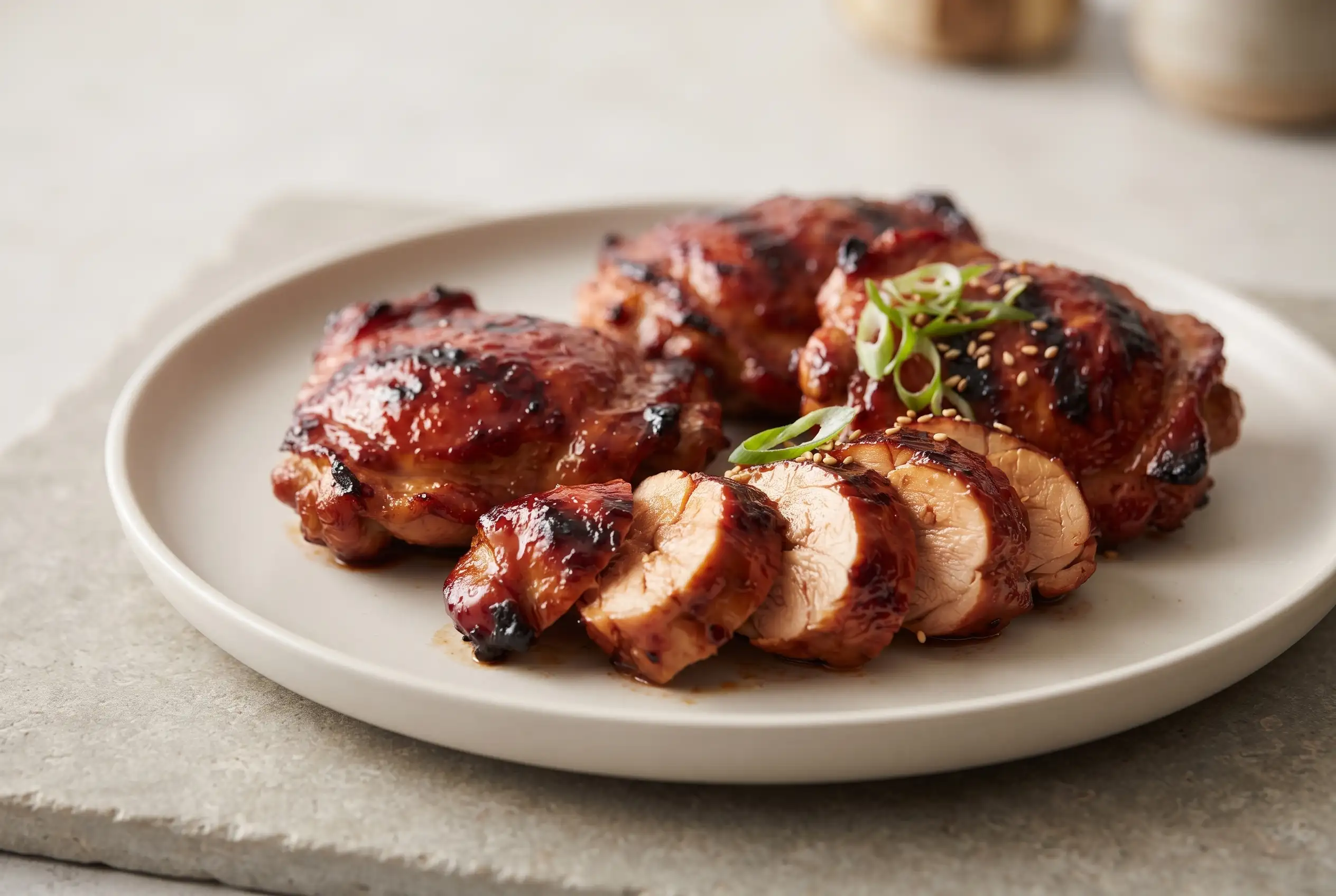
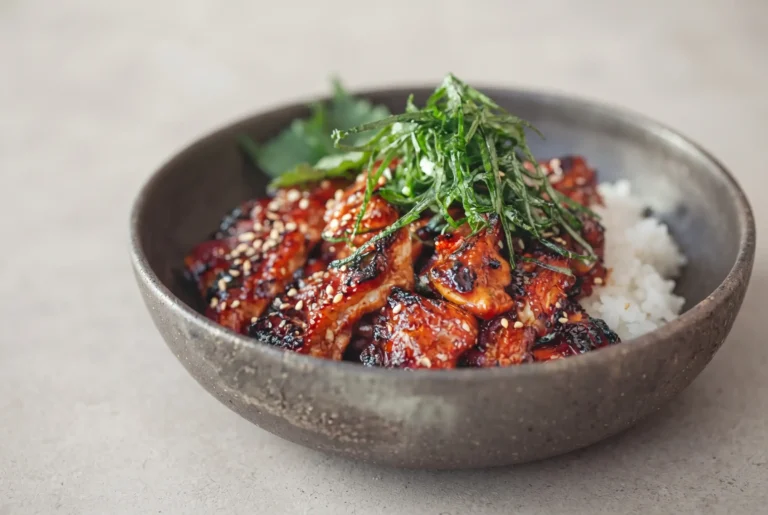
Char Siu Chicken brings Cantonese-inspired barbecue flavor into a home kitchen with tender chicken thighs, a glossy mahogany coating, and a deeply savory-sweet finish. The dish centers on a carefully balanced marinade of hoisin sauce, soy sauce, honey, oyster sauce, garlic, rice vinegar, sesame oil, and Chinese five-spice powder. After the chicken absorbs those flavors, controlled roasting and a concentrated glaze create the sticky surface associated with premium Chinese bbq chicken thighs.
The appeal of this char siu chicken recipe comes from contrast. The inside remains juicy from the thigh meat, while the outside develops caramelized edges through a short high-heat finishing stage. A reduced glaze gives the finished chicken its signature shine and helps every slice carry the aromatic flavors built during marination.
Char Siu Chicken Creates a Glossy Cantonese-Inspired Finish
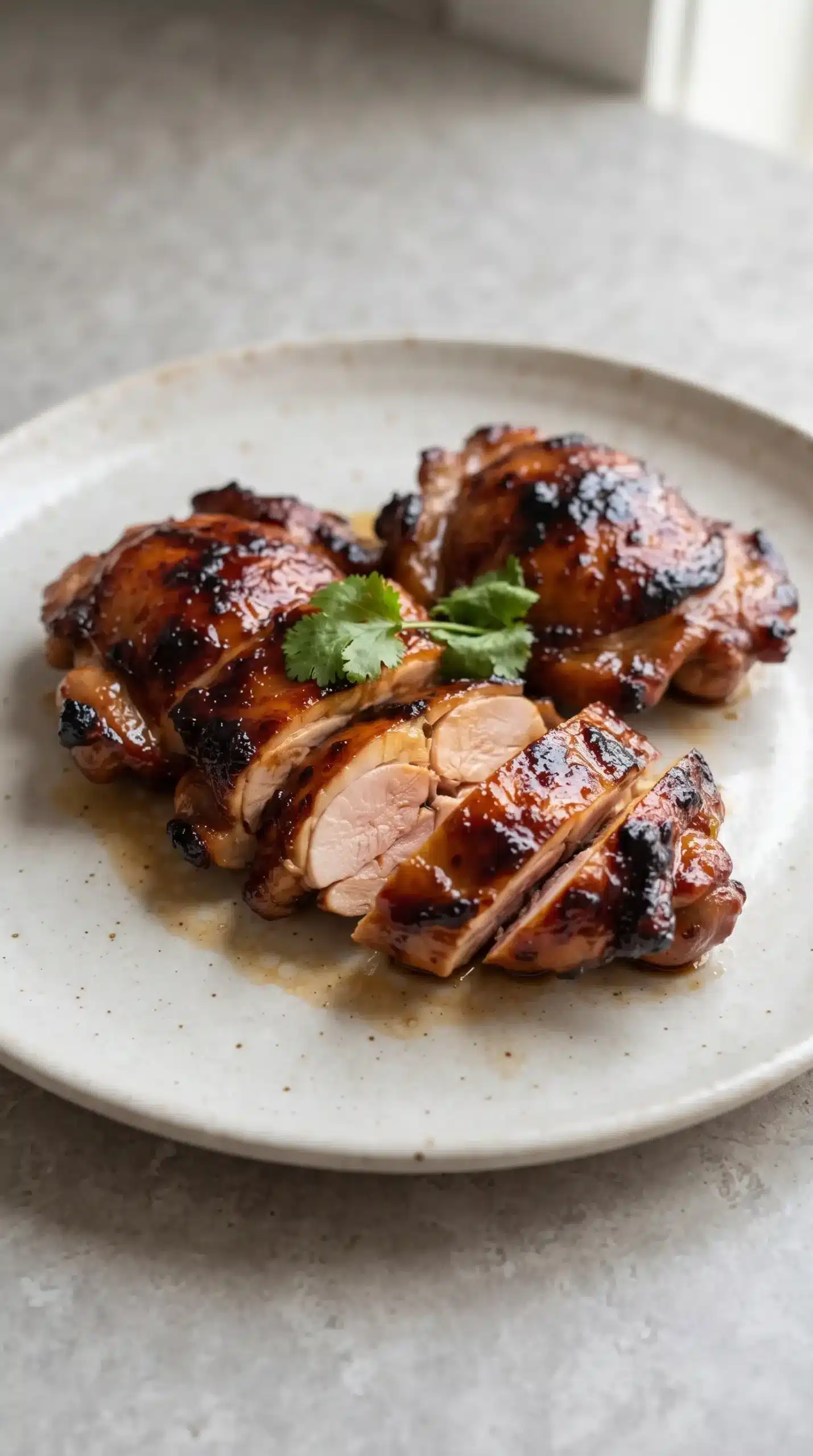
The defining feature of Char Siu Chicken is the lacquered exterior created by the combination of honey, hoisin sauce, and careful heat control. Instead of relying on a thin coating applied only at serving, the chicken develops flavor in layers: the marinade seasons the meat, roasting cooks it evenly, and the sticky char siu glaze creates the final surface.
Chicken thighs are especially suited to this preparation because their texture supports longer exposure to heat without losing tenderness. The meat holds the rich flavors of the marinade while providing enough moisture to balance the concentrated sweetness of the glaze.
The Marinade Balance Shapes the Char Siu Flavor
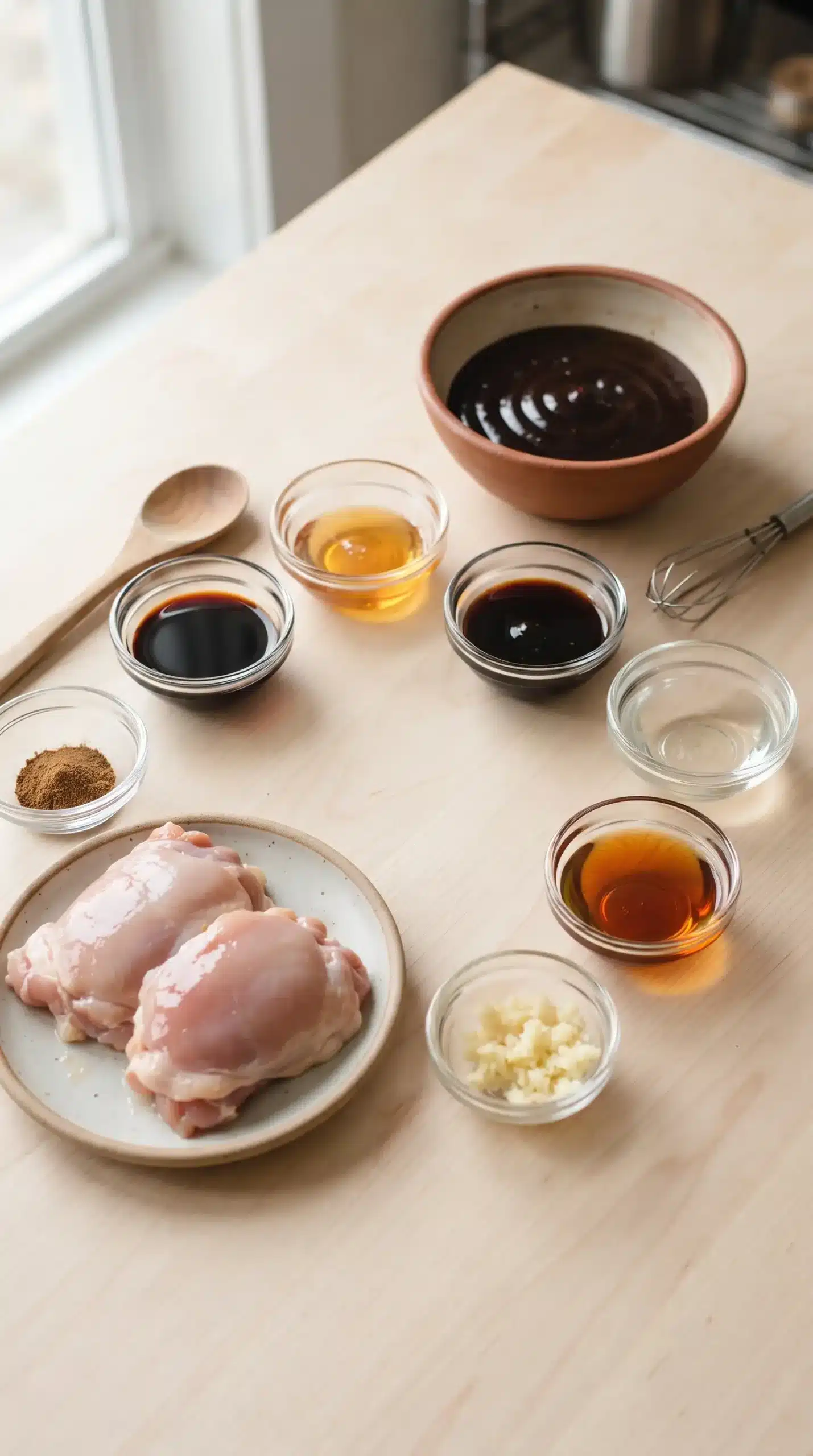
The marinade works because each element contributes to the overall profile without overpowering the others. Hoisin sauce supplies a rich base, soy sauce builds savory depth, honey encourages browning, and oyster sauce adds another layer of umami. Rice vinegar keeps the mixture balanced while garlic and five-spice powder create the aromatic character expected from char siu-style cooking. A balanced blend of soy sauce, aromatics, and seasonings can transform chicken into a deeply flavored meal, as shown with this Chicken Bulgogi Recipe.
- Sweet foundation: Honey and hoisin sauce support the caramelized exterior.
- Savory structure: Soy sauce and oyster sauce create depth throughout the chicken.
- Aromatic finish: Garlic, sesame oil, and five-spice powder provide a distinctive fragrance.
Allowing the chicken to sit in the marinade gives the flavors time to move across the surface and develop a more complete taste. The reserved portion of marinade becomes a separate finishing sauce after reduction, creating a thicker coating that clings to the cooked meat.
Five-Spice and Hoisin Define the Ingredient Decisions
The most important ingredient choices in this preparation focus on building a glaze that is flavorful, glossy, and stable during roasting. Five-spice powder is especially important because its warm aromatic notes prevent the sweetness from becoming one-dimensional.
Hoisin sauce provides the recognizable barbecue-style character, while honey supports the darkened exterior created during broiling. The combination works with chicken thighs because the rich sauce complements the natural texture of the meat.
| Ingredient focus | Role in the dish | Cooking effect |
|---|---|---|
| Hoisin sauce | Creates a sweet savory base | Helps form the sticky outer coating |
| Honey | Adds sweetness | Supports caramelization during finishing heat |
| Five-spice powder | Builds aromatic complexity | Balances the rich glaze profile |
Marinating Time Controls Color and Flavor Depth
The chicken absorbs the strongest characteristics of the marinade during the resting period. A shorter marination develops surface flavor, while a longer resting period allows the seasoning to create deeper color and a more pronounced char siu profile.
Sealing the chicken tightly helps maintain contact between the marinade and the meat. Removing excess air from the bag increases surface coverage, allowing the sauce mixture to coat more evenly before cooking begins.
Roasting Technique Protects Tender Chicken Texture
Controlled roasting is central to the success of this dish. Cooking the thighs at a moderate oven temperature allows the meat to reach a safe internal temperature while giving the exterior time to develop without immediately burning the sugars in the marinade.
Checking the chicken with a thermometer provides a reliable finish point, and the thighs should reach a 165°F internal temperature before serving to confirm they are safely cooked.
Spacing the chicken pieces on the baking sheet also matters. Proper separation allows hot air to circulate around each piece, helping the surface cook consistently and preparing the chicken for the glaze stage.
The reserved marinade is reduced separately while the chicken roasts. Simmering concentrates the sauce until it becomes thick enough to coat the back of a spoon, producing the texture needed for a true sticky char siu glaze.
Common Char Siu Chicken Mistakes That Reduce the Glaze Quality
Small handling mistakes can affect the appearance and texture of the finished chicken. The most common issues involve sugar control, glaze preparation, and slicing too soon after cooking.
| Problem | Visible sign | Better approach |
|---|---|---|
| Glaze darkens too quickly | Exterior browns before the chicken is ready | Move the tray lower during finishing heat |
| Thin finishing sauce | Coating slides off the meat | Reduce the reserved marinade until thickened |
| Immediate slicing | Juices escape from the chicken | Rest before cutting against the grain |
Using marinade that touched raw chicken without proper cooking creates another avoidable problem. The reserved portion should remain separate and should be simmered before it becomes a finishing glaze.
Broiling Creates the Signature Sticky Char Siu Glaze
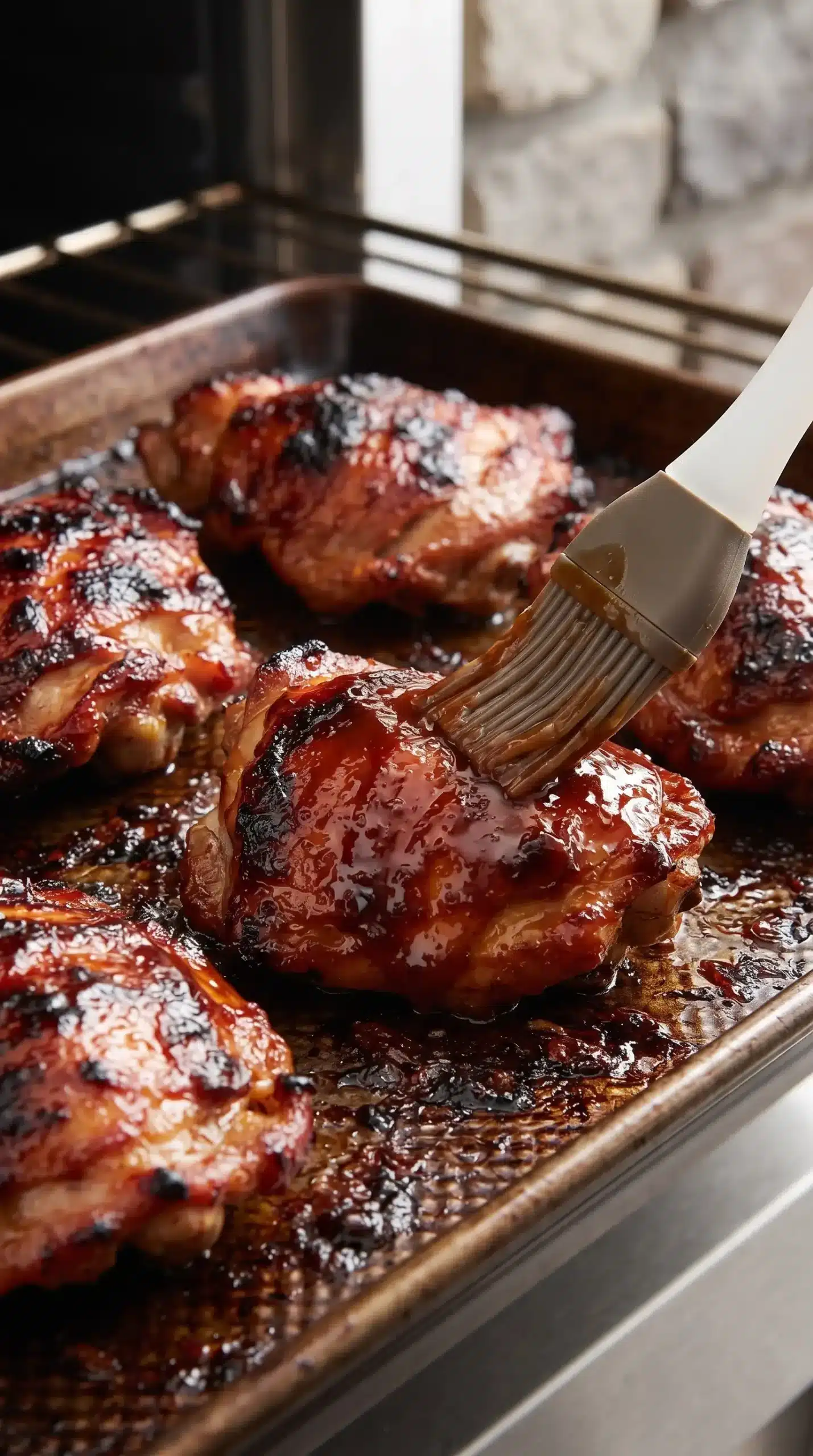
The broiler stage changes the chicken from a roasted dish into a char siu-style preparation. Once the reduced glaze is brushed over the meat, intense top heat encourages the sugars from honey and hoisin sauce to bubble and create darkened lacquered edges.
Watching closely during this stage is essential because the same sugars that create beautiful caramelization can darken quickly. The goal is a glossy surface with controlled char, not a burnt coating.
Slicing and Resting Improve Every Serving
Resting the chicken after broiling allows internal juices to redistribute through the meat. Cutting immediately can release moisture before it has a chance to settle, affecting the tenderness of each portion.
Slicing against the grain shortens the muscle fibers and creates a more pleasant bite. The glossy exterior remains visible across each slice, highlighting the contrast between the caramelized outside and tender center.
Char Siu Chicken Variations Expand the Serving Style
The core flavor profile can be adjusted while keeping the same marinade foundation. Different cooking approaches change the character of the finished dish without removing the sweet-savory identity.
- Grilled option: Use indirect charcoal heat for a smoky version with additional wood-fired flavor.
- Spicy adjustment: Add chili oil or Szechuan peppercorns for extra heat and complexity.
- Air fryer approach: Cook marinated thighs with glaze added near the end of cooking for a faster method.
Storage Choices Preserve Leftover Char Siu Chicken
Cooked chicken keeps its quality when stored in an airtight container and protected from moisture loss. The glaze becomes thicker after chilling, helping maintain the rich coating around the meat.
For longer storage, freezing the chicken with extra glaze helps protect the texture. Gentle reheating restores the sticky surface more effectively than aggressive heating methods.
Char Siu Chicken Delivers Restaurant-Style Results Through Glaze Control
Char Siu Chicken succeeds when the marinade, roasting temperature, and finishing glaze work together. The chicken thighs provide a tender foundation, while the reduced sauce and broiling stage create the glossy exterior that defines the dish.
The most important cooking judgment is protecting the balance between sweetness and heat. Careful glaze reduction and close attention during broiling transform simple chicken thighs into a richly colored Cantonese-inspired meal.
Questions About Glaze and Char Siu Chicken Preparation
What makes the glaze sticky on Char Siu Chicken?
The sticky texture comes from reducing the reserved marinade until its sugars and savory ingredients concentrate. Honey and hoisin sauce help create the glossy coating that clings to the chicken during the broiling stage.
Can chicken breasts replace thighs in this preparation?
Chicken breasts can be used, but they contain less fat than thighs and require closer attention during cooking. Adjusting the cooking time helps prevent a dry texture while still reaching a safe internal temperature.
Why should the reserved marinade be cooked before glazing?
The reserved marinade must be simmered before use because it was prepared alongside raw chicken. Cooking it also reduces excess moisture and creates the thick consistency needed for the finishing glaze.
How does resting improve sliced Char Siu Chicken?
Resting gives the juices inside the chicken time to redistribute. This helps maintain tenderness when the meat is sliced and keeps each piece moist after serving.
Char Siu Chicken with Buttery Glaze and Hoisin Sauce
Ingredients
Method
- Whisk hoisin sauce, soy sauce, honey, oyster sauce, rice vinegar, garlic, Chinese five-spice powder, and toasted sesame oil until the marinade is evenly combined.
- Place the chicken thighs in a resealable bag and coat with half of the marinade, reserving the remaining marinade separately for the glaze.
- Seal the bag and refrigerate the chicken for at least 2 hours or up to 24 hours to marinate.
- Preheat the oven to 375°F / 190°C and prepare a rimmed baking sheet with parchment paper or a silicone mat.
- Arrange the marinated chicken thighs in a single layer on the prepared baking sheet and bake for about 25 minutes, until the internal temperature reaches 165°F / 74°C.
- Simmer the reserved marinade in a saucepan over medium heat for 8–10 minutes until it thickens enough to coat the back of a spoon.
- Brush the reduced glaze over the roasted chicken thighs and broil for 2–4 minutes until the glaze bubbles and the edges caramelize.
- Rest the chicken for 5 minutes, then slice it against the grain before serving.