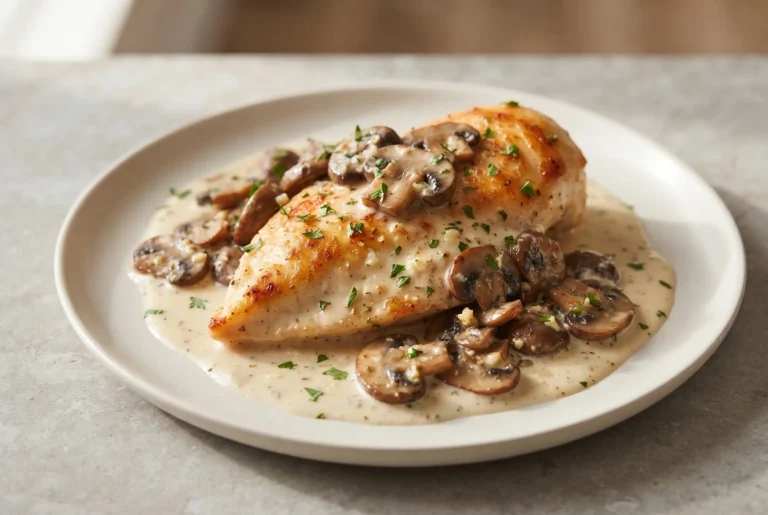
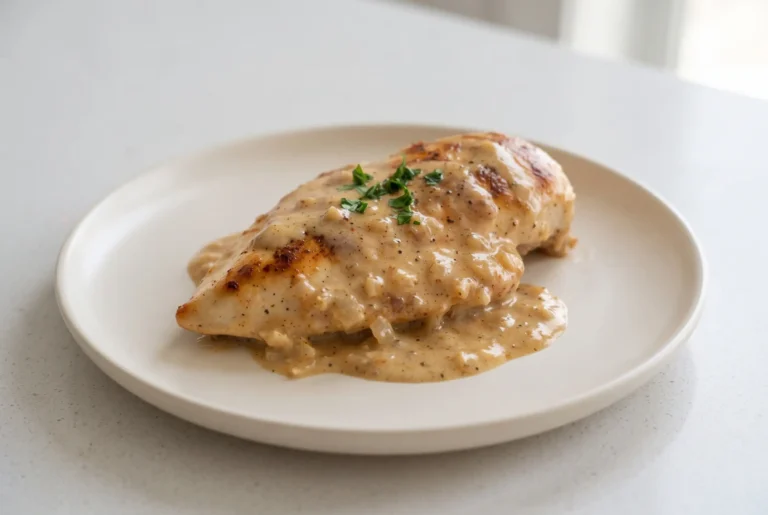
Baked Cream Cheese Chicken with Parmesan and Mozzarella
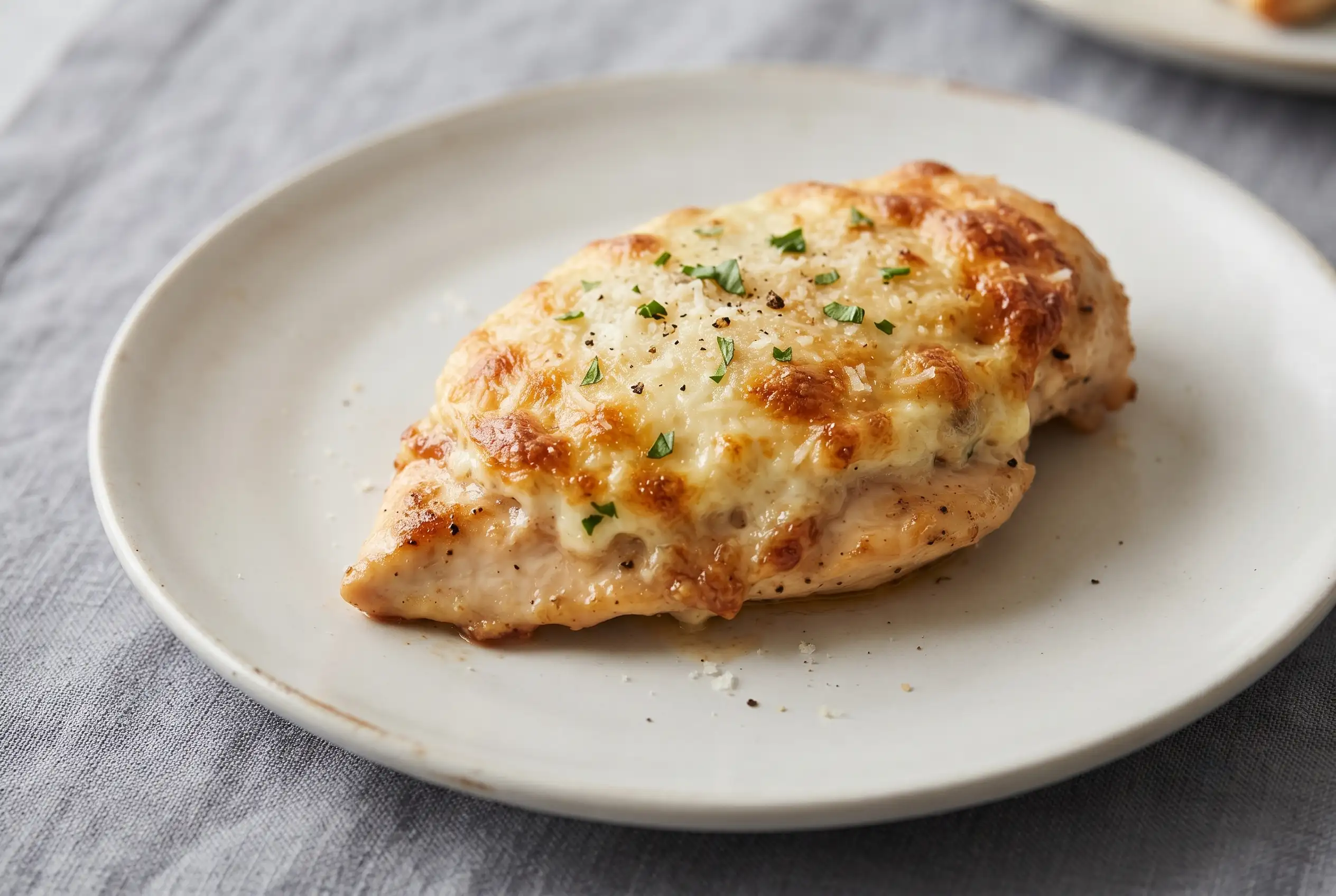
Baked Cream Cheese Chicken brings together lean poultry, a rich cheese topping, and a broth-supported oven finish to create a deeply comforting dinner with a smooth interior and golden surface. The dish centers on chicken cutlets covered with softened cream cheese blended with Parmesan, mozzarella, and seasonings before the oven develops a bubbling crust.
Careful layering gives this baked cream cheese chicken its signature texture. A broth-lined baking dish helps maintain moisture around the chicken while the cheese layer shields the upper surface from direct heat, creating a balanced result that feels indulgent without requiring complicated preparation.
Baked Cream Cheese Chicken Creates a Moist Cheese-Crust Finish
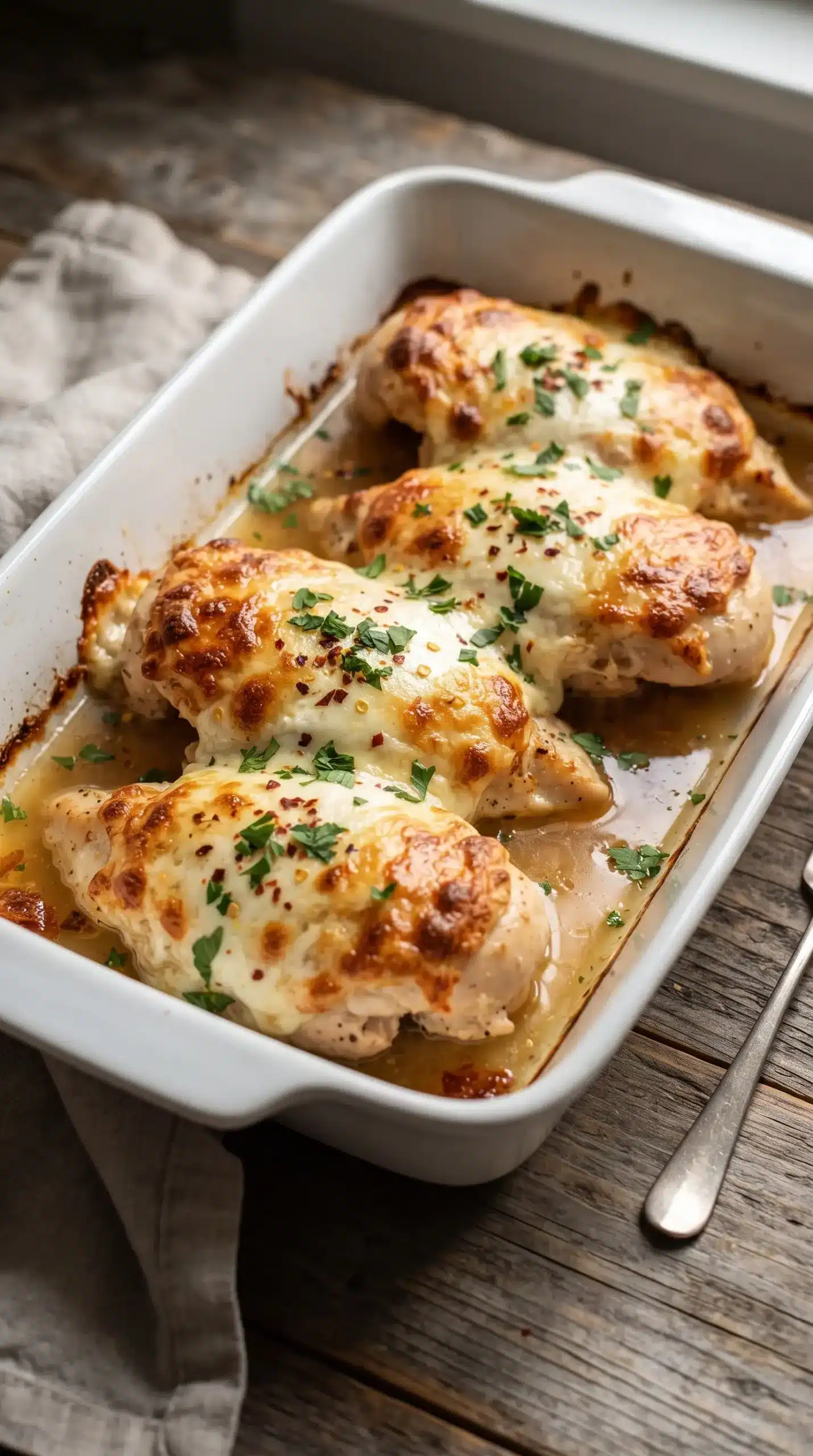
Chicken breasts can lose moisture during oven cooking because they contain less fat than darker cuts. Careful temperature control and proper resting are essential when preparing baked chicken breast, and the combination of a humid baking environment and a dense cheese topping changes how heat moves through the dish, helping the meat stay tender while the topping develops savory depth.
During baking, the cream cheese mixture forms a protective layer across each cutlet. Parmesan contributes a sharper flavor, mozzarella supports the melted texture, and the seasoned cream cheese creates the creamy foundation that defines the finished dish.
Meanwhile, the broth beneath the chicken supports the cooking environment without washing away the cheese topping. Keeping the liquid below the crust allows the surface to remain concentrated and golden as the dish moves through its oven stages.
Cream Cheese Chicken Recipe Balances Richness and Texture
Many creamy chicken dishes rely on a sauce added after cooking, but this cream cheese chicken recipe builds its texture directly on the poultry during baking. The cheese mixture becomes part of the dish structure, creating a coating that stays connected to each portion when served.
| Element | Cooking role | Finished effect |
|---|---|---|
| Cream cheese | Creates the rich topping base | Produces a smooth, creamy layer |
| Parmesan and mozzarella | Support flavor and melting qualities | Build a savory golden crust |
| Chicken broth | Maintains moisture around the meat | Helps protect tender chicken texture |
Balanced seasoning keeps the richness focused. Garlic powder and onion powder add aromatic depth, while salt and cracked black pepper sharpen the dairy flavors without overpowering the chicken.
Softened Dairy and Broth Shape the Chicken’s Results
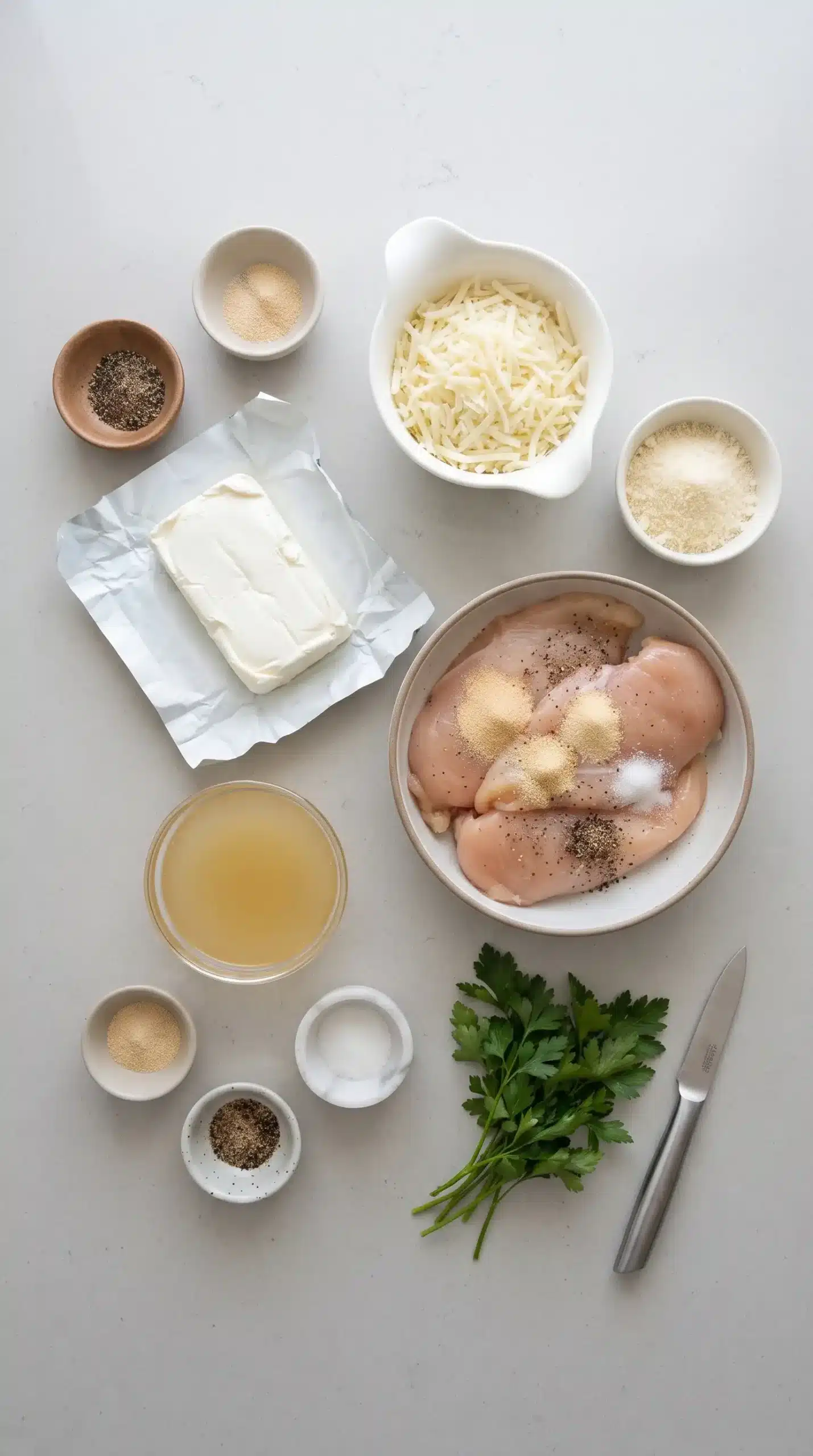
Room-temperature cream cheese is one of the most important ingredient decisions for this dish. Softened dairy blends smoothly with the grated and shredded cheeses, allowing the topping to spread evenly across the chicken.
Low-sodium chicken broth also has a practical purpose beyond adding moisture. As the liquid reduces during baking, starting with controlled seasoning helps prevent the surrounding flavors from becoming overly salty.
- Soft cheese texture: Fully softened cream cheese creates a smoother blend that coats the chicken evenly.
- Balanced liquid: Broth placed beneath the topping supports moisture while protecting the crust structure.
- Even chicken pieces: Uniform cutlets cook more consistently and help each serving reach the proper doneness together.
Oven Controls Protect the Creamy Baked Chicken Breast
Heat management determines how the creamy baked chicken breast develops from covered baking to its browned finish. The initial covered stage allows gentle cooking in the broth-supported environment before the uncovered stage concentrates the cheese topping.
Removing the foil at the correct point gives the surface access to direct oven heat. The cheese can bubble and develop golden coloration while the chicken continues cooking until it reaches the required internal temperature.
Resting after baking also matters because the hot juices settle before serving. A short pause helps maintain the structure of the chicken and keeps the cheese topping attached instead of sliding away immediately.
Cheese Crust Mistakes Can Ruin Baked Cream Cheese Chicken
Several avoidable errors can change the texture of baked cream cheese chicken. Pouring broth over the cheese layer is one of the biggest problems because the liquid can disturb the seasoning and prevent the topping from forming its intended surface.
Another common issue comes from using cold cream cheese. Firm dairy does not combine easily with the other cheeses, leaving uneven pockets that make spreading difficult and reduce the smooth appearance of the finished topping.
Uneven chicken thickness creates another challenge. Thicker sections require more cooking time while thinner areas may finish earlier, making uniform cutlets an important preparation choice for consistent results.
Serving Choices Complete the Cheesy Baked Chicken Plate
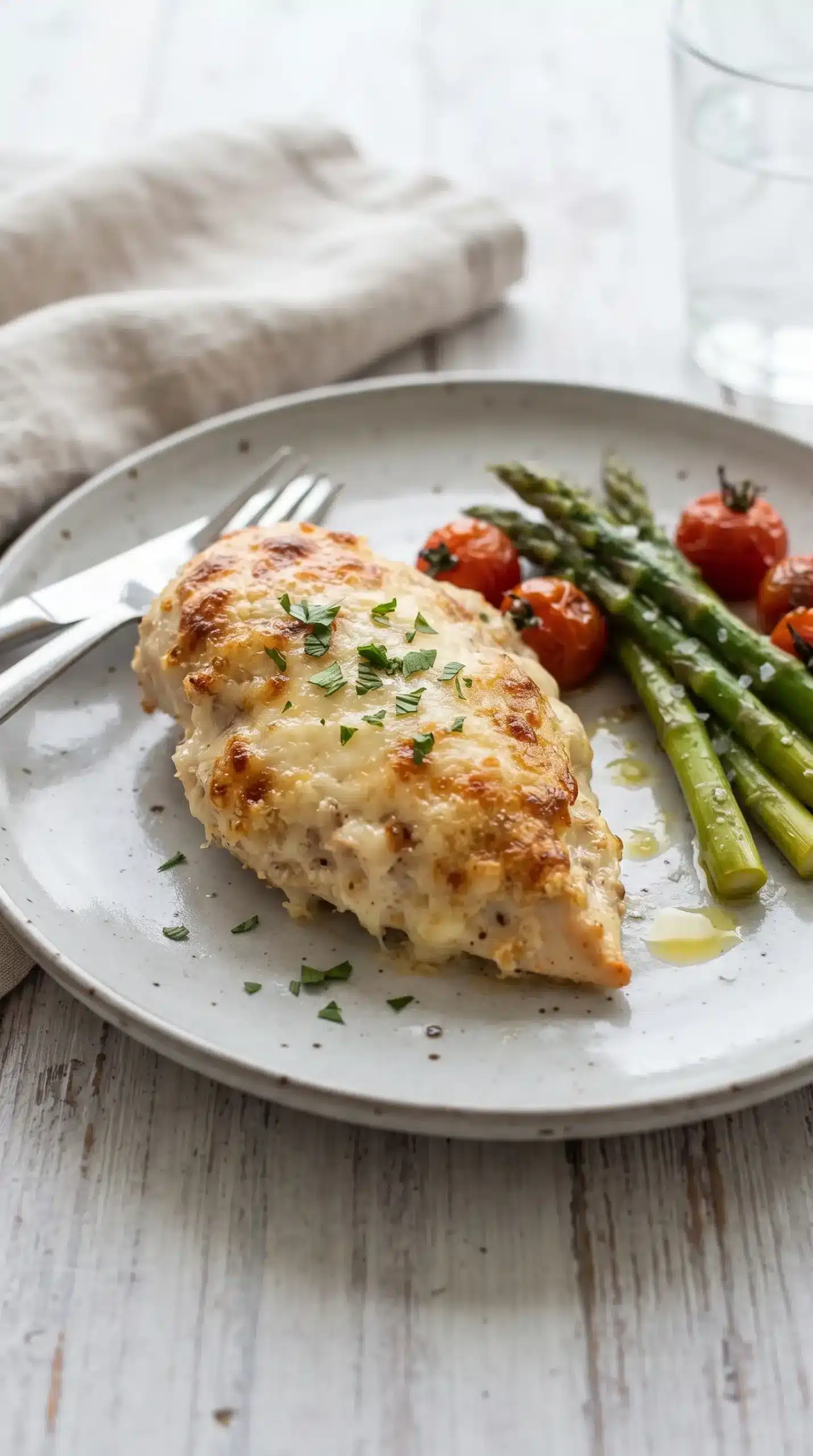
Fresh parsley provides an optional finishing touch after the oven work is complete. The bright green garnish adds contrast against the creamy golden surface and gives the finished plate a cleaner appearance.
Cheesy baked chicken works especially well when served with sides that complement its rich texture. Simple vegetables, grains, or other lighter accompaniments can provide balance alongside the creamy topping and tender poultry.
Variations Keep Cream Cheese Chicken Recipe Flexible
Small adjustments can create different versions while keeping the core structure of the cream cheese chicken recipe intact. The cheese topping provides enough flexibility for additional flavors without changing the main baking approach.
| Variation | Added ingredient | Flavor direction |
|---|---|---|
| Spinach artichoke style | Chopped spinach and artichoke hearts | Creates a vegetable-forward creamy profile |
| Smoky version | Smoked paprika or chipotle powder | Adds deeper Southwestern notes |
| Dark meat option | Boneless skinless chicken thighs | Provides a more succulent texture |
Alternative cuts may require adjustments during baking because chicken thighs contain different fat levels than breast meat. Monitoring doneness remains important when changing the poultry used in the dish.
Storage Habits Preserve Baked Cream Cheese Chicken Quality
Proper storage helps maintain the creamy topping after the meal. Refrigerating portions in an airtight container keeps the chicken protected, while gentle reheating helps restore the softer texture of the cheese layer.
Oven reheating with a small amount of broth can help refresh the sauce-like consistency around the chicken. A slower approach is useful because intense heat can affect the texture of dairy-based toppings.
Pairings Bring Balance to the Rich Chicken Dish
Lighter side dishes can create contrast with the richness of the cheese topping. Fresh vegetables or simple accompaniments allow the savory chicken to remain the centerpiece while keeping the plate balanced.
Texture also influences the overall meal experience. A creamy main dish benefits from sides that introduce different qualities, giving each bite more variety without competing with the seasoned chicken.
Broth Placement Defines the Bake’s Moisture Control
Liquid placement separates this preparation from a simple covered chicken bake. The broth belongs at the base of the dish, where it can create a moist cooking environment while leaving the cheese layer untouched.
Keeping the topping above the liquid allows the surface to develop the browned appearance associated with a baked cheese crust. The contrast between the moist chicken and the concentrated top layer is central to the finished texture.
Cream Cheese Chicken Recipe Delivers Reliable Comfort
The structure of this cream cheese chicken recipe comes from a small number of deliberate choices: softened cheese, even chicken portions, controlled broth placement, and a staged oven finish. Each choice supports the next part of the cooking process.
Unlike a preparation that depends on last-minute sauce work, the flavor develops while the chicken and topping bake together. The result is a dependable one-pan meal built around creamy texture and savory depth.
Baked Cream Cheese Chicken Shows How Moisture Creates Flavor
Baked Cream Cheese Chicken succeeds because the chicken remains supported by moisture while the cheese topping provides richness and a browned finish. The combination of broth, seasoned dairy, and careful heat control creates a dish where tenderness and texture depend on the same preparation decisions.
Chicken cutlets, when covered with the balanced cheese mixture and finished correctly in the oven, create a comforting meal that demonstrates how simple ingredients can produce a layered result. The creamy crust and juicy center define the dish’s lasting appeal.
Common Temperature Concerns About Baked Cream Cheese Chicken Questions
How can I check the chicken temperature accurately?
A digital instant-read thermometer provides the most reliable check. The chicken should reach 165°F internally, with the thermometer placed into the thickest area of the meat for the most accurate reading.
Why does the cheese topping need softened cream cheese?
Softened cream cheese blends more evenly with Parmesan, mozzarella, and seasonings. When the dairy begins at room temperature, the topping spreads smoothly across the chicken instead of leaving firm pieces behind.
Can I use chicken thighs instead of breasts?
Boneless, skinless chicken thighs can replace the breasts for a more succulent version. The higher fat content may require additional baking time so the chicken finishes properly.
What happens if broth touches the cheese topping?
Broth poured over the topping can thin the cheese layer and disturb the seasoned surface. Keeping the liquid beneath the chicken helps preserve the crust that forms during baking.
How should leftovers be reheated without drying them out?
Gentle oven reheating with a small splash of broth helps maintain the creamy texture. Strong microwave heating may cause the dairy topping to separate more easily.
Baked Cream Cheese Chicken with Parmesan and Mozzarella
Ingredients
Method
- Preheat the oven to 375°F / 190°C and lightly coat a 9x13-inch baking dish with the olive oil.
- Mix the softened cream cheese with Parmesan, mozzarella, garlic powder, onion powder, sea salt, and black pepper until evenly combined.
- Place the chicken cutlets in a single layer in the prepared baking dish, then spread the cream cheese mixture over each piece.
- Add the chicken broth to the bottom of the dish around the chicken, keeping it away from the cheese topping.
- Cover the baking dish tightly with aluminum foil and bake for 25 minutes.
- Remove the foil and bake for an additional 10–15 minutes, until the cheese is bubbling and golden and the chicken reaches 165°F / 74°C internally.
- Allow the baked chicken to rest for 5 minutes, then finish with chopped parsley and serve.