Pumpkin Chocolate Chip Cookies Chewy Browned Butter Recipe
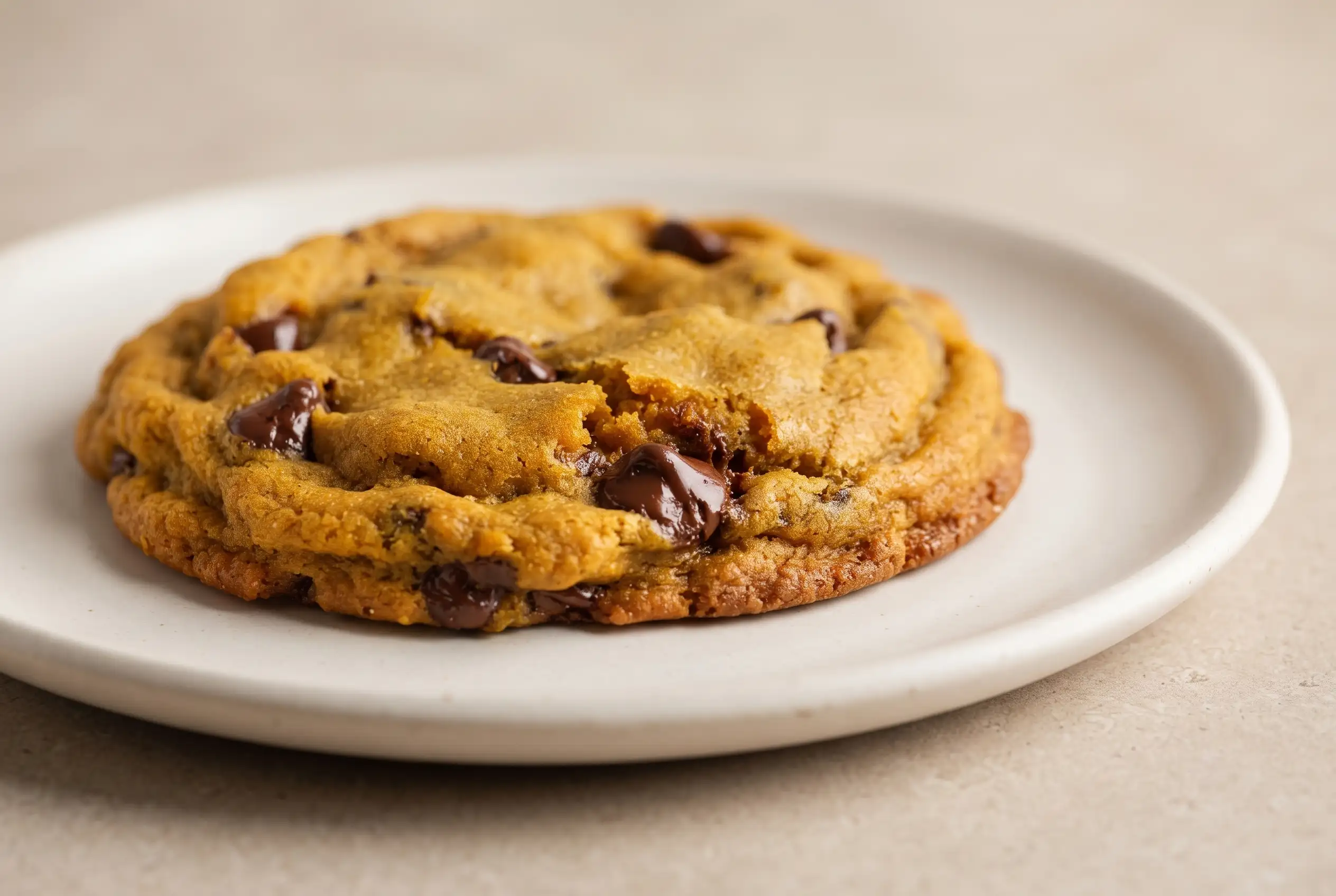
Pumpkin chocolate chip cookies bring together the warmth of pumpkin spice, the richness of browned butter, and the satisfying texture of a bakery-style cookie. Unlike many pumpkin cookies that become soft and cake-like from excess moisture, this approach focuses on concentrating the pumpkin and building a dense, chewy center with crisp, set edges. The result is a cookie with deep autumn flavor, melted chocolate pockets, and a balanced bite.
The key decisions behind these chewy pumpkin chocolate chip cookies come from controlling moisture and fat at the right stages. Reduced pumpkin puree prevents extra steam during baking, while browned butter contributes a nutty depth that complements the pumpkin’s earthy sweetness. Each technique supports a cookie texture that stays rich and substantial.
Pumpkin Chocolate Chip Cookies Deliver a Chewy Autumn Texture
The character of these cookies comes from a careful balance between concentrated pumpkin flavor and a firm dough structure. Pumpkin naturally contains water, and managing that moisture changes how the cookie sets in the oven. Removing excess liquid allows the dough to develop a thicker, more concentrated texture.
Browned butter creates another layer of complexity by adding toasted, nutty notes from the butter solids. The combination of caramel-like butter flavors, pumpkin spice, and chocolate creates a dessert profile that feels more refined than a standard seasonal cookie.
Egg yolks also play an important role in maintaining a fudgy texture. Using yolks without egg whites limits additional moisture while supporting a rich dough that bakes into chewy pumpkin chocolate chip cookies with a soft interior.
Moisture Control Defines the Pumpkin Chocolate Chip Cookies Recipe
Pumpkin preparation is the most important factor separating a dense cookie from a cakey one. The puree must be reduced from 2/3 cup to about 1/3 cup by blotting away excess water, a process similar to concentrating pumpkin puree to improve its baking performance. This concentrates the pumpkin while preventing too much steam from forming inside the cookie.
| Preparation choice | Cookie result | Reason it matters |
|---|---|---|
| Reduced pumpkin puree | Dense and chewy texture | Less water creates less steam during baking |
| Untreated pumpkin puree | Softer, more cake-like crumb | Extra moisture changes the structure |
| Egg yolks only | Rich, fudgy bite | Limits additional water from egg whites |
The texture improvement comes from concentrating what remains in the pumpkin instead of adding more dry ingredients to compensate. A thicker puree blends into the dough while keeping the seasonal flavor clear.
Browned Butter and Pumpkin Concentrate Shape the Flavor
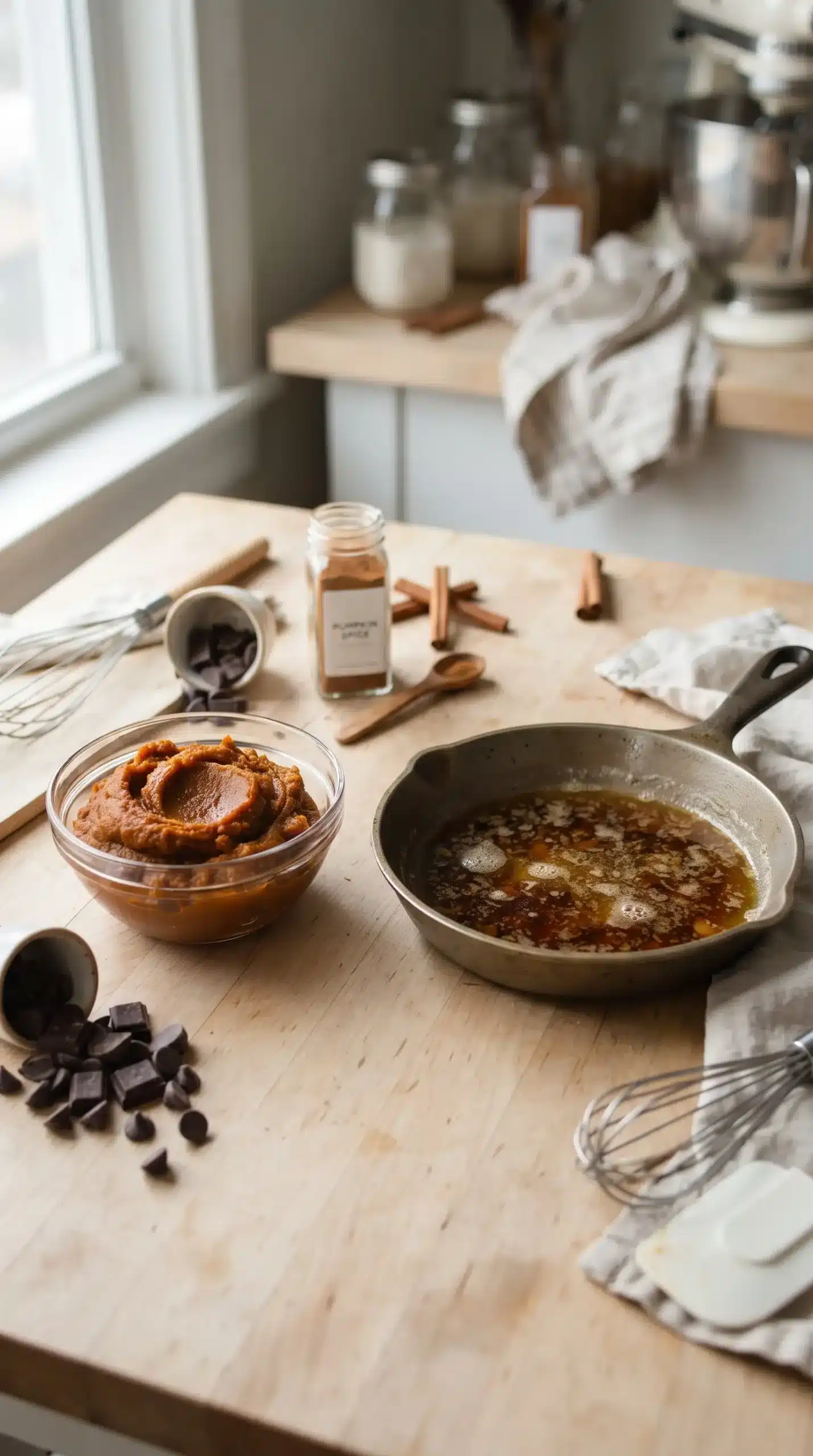
Butter browning creates the signature flavor foundation for the dough. Heating butter until the solids become amber develops toasted aromas that add a subtle toffee character. Cooling the browned butter until it becomes soft and workable allows it to cream properly with the sugars.
Pumpkin puree contributes moisture, color, and autumn character after it has been concentrated. The reduced puree works alongside pumpkin pie spice, creating a warm flavor profile without overwhelming the chocolate component.
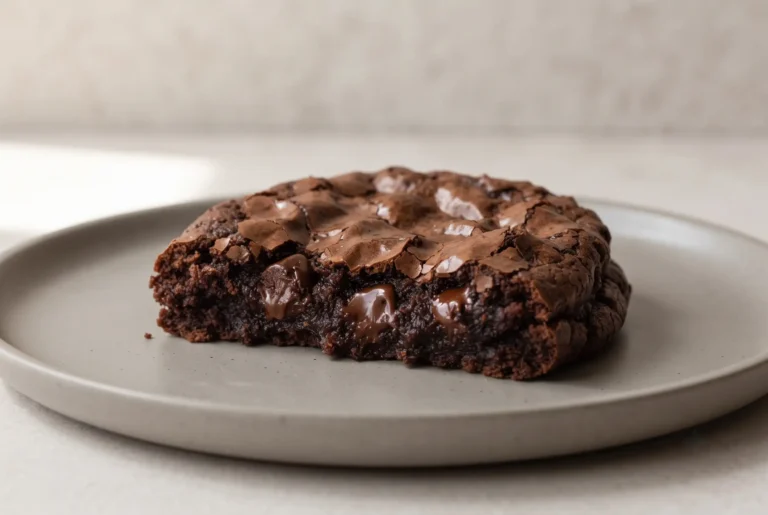
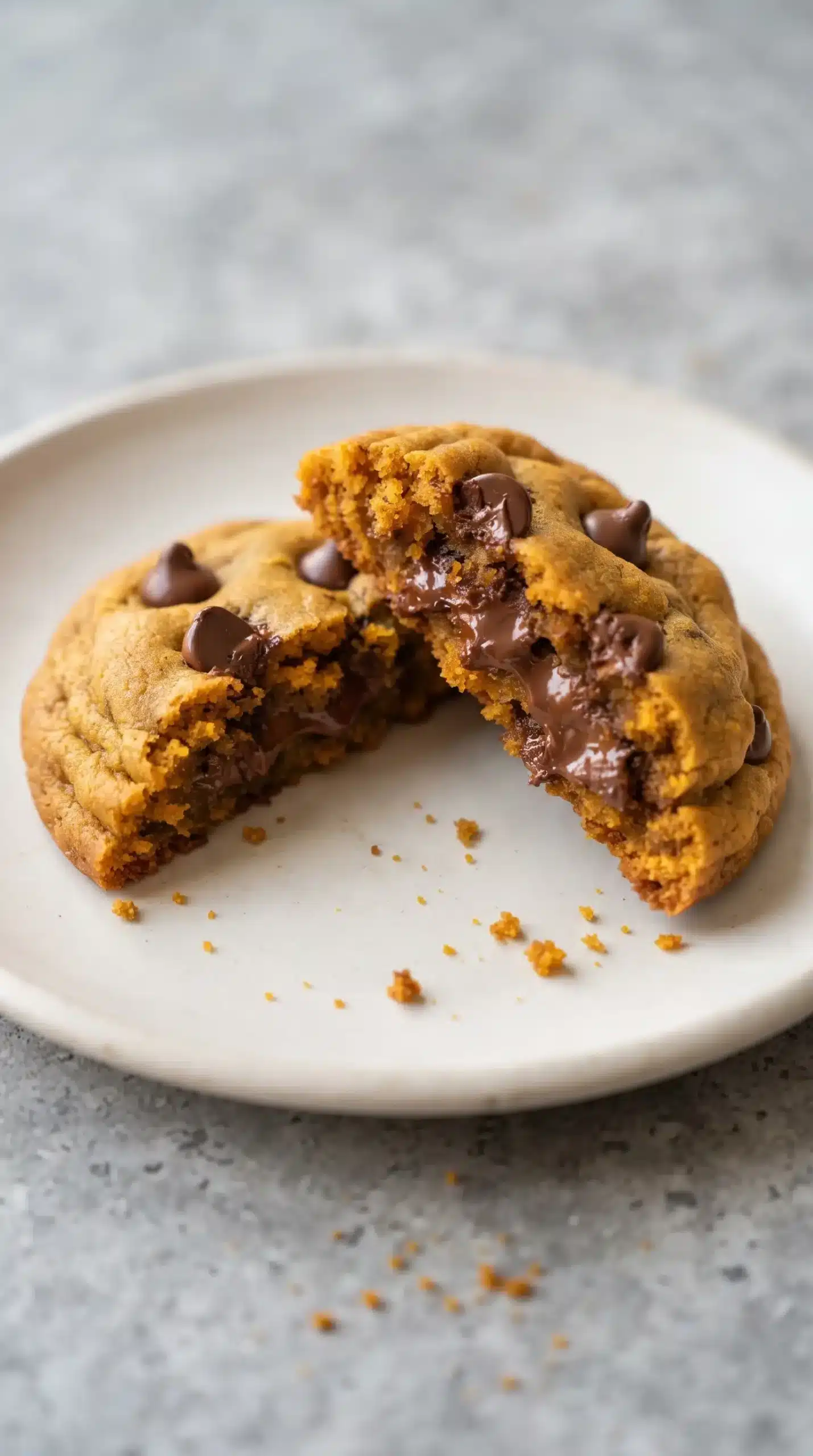
Semi-sweet chocolate chips or chopped dark chocolate complete the cookie’s flavor structure. Chopped chocolate can create broader melted pockets throughout the cookie, adding a more dramatic chocolate experience with each bite.
Chocolate and Spice Choices Refine Bakery Style Pumpkin Cookies
The chocolate selection influences both appearance and texture. Semi-sweet chips provide familiar chocolate pieces, while chopped dark chocolate creates irregular pools that spread through the dough during baking. Bakers who enjoy a more pronounced chocolate presence can explore bakery style chocolate chip cookies to compare how chocolate quantity and distribution shape the final bite. The choice depends on whether you prefer distinct bites or melted chocolate layers.
- Espresso addition: A small amount of espresso powder can emphasize darker chocolate notes.
- White chocolate pairing: White chocolate with toasted pecans creates a sweeter, nutty variation.
- Dark chocolate option: Seventy percent cocoa chocolate with smoked paprika creates a deeper autumn profile.
Pumpkin pie spice keeps the flavor connected to the season, while optional variations allow the chocolate and spice balance to move in different directions without changing the cookie structure.
A Stable Dough Creates Better Cookie Structure
The dough texture depends on creating a strong emulsion before adding flour. Creaming cooled browned butter with granulated and brown sugars helps form a smooth base that can hold the concentrated pumpkin, yolks, and vanilla evenly.
Flour, baking soda, and salt are incorporated after the wet mixture becomes uniform. Sifted flour helps distribute the dry ingredients more evenly, reducing the chance of dense pockets of flour in the finished cookies.
Once the dough forms, the chocolate should be folded in gently. Overworking the mixture after flour is added can affect the tender texture that makes these cookies distinctive.
Baking Control Preserves Soft Centers and Chewy Edges
Temperature and timing determine when the cookie structure sets. Baking at 350°F (180°C) allows the edges to become firm while the centers remain slightly soft. The cookies continue settling after leaving the oven as the sugars and structure finish setting.
The cooling period on the baking sheet is an important part of the texture. Moving the cookies too quickly can disturb the soft interior before it develops its finished chewy consistency.
Common Pumpkin Chocolate Chip Cookies Mistakes to Avoid
Small preparation errors can change the balance between a bakery-style cookie and a soft, cakey result. These common issues are directly connected to moisture, butter condition, and baking decisions.
- Skipping pumpkin reduction: Extra water from the puree can create a puffier, cake-like texture.
- Using liquid browned butter: Warm melted butter can make the dough spread too much before it sets.
- Adding whole eggs: Egg whites introduce additional moisture that works against the chewy structure.
- Overbaking centers: Waiting for the middle to look completely firm can remove the soft texture that develops during cooling.
Correcting these problems starts with observing the dough before baking. The pumpkin should be concentrated, the butter should be soft but not liquid, and the baked cookies should retain slightly soft centers when removed from the oven.
Storage Methods Keep Chocolate Pockets Enjoyable
Proper storage helps maintain the texture of pumpkin chocolate chip cookies after baking. An airtight container keeps them enjoyable at room temperature for 2–3 days while protecting the chewy center.
Raw dough balls can also be frozen and baked later. Frozen dough can go directly into the oven with additional baking time, making it easier to prepare fresh cookies when needed.
A short microwave reheat can restore the melted chocolate texture. About 10 seconds is enough to soften the chocolate pockets and bring back a freshly baked feel.
Serving Details Highlight the Dense Cookie Texture
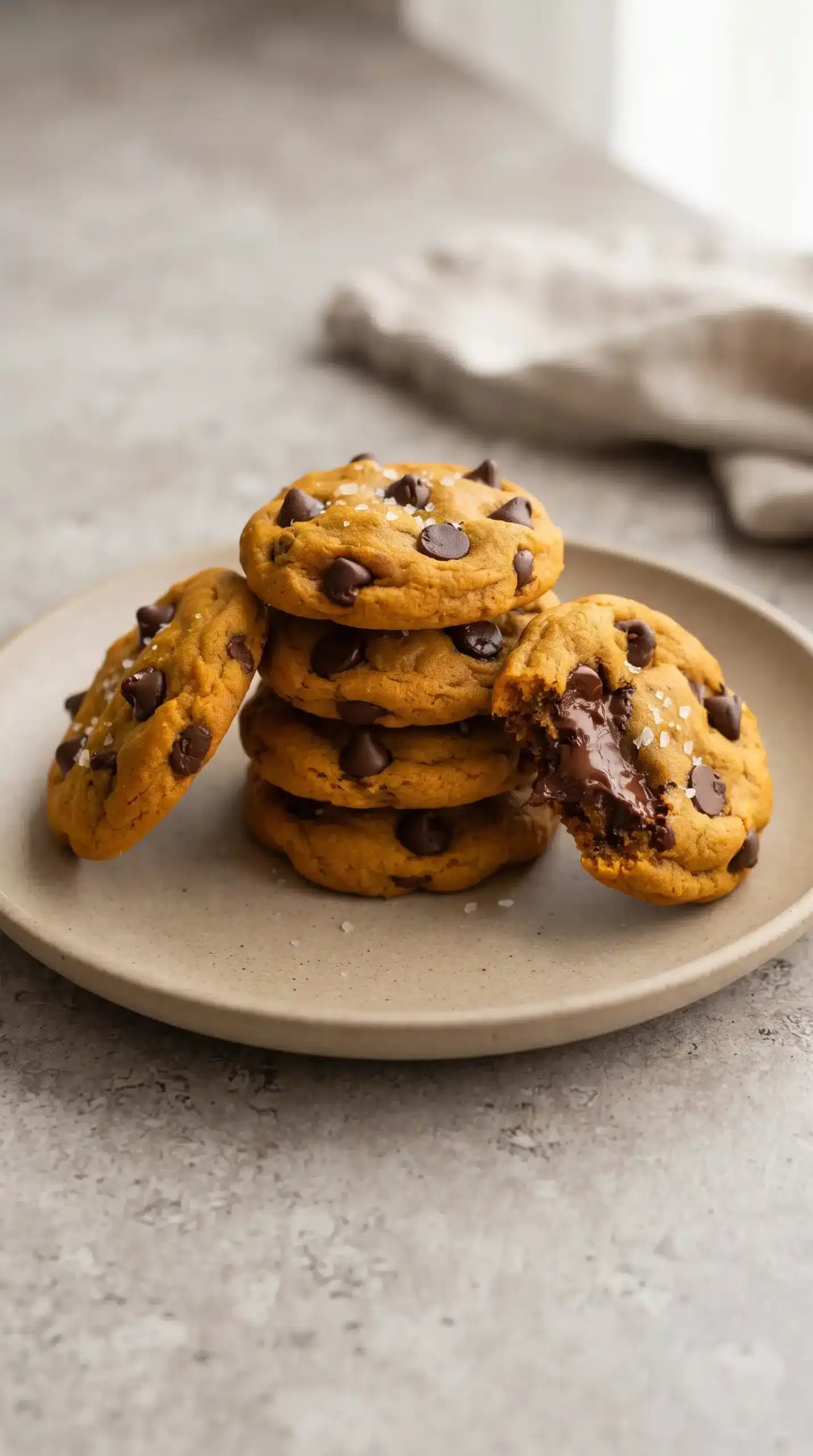
The best presentation shows the contrast between the darker chocolate pieces and the orange-toned pumpkin cookie base. A small sprinkle of Maldon sea salt after baking can balance the richness of the browned butter.
These cookies are especially suited to occasions where a classic fall dessert benefits from a more structured texture. The combination of spice, chocolate, and toasted butter creates a cookie that feels substantial without becoming heavy.
Pumpkin Chocolate Chip Cookies Prove Moisture Balance Creates Chew
Pumpkin chocolate chip cookies achieve their signature texture through careful control of moisture and fat. Reducing the pumpkin puree, browning the butter, and relying on egg yolks creates the dense structure that defines a premium seasonal cookie.
The strongest result comes from respecting the small preparation choices that shape the final bite. Concentrated pumpkin flavor, nutty browned butter, and melted chocolate work together to transform a familiar autumn cookie into a chewy bakery-style treat.
Pumpkin Chocolate Chip Cookies Questions About Cakey Texture and Baking Control
Why do pumpkin chocolate chip cookies become cakey?
Cakey texture usually develops when too much moisture remains in the dough. Pumpkin that has not been reduced and the use of whole eggs can add extra water, causing the cookies to bake with a softer, more cake-like crumb.
Can browned butter be used immediately after cooking?
Browned butter needs to cool and become soft enough to cream with the sugars. Using it while liquid changes the dough consistency and can lead to excessive spreading during baking.
How should pumpkin puree look before mixing into the dough?
The pumpkin should become much thicker after blotting, closer to a concentrated paste than a loose puree. This texture indicates that excess water has been removed before it enters the dough.
Can chocolate chips be replaced with chopped chocolate?
Chopped dark chocolate works well as a replacement and creates larger melted areas throughout the cookie. It changes the chocolate distribution while keeping the overall dough structure intact.
How can the cookies keep a soft center after baking?
The cookies should leave the oven with set edges and centers that still appear slightly soft. Cooling on the baking sheet allows the interior sugars and structure to finish developing without becoming dry.
Pumpkin Chocolate Chip Cookies with Browned Butter
Ingredients
Method
- Cook the butter in a light-colored saucepan over medium heat until the milk solids become amber and the butter smells nutty, then move it to a heat-safe bowl and chill while stirring every 10 minutes until soft and spreadable.
- Blot the pumpkin puree with paper towels until it is reduced from 2/3 cup to about 1/3 cup to remove excess moisture.
- Beat the cooled browned butter with granulated sugar and brown sugar using a paddle attachment for 3–5 minutes until smooth and airy.
- Mix the egg yolks, vanilla extract, and reduced pumpkin puree into the butter mixture until fully combined.
- Whisk the sifted all-purpose flour, pumpkin pie spice, baking soda, and sea salt together in a separate bowl.
- Fold the dry ingredient mixture into the pumpkin mixture gradually until no flour remains visible, then fold in the chocolate chips.
- Scoop the cookie dough into 3-tablespoon portions and arrange them on a parchment-lined baking sheet.
- Bake the cookies at 350°F / 175°C for 9–13 minutes until the edges are set and matte while the centers stay slightly soft.
- Leave the cookies on the baking sheet for 10 minutes to cool before serving.