Fudgy Brownie Cookies with Rich Chocolate Center Recipe
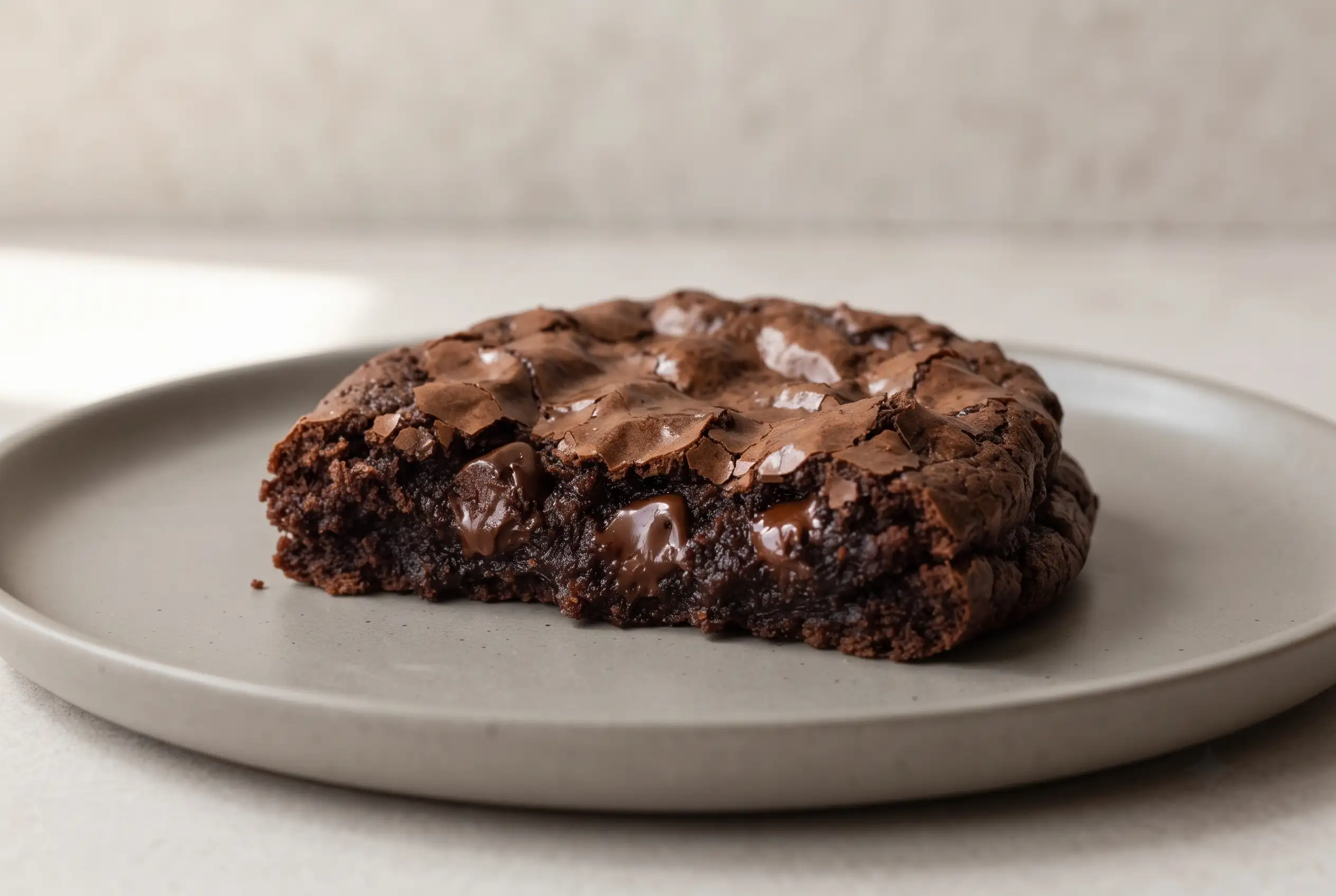
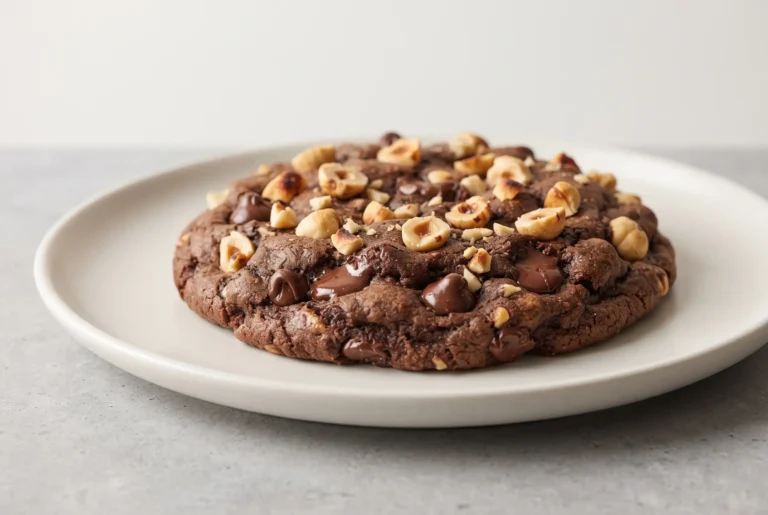
Fudgy Brownie Cookies bring together the dense chocolate character of a brownie and the handheld shape of a cookie through careful control of fats, sugars, cocoa, and baking time. The fudgy brownie cookies recipe creates a glossy crackled surface while keeping the center soft, rich, and deeply chocolate-focused.
The defining difference comes from texture management. A low flour balance, warm melted butter, dual sugars, and the absence of chemical leaveners keep the dough compact after baking. The result is a cookie with the satisfying bite of a brownie and the convenience of a classic chocolate treat.
Fudgy Brownie Cookies Create a Brownie-Like Center
The structure of fudgy brownie cookies depends on preserving moisture during the short bake. The dough enters the oven with enough richness to develop firm edges while the center remains slightly glossy. Cooling completes the transformation as the fats solidify and the interior settles into a dense texture.
Chocolate chips reinforce the experience by creating pockets of melted chocolate throughout the cookie. These pieces continue contributing richness as the cookies cool, helping maintain the contrast between the set exterior and softer middle.
Unlike a traditional airy chocolate cookie, this style avoids ingredients that create extra lift. The dense texture comes from the interaction between the flour amount, cocoa solids, sugar structure, and mixing approach.
Dense chocolate desserts depend on balancing moisture and structure, with fudgy chewy browkies bringing brownie-style richness into a cookie format through careful texture control.
The Chocolate Balance Behind the Dough
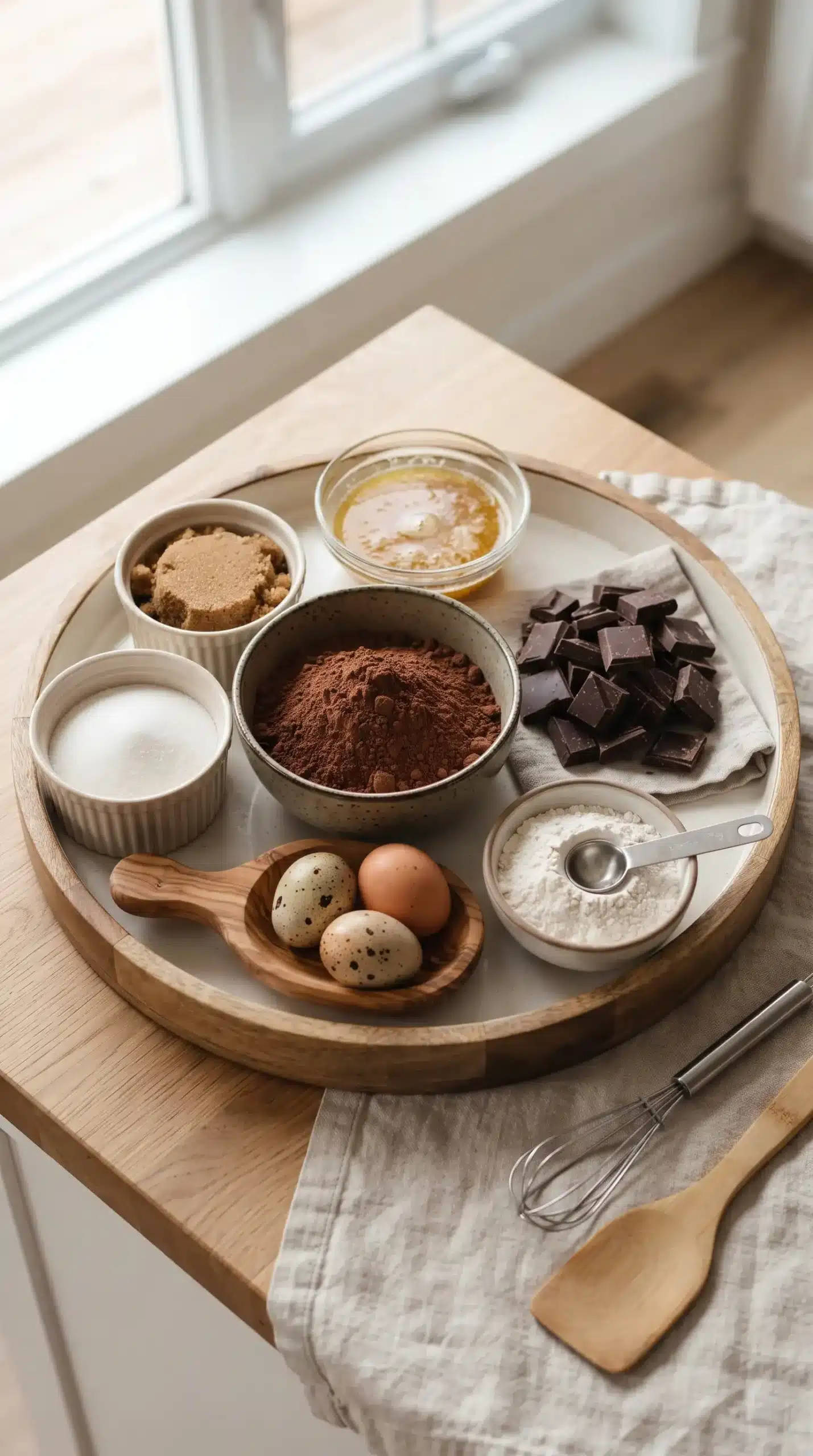
The ingredient choices in fudgy brownie cookies recipe have a direct effect on the finished texture. Unsweetened cocoa powder supplies concentrated chocolate flavor, while melted butter provides the fat needed to create a smooth dough consistency.
- Dual sugars: Granulated sugar supports sweetness and surface development, while brown sugar contributes moisture that helps maintain tenderness.
- Room-temperature eggs: Eggs combine more evenly with the warm butter mixture, supporting a stable dough.
- All-purpose flour: The measured flour amount provides enough structure without creating a bread-like result.
Warm Butter and Sugars Shape the Crackled Surface
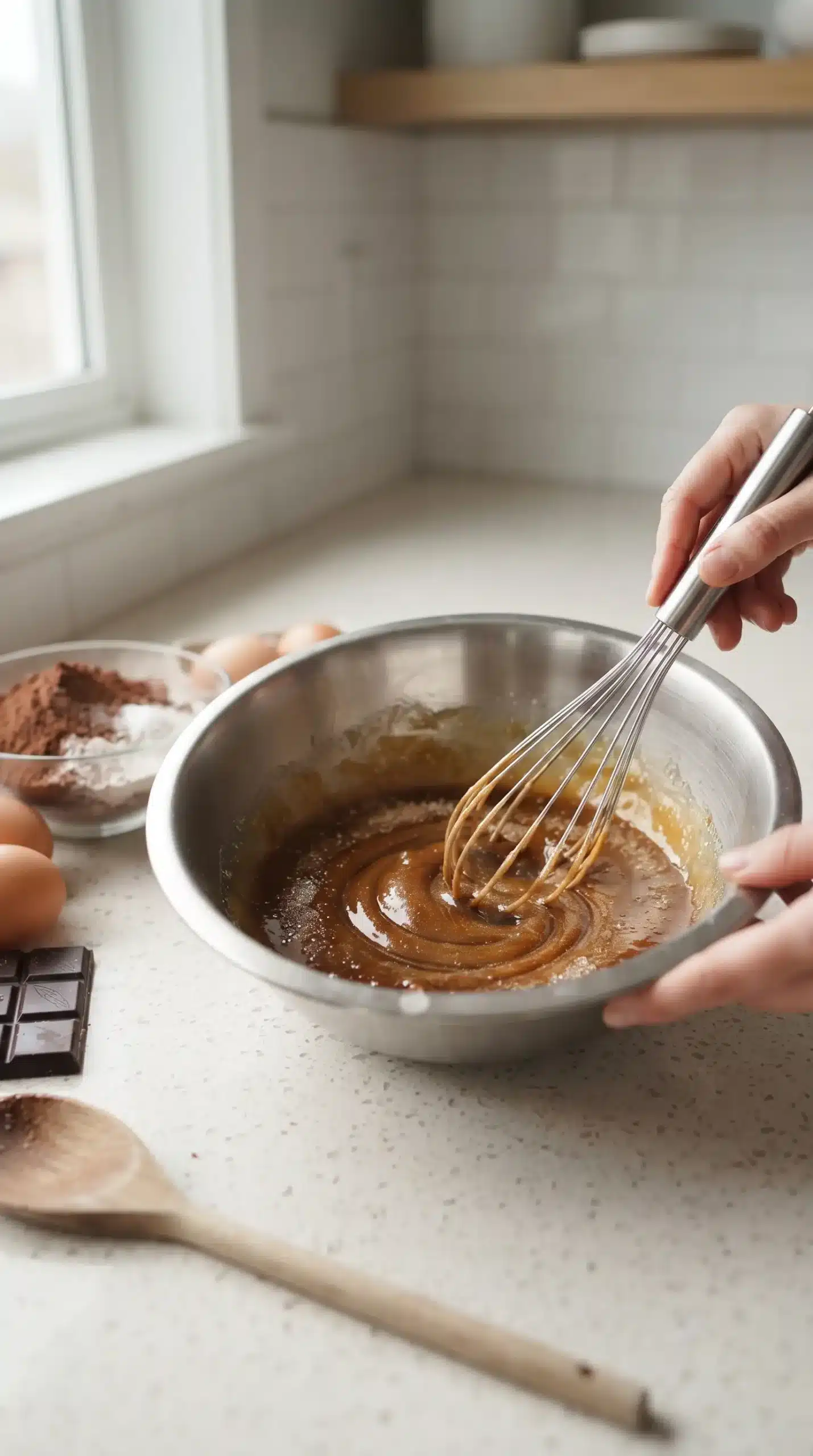
Warm melted butter plays an important role before the dough reaches the oven. Combining it with both sugars allows the mixture to form a tighter blend that contributes to the shiny surface associated with brownie-style cookies.
The surface appearance develops from how the sugar, fat, and egg mixture behaves during baking. Vigorous whisking incorporates air into the wet mixture, but the recipe does not rely on baking powder or baking soda for expansion.
The absence of chemical leaveners keeps the cookie heavy and concentrated. Too much aeration would move the texture toward a cake-like result, reducing the dense brownie quality that defines these cookies.
Cocoa Choice Determines Chocolate Depth
High-quality unsweetened cocoa powder has a major influence on flavor intensity. A darker cocoa, especially a Dutch-process style, can provide a smoother and deeper chocolate profile because Dutch-process cocoa treatment reduces acidity and changes the color and flavor characteristics of the cocoa.
Mixing Control Keeps Brownie Cookies Dense and Tender
Mixing technique determines whether the dough remains soft or becomes overly firm after baking. Once the dry ingredients meet the wet mixture, the dough only needs enough folding to remove visible flour streaks.
Overworking the dough encourages gluten development from the flour. That extra structure can change the bite from soft and fudgy to tougher and less delicate.
The chocolate chips should be folded in gently after the dough comes together. This keeps the pieces evenly distributed without unnecessary handling that could affect the texture.
Fudgy Brownie Cookies Need Careful Portioning and Baking
Cookie size and oven timing influence the balance between edge firmness and center softness. Even portions allow the cookies to bake at a similar rate so each piece develops the intended texture.
| Observation | Cookie Stage | Recommended Action |
|---|---|---|
| Edges appear set | Ready to remove | Take cookies from the oven while centers remain slightly glossy |
| Centers look fully dry | Likely overbaked | Avoid extending baking time past the point of a soft middle |
| Cookies are still soft after baking | Normal cooling stage | Allow them to finish setting on the baking sheet |
Common Fudgy Brownie Cookies Mistakes That Dry the Center
Dry brownie cookies usually come from changes that disturb the balance between moisture and structure. The most common problems are connected to flour measurement, baking time, and ingredient temperature.
- Overbaking: Removing the cookies only when they look completely finished can lead to a dry texture after cooling.
- Cold eggs: Chilled eggs can cause warm melted butter to seize, creating uneven dough that spreads poorly.
- Incorrect cocoa: Cocoa mixes contain additional ingredients that can disrupt the texture expected from pure unsweetened cocoa powder.
- Too much mixing: Excessive stirring after adding flour can create unwanted toughness.
Correcting these issues starts with observing the dough and the cookies at each stage. A slightly glossy center after baking is a useful visual signal because the cookies continue setting outside the oven.
Chocolate Chip Choices Change the Texture Experience
Brownie cookies with chocolate chips gain additional richness from the melted pockets created by semi-sweet chocolate pieces. The chips become part of the texture instead of simply adding decoration.
Storage Methods Preserve the Fudgy Brownie Cookies Texture
Proper storage helps maintain the soft interior after cooling. Once completely cooled, fudgy brownie cookies can be kept in an airtight container at room temperature for up to five days.
Separating layers with parchment paper helps protect the glossy surfaces from sticking together. This small step keeps the appearance intact while preserving the cookie texture.
Freezing also works well for longer storage. Frozen cookies can maintain their quality for up to three months, and gentle reheating can restore some of the softness of the chocolate center.
Variations That Shift the Chocolate Profile
The base dough can support different chocolate directions without changing its core structure. Dark chocolate chunks can create a less sweet, more intense version, while espresso powder can deepen chocolate notes.
Serving Ideas Highlight the Soft Chocolate Interior
The rich texture of fudgy brownie cookies makes them suitable for simple serving approaches. A warmed cookie emphasizes the softened chocolate chips and the brownie-like middle.
Understanding the Glossy Top and Soft Core
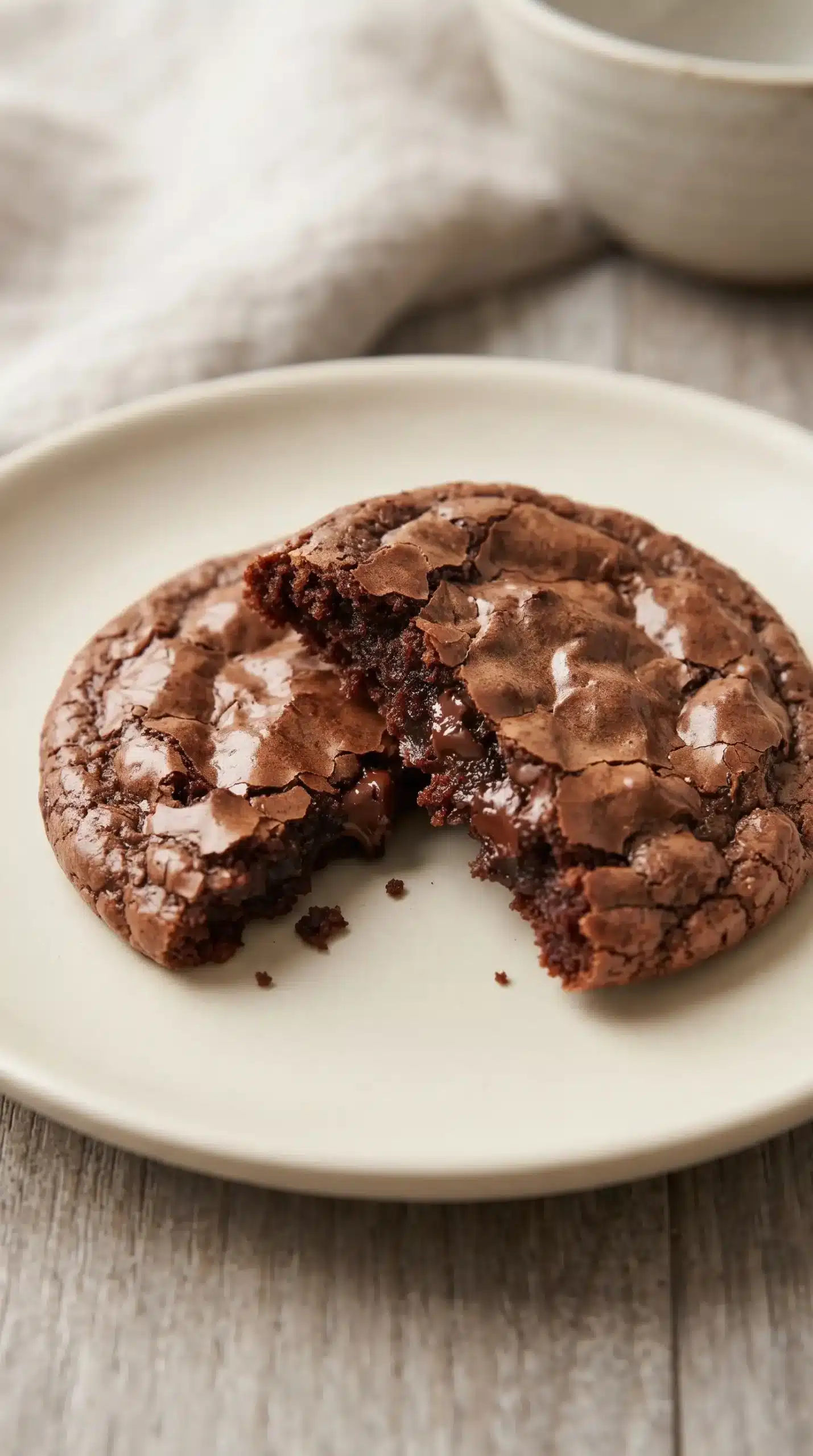
The signature appearance comes from several connected decisions during preparation. The warm butter mixture, sugar concentration, egg incorporation, and short bake work together to create the crackled finish.
The glossy top is not a separate decoration added after baking. It forms as the surface ingredients respond to heat while the interior retains enough moisture to remain soft.
Cooling is an important part of the texture process. The cookies continue changing after leaving the oven because the fats gradually firm and the structure stabilizes.
Baking Decisions That Define Chewy Brownie Cookies
Chewy brownie cookies depend on restraint during preparation. Keeping the dough dense, avoiding excessive baking, and maintaining the correct ingredient balance preserves the signature chewy texture.
Fudgy Brownie Cookies Become Defined by Moisture Control
The chocolate dough achieves its best texture when warm butter, balanced sugars, cocoa, and controlled baking work together. The slightly underdone appearance at removal is part of the process that creates a soft center after cooling.
Fudgy brownie cookies reward careful attention to small choices. Managing the dough gently and respecting the baking point produces a dessert that keeps the richness of a brownie while delivering the shape and convenience of a cookie.
Fudgy Brownie Cookies Troubleshooting Questions About Cocoa and Baking Time
Why do my fudgy brownie cookies turn out dry?
Dry cookies usually indicate that too much flour was added or that the cookies stayed in the oven too long. Keeping the center slightly glossy when removing the cookies helps preserve the soft interior.
Can cocoa mix replace unsweetened cocoa powder?
No. Cocoa mix contains additional ingredients such as dried milk and stabilizers that can change the balance of the dough. Unsweetened cocoa powder provides the concentrated chocolate structure needed for the cookies.
How do I keep the crackled top on brownie cookies?
The crackled surface depends on the warm butter and sugar mixture, proper egg incorporation, and the balance of ingredients. Changes that reduce this interaction can affect the glossy finish.
Why are my brownie cookies cakey?
A cakier texture can result when the dough gains too much air or structure. The recipe relies on whisking for the wet mixture while avoiding chemical leaveners that would create additional lift.
Can I make these cookies taste more intensely chocolatey?
Using a high-quality cocoa powder or adding dark chocolate pieces can increase the chocolate character while keeping the dense texture that defines the cookies.
Fudgy Brownie Cookies with Rich Chocolate Center
Ingredients
Method
- Whisk the warm melted butter with both sugars in a large bowl until the mixture is well combined.
- Add the room temperature eggs and vanilla extract, then whisk for 2 minutes until smooth.
- In a separate bowl, combine the all-purpose flour, cocoa powder, and fine sea salt.
- Add the dry mixture to the wet ingredients and fold with a spatula just until no visible flour remains.
- Fold the semi-sweet chocolate chips into the dough until evenly spread throughout.
- Place tablespoon-sized portions of dough on a parchment-lined baking sheet, leaving about 2 inches between each cookie.
- Bake the cookies at 350°F / 175°C for 10–12 minutes, until the edges are set and the centers are still slightly glossy.
- Leave the cookies on the baking sheet until completely cooled so they can firm up and develop their fudgy texture.