Cookies and Cream Cookies with White Chocolate Chunks
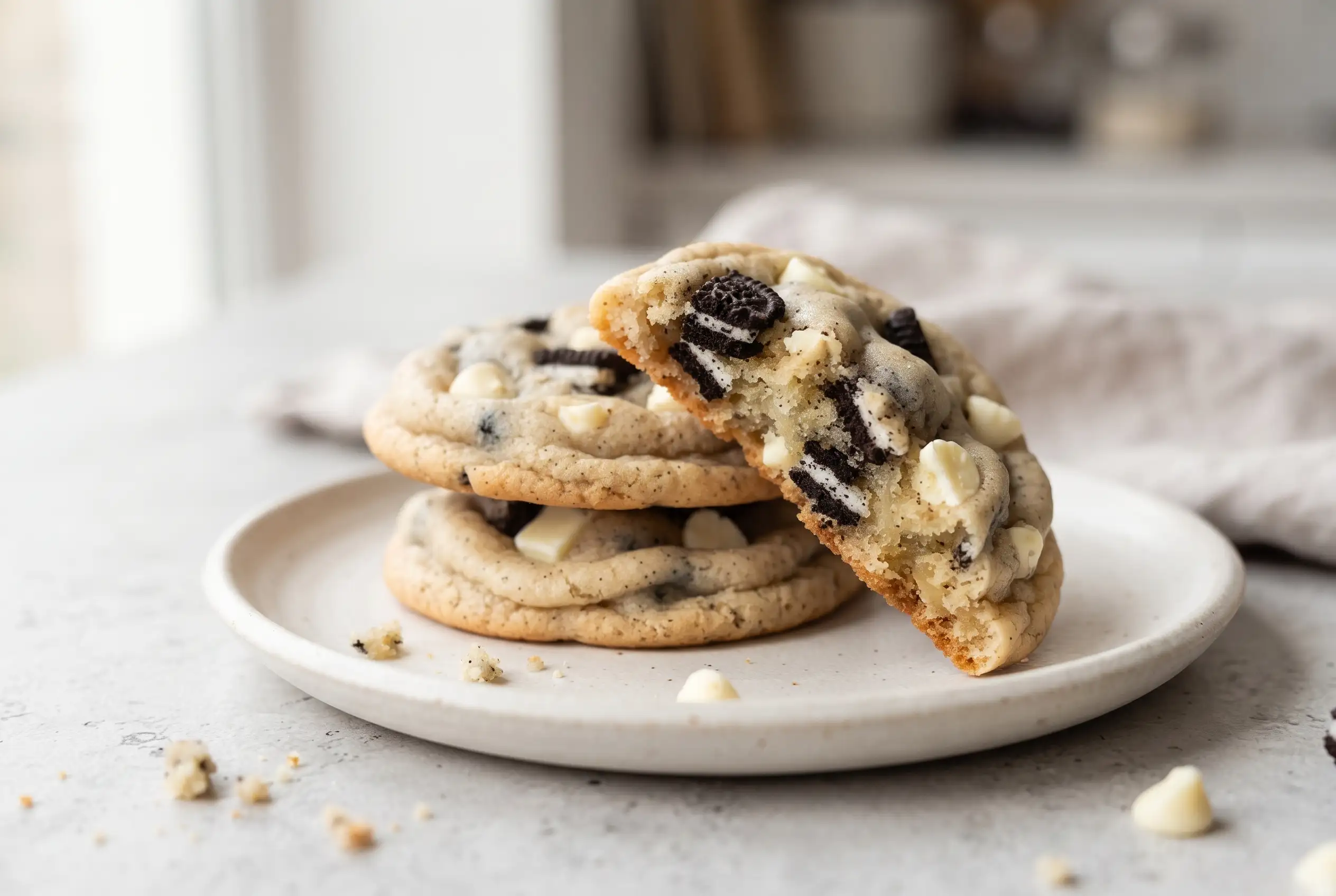
Cookies and cream cookies combine a soft vanilla-style dough with crunchy cocoa sandwich cookie pieces and sweet white chocolate for a bakery-inspired dessert. This soft cookies and cream cookie recipe focuses on controlling texture through butter consistency, balanced leavening, and careful mixing so each cookie stays tender while holding distinct cookie chunks.
The contrast between the delicate dough and the bold chocolate pieces creates a dessert that feels familiar while offering a more structured bite. Oreo cookies and cream cookies depend on keeping the crumb soft enough to complement the crunchy additions without losing their shape.
Soft Cookie Structure Starts with Butter, Sugar, and Starch
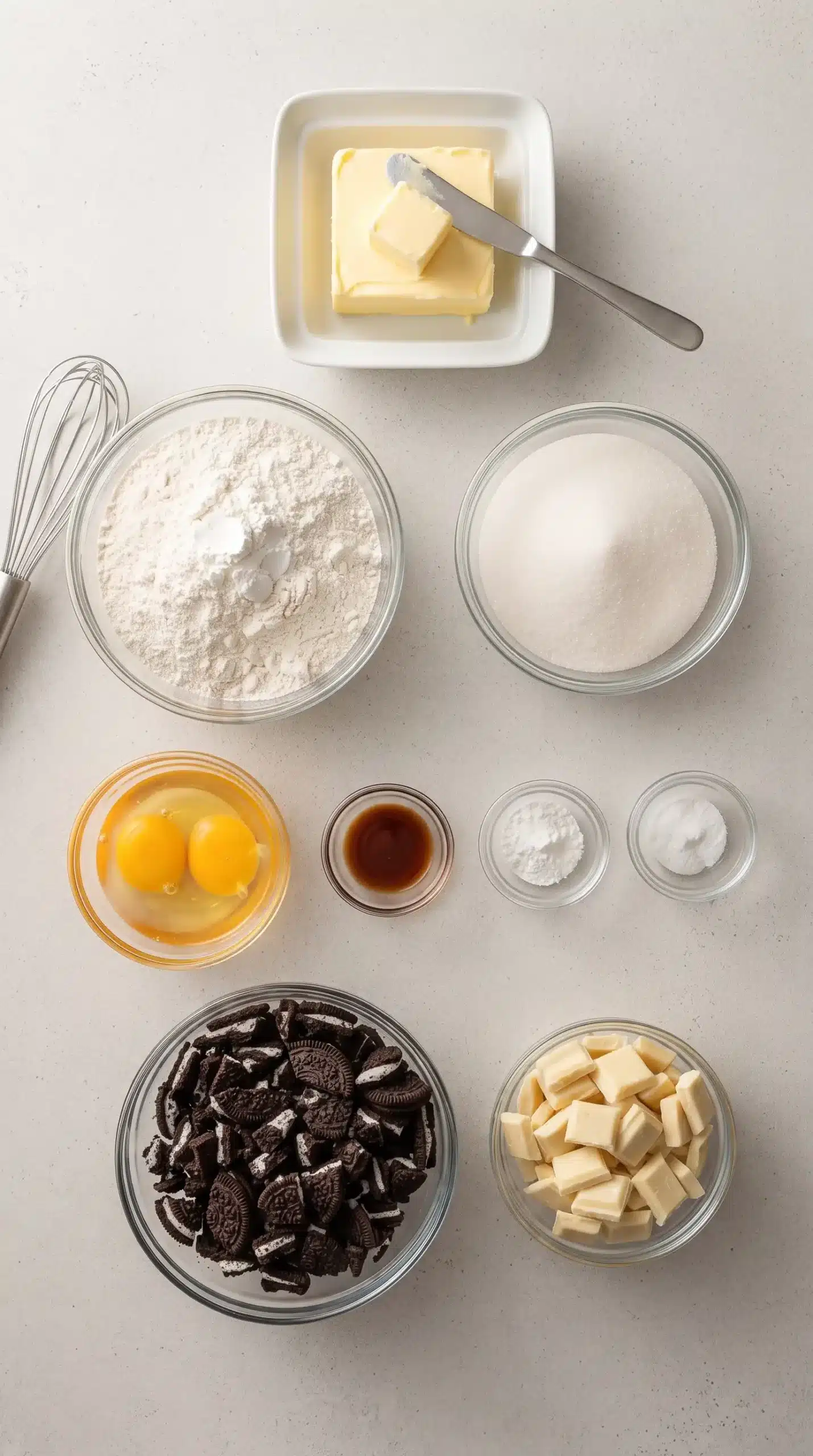
Butter temperature influences how the dough develops before it reaches the oven. Softened unsalted butter at the proper consistency blends smoothly with sugar, allowing the mixture to become cohesive without introducing excessive air. A dense, chewy texture depends on maintaining this balance during mixing.
Cornstarch plays a key role in the cookie structure because it helps create a more delicate crumb. The starch works with the flour by supporting a softer texture, while the egg and butter provide moisture that helps prevent the cookies from becoming dry during baking.
Sugar, flour, and fat must work together to create cookies that are tender but stable. The measured combination of all-purpose flour, granulated sugar, and softened butter gives cookies and cream cookies enough structure to hold chopped sandwich cookies and white chocolate chips throughout the bake, while bakery-style cookie structure depends on maintaining the right balance between softness and strength.
| Texture factor | Recipe component | Result in the baked cookie |
|---|---|---|
| Soft crumb | Cornstarch with flour | More delicate interior texture |
| Rich mouthfeel | Softened unsalted butter | Buttery cookie base |
| Moisture balance | Egg and sugar mixture | Tender center after baking |
Chocolate Sandwich Cookies Hold the Signature Crunch
Coarsely chopped cocoa sandwich cookies create the defining contrast in cookies and cream cookies. Keeping the pieces larger preserves the recognizable crunch and prevents the dough from becoming filled with fine crumbs that disappear into the base.
Mixing Decisions Keep the Dough Tender
Proper mixing affects both texture and appearance. Creaming butter and sugar creates a unified base by incorporating air into the dough, but excessive aeration can change the final structure and encourage a lighter texture than intended.
Adding the room-temperature egg and vanilla creates a glossy, even mixture before the dry ingredients are introduced. A consistent wet base helps the flour blend evenly and reduces the chance of uneven pockets of dry ingredients.
Dry ingredients should be incorporated gradually at low speed and mixed only until the flour streaks disappear. Overworking the dough can encourage too much gluten development, which may produce a firmer, bread-like cookie instead of a soft bakery-style result.
Leavening Balance Builds Height Without Heaviness
The combination of baking powder and baking soda gives cookies and cream cookies controlled lift and spread. Baking powder supports additional rise during baking, while baking soda contributes to the surface development and reacts with acidic elements associated with cocoa-based cookie pieces.
That balance helps create a cookie that feels thick while still maintaining a light enough interior. The leavening system works alongside cornstarch and flour to support the signature soft texture.
Mistakes That Ruin Cookies and Cream Cookies
Several preparation errors can change the finished result. Warm, greasy butter can cause cookies and cream cookies to spread too much, while over-creaming can introduce an unwanted amount of air into the dough.
- Broken cookie pieces: Avoid pulverizing sandwich cookies because large chunks provide the intended texture contrast.
- Overmixed dough: Stop mixing when the flour disappears to help preserve a tender crumb.
- Early removal: Do not judge the center immediately after baking because carry-over heat helps finish setting the cookie.
Correcting these issues starts with watching the dough instead of relying only on timing. Proper butter consistency, gentle dry ingredient incorporation, and careful handling of additions keep the cookie structure balanced.
White Chocolate Cookies and Cream Cookies Variations
White chocolate cookies and cream cookies can be adjusted with different flavor directions while keeping the same dough foundation. Dark chocolate chunks can replace white chocolate chips for a deeper flavor, mint sandwich cookies with peppermint extract can create a seasonal version, and the dough can be layered with brownie batter for a browkie-style dessert.
Cooling Choices Preserve the Soft Interior
Freshly baked cookies continue setting after they leave the oven. Allowing them to rest on the baking sheet for at least five minutes helps the centers develop their finished texture while keeping the edges from becoming overly firm.
Storage Methods Maintain Fresh Cookie Texture
Proper storage helps preserve the soft texture of cookies and cream cookies after baking. Once cooled, the cookies should be kept in an airtight glass or plastic container at room temperature for up to five days.
Longer storage is possible by freezing baked cookies for up to three months. A brief warm-up in a 300°F oven for two to three minutes can soften the white chocolate and refresh the buttery aroma without overcooking the edges.
Serving Styles for Oreo Cookies and Cream Cookies
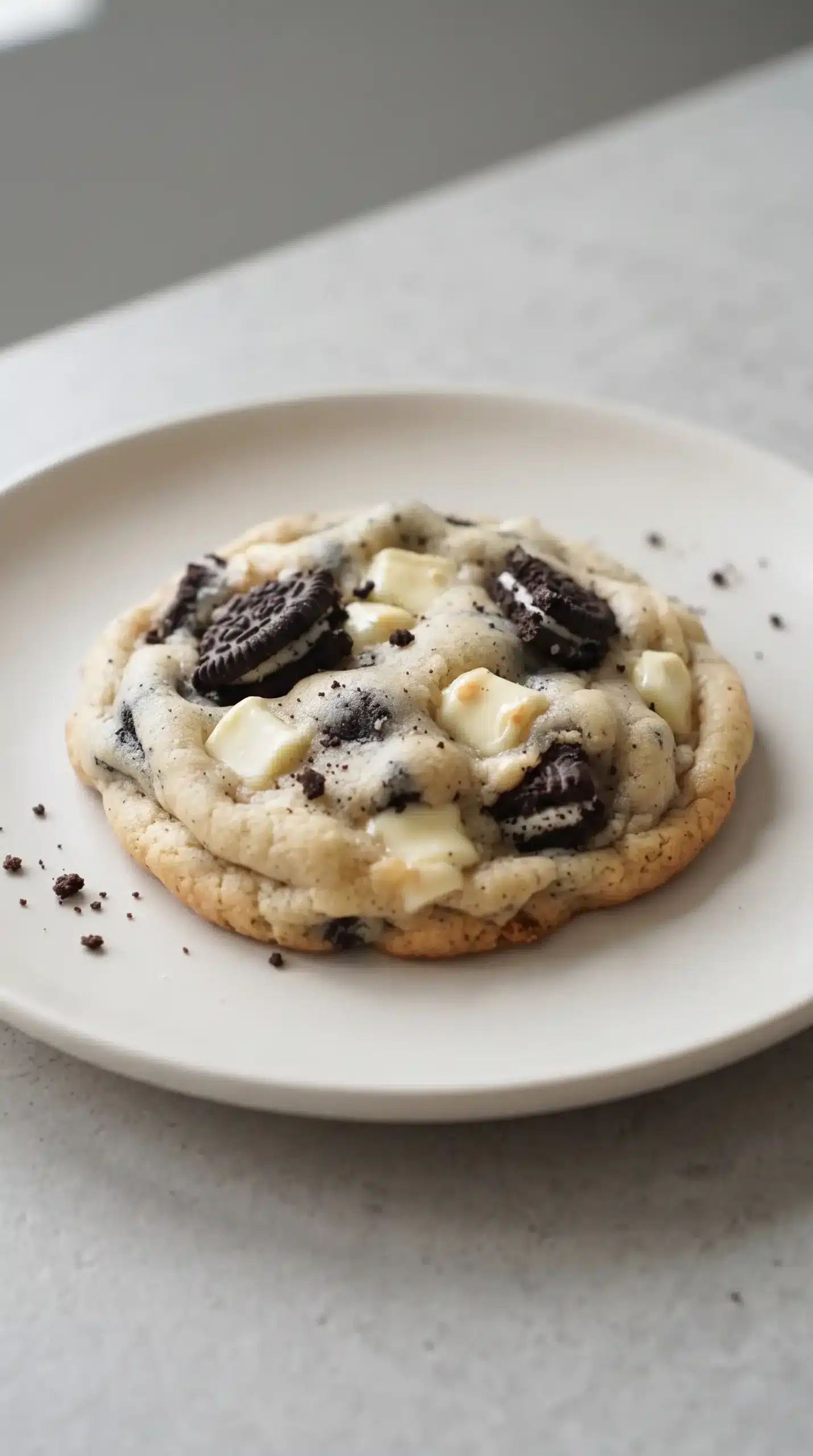
Oreo cookies and cream cookies stand out when the contrast between the pale dough, white chocolate pieces, and dark cookie chunks remains visible. Simple plating that highlights the high-contrast appearance makes the dessert especially appealing for sharing or serving.
Dough Handling Clues Improve Baking Results
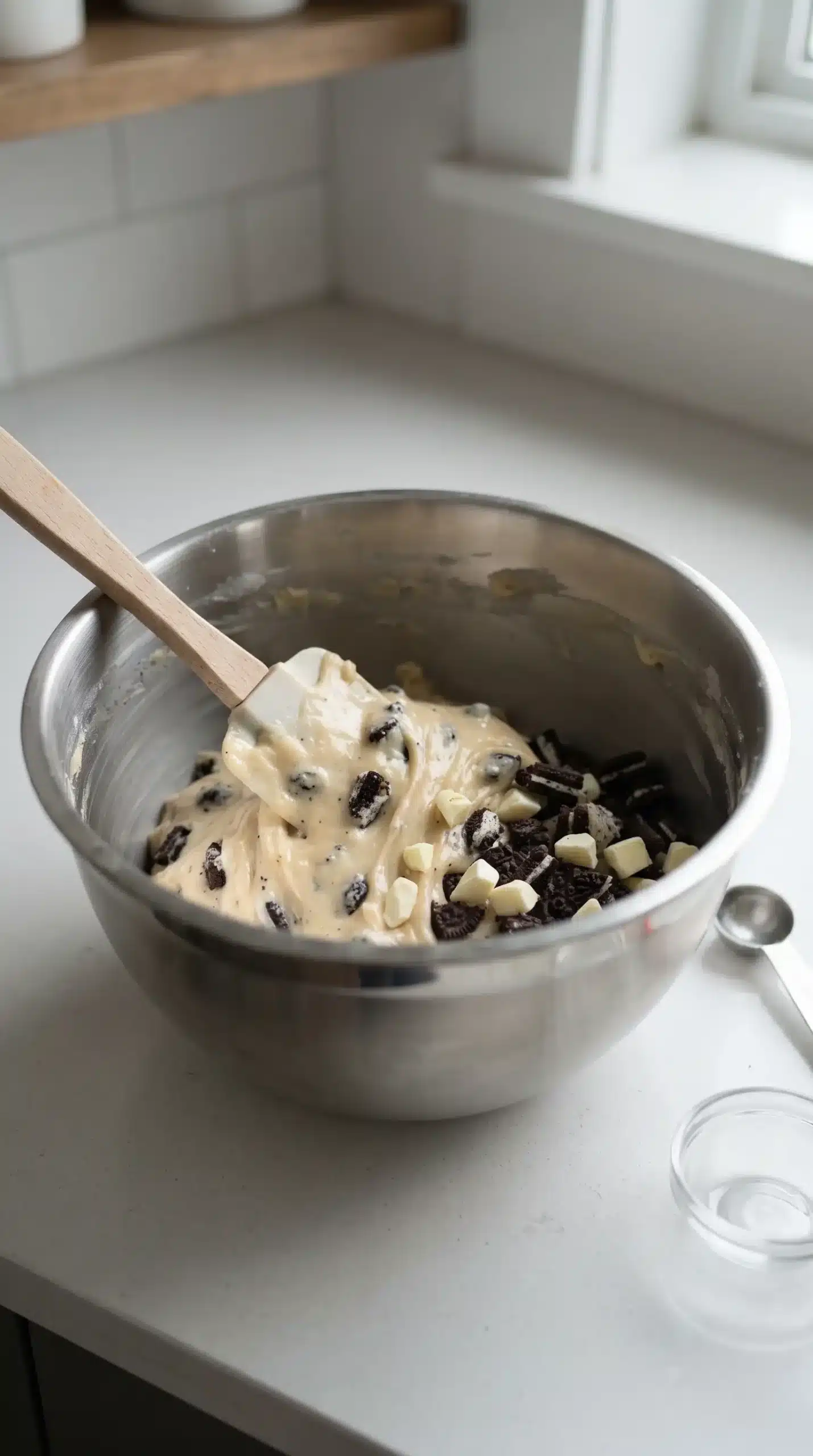
The dough provides several visual signals that indicate whether the preparation is moving correctly. A smooth, glossy wet mixture after adding the egg shows that the butter base has properly combined before the flour enters.
After dry ingredients are added, the dough should come together without extended mixing. The chopped sandwich cookies and white chocolate chips should remain distinct additions that are folded in gently with a spatula.
Before baking, uniform dough portions help create consistent cookies. The cookies should be removed when the edges are set and the centers still look slightly underdone because the remaining heat completes the process on the baking sheet.
Cookie Texture Changes Through Heat Control
Baking temperature affects both surface development and interior softness. The oven heat encourages exterior browning and flavor development while the retained moisture from butter, egg, and cornstarch helps maintain a tender center.
Careful observation matters because the cookies continue changing after they leave the oven. The balance between a set edge and a soft middle defines the bakery-style character of the finished dessert.
Cookies and Cream Cookies Deliver Balanced Texture Through Precision
Cookies and cream cookies succeed when each handling choice protects the relationship between softness and crunch. The butter mixture, starch-supported dough, balanced leavening, and carefully preserved sandwich cookie pieces all contribute to a dessert with a clear texture identity.
Small decisions during mixing and cooling determine whether the cookie keeps its tender center and recognizable chocolate crunch. Following those controls creates a reliable result with the flavor contrast expected from a soft cookies and cream cookie recipe.
Cookies and Cream Cookies Questions About Flat Cookies and Texture
Why did my cookies and cream cookies spread flat?
Flat cookies are often connected to butter that became too warm or mixing choices that changed the dough structure. Keeping the butter softened but not melted and avoiding excessive creaming helps the dough maintain its intended shape.
Can I use another brand of chocolate sandwich cookie?
Any cocoa-based sandwich cookie with a stable cream filling can work in the dough. Different brands may vary in strength, so some cookies may create more crumbs instead of maintaining large pieces.
How do I keep the cookie pieces noticeable?
Use coarsely chopped sandwich cookies and fold them in manually with a spatula. Gentle handling keeps the chunks larger and helps them remain visible after baking.
Why are the centers still soft when I remove them from the oven?
The centers are expected to look slightly underdone when the cookies come out. Residual heat from the baking sheet continues cooking the interior and helps create the soft texture associated with the dessert.
Can these cookies be made ahead for later?
Baked cookies can be frozen for extended storage and brought back to a fresh texture with gentle reheating. Keeping them sealed after cooling helps protect their softness before serving.
Cookies and Cream Cookies with White Chocolate Chunks
Ingredients
Method
- Beat the softened butter and granulated sugar together on medium speed for about 2 minutes until smooth.
- Mix the egg and vanilla extract into the butter mixture on medium-low speed until combined.
- Combine the flour, cornstarch, baking powder, baking soda, and fine sea salt in a separate bowl.
- Add the dry mixture gradually to the butter mixture on low speed, mixing only until the flour is absorbed.
- Use a spatula to fold the chopped chocolate sandwich cookies and white chocolate chips into the dough until evenly mixed.
- Scoop the dough into 2-tablespoon portions and arrange the mounds on a parchment-lined baking sheet.
- Bake the cookies at 350°F / 175°C for 8–10 minutes, until the edges are set and the centers are still slightly soft.
- Leave the cookies on the baking sheet for at least 5 minutes before serving.