Chocolate Crinkle Cookies with Fudgy Center Recipe
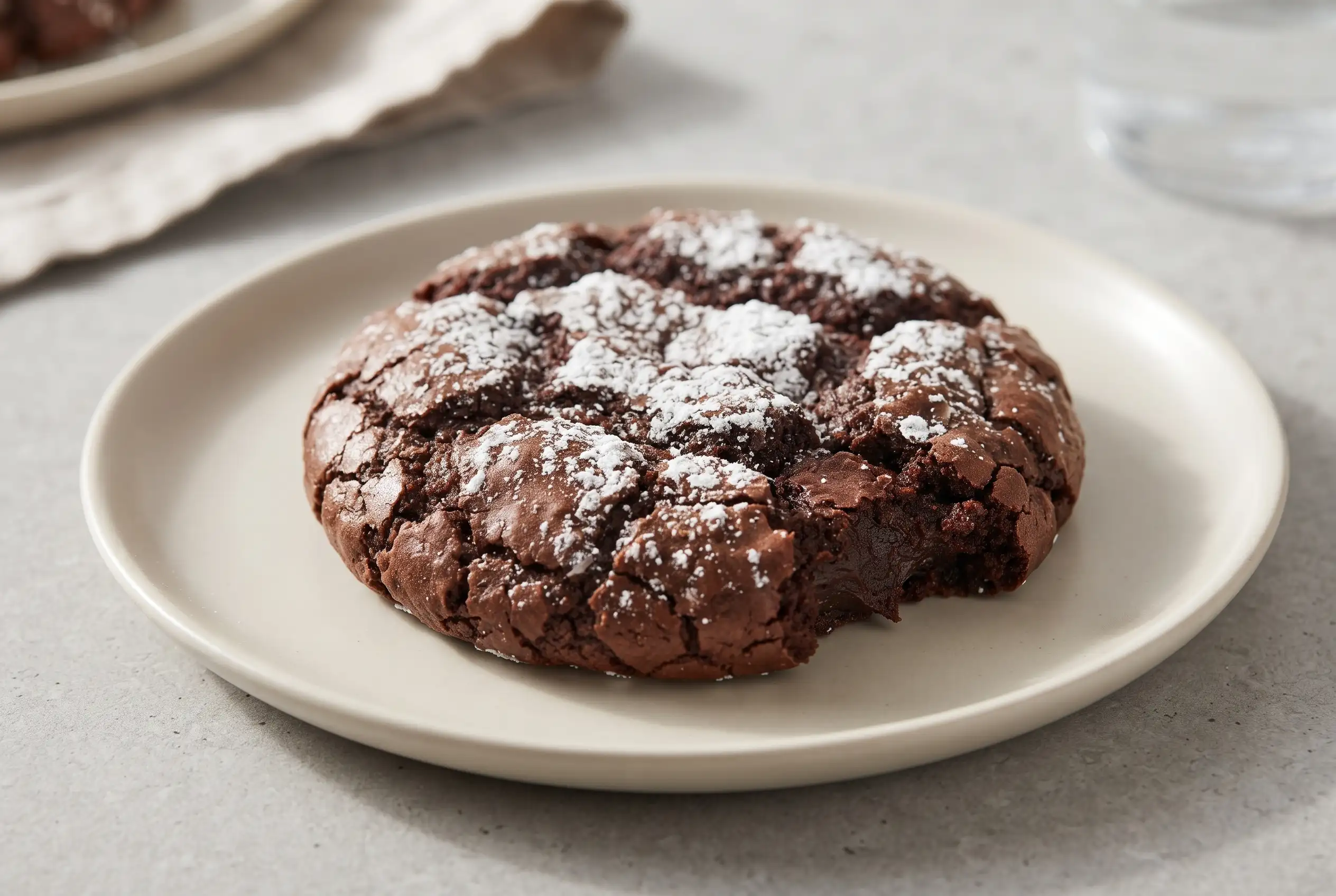
Chocolate crinkle cookies deliver a deep cocoa flavor, a soft fudgy center, and a dramatic powdered sugar surface created through careful control of dough texture and baking behavior. The best chocolate crinkle cookies recipe depends on balancing cocoa, oil, sugar layers, and chilling so the cookies expand correctly while maintaining their signature cracked appearance.
Unlike ordinary chocolate cookies, the crinkle pattern is formed during baking as the dough rises beneath a dry sugar coating. The contrast between dark chocolate valleys and bright white cracks comes from a deliberate preparation process that protects the powdered sugar while allowing the surface to fracture.
Chocolate Crinkle Cookies Create Their Signature Fudgy Contrast
The defining quality of chocolate crinkle cookies comes from the relationship between moisture retention and expansion. The cocoa-based dough needs enough flexibility to move in the oven while keeping a rich interior after baking. Using oil creates a different texture profile from butter-based cookies because the fat remains liquid at room temperature and supports a softer bite.
Fudgy chocolate crinkle cookies rely on a dough structure that stays tender after heat sets the outside. The combination of cocoa, eggs, flour, and oil creates a stable mixture that can hold the rounded shape formed before baking. Proper handling keeps the interior dense without making the cookie heavy.
During baking, the surface changes quickly as the dough expands. Baking powder helps create the internal movement that pushes through the sugar coating, producing the recognizable pattern that makes a chocolate crinkle cookies recipe visually distinct.
Dutch Cocoa and Oil Shape Chocolate Crinkle Cookies Texture
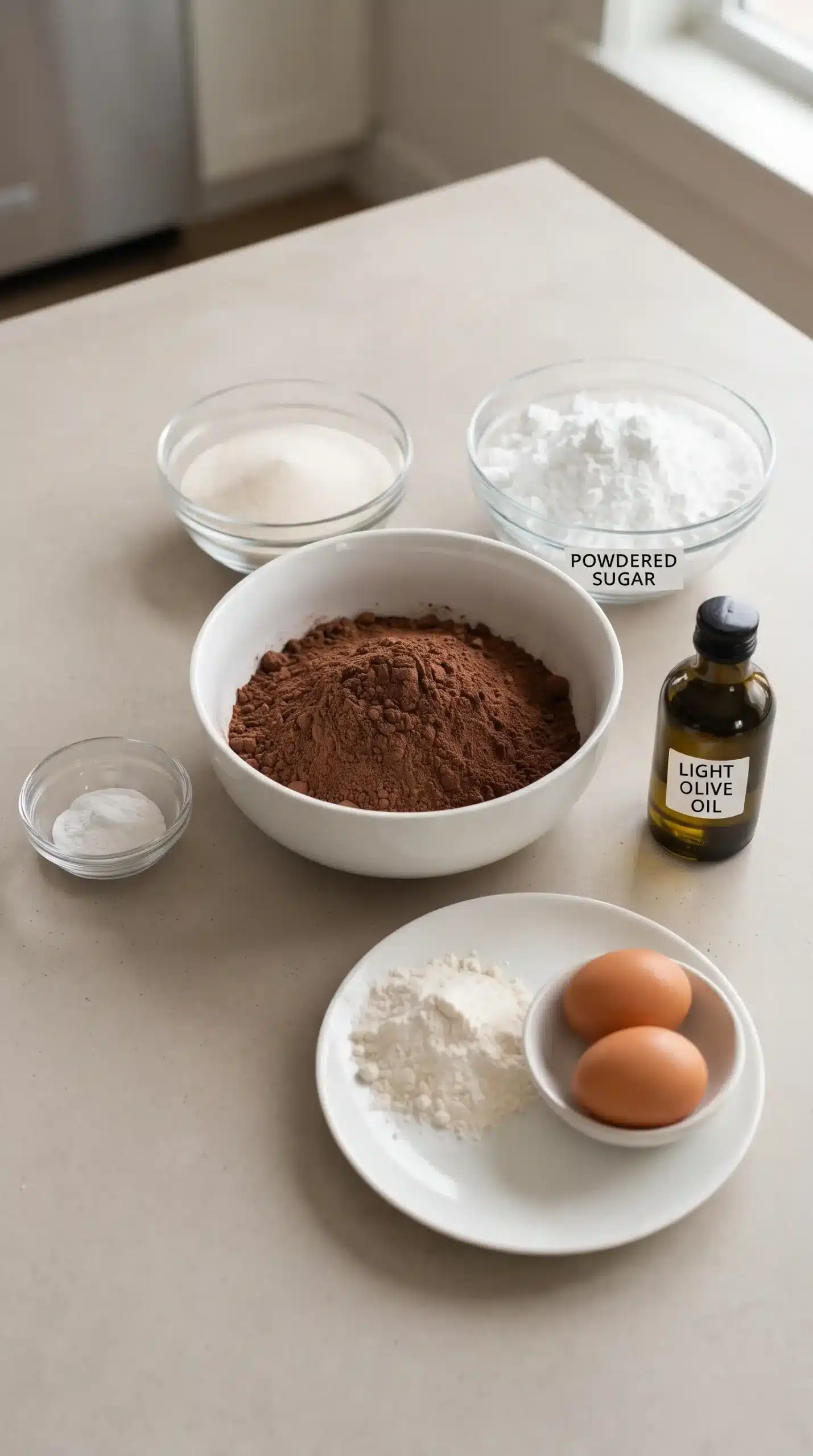
The ingredient choices in chocolate crinkle cookies have a direct effect on the finished texture. Dutch-process cocoa provides the dark chocolate base, while the oil contributes to the moist consistency associated with a brownie-like cookie. These two elements work with the eggs and flour to create a dough that can be shaped and baked successfully.
Ingredient decisions become especially important when aiming for consistent results. The cocoa should be unsweetened Dutch-process cocoa powder, and the fat source should remain a light olive oil or neutral avocado oil according to the supplied formula. Small changes in these core ingredients can influence how the dough behaves during chilling and baking.
| Ingredient choice | Role in the cookie | Effect on the finished result |
|---|---|---|
| Dutch-process cocoa powder | Creates the chocolate foundation | Deep cocoa color and flavor |
| Light olive or avocado oil | Supports moisture retention | Soft, fudgy interior |
| Eggs and flour balance | Builds dough structure | Shape that holds during baking |
Sugar Layers Protect the White Cracked Finish
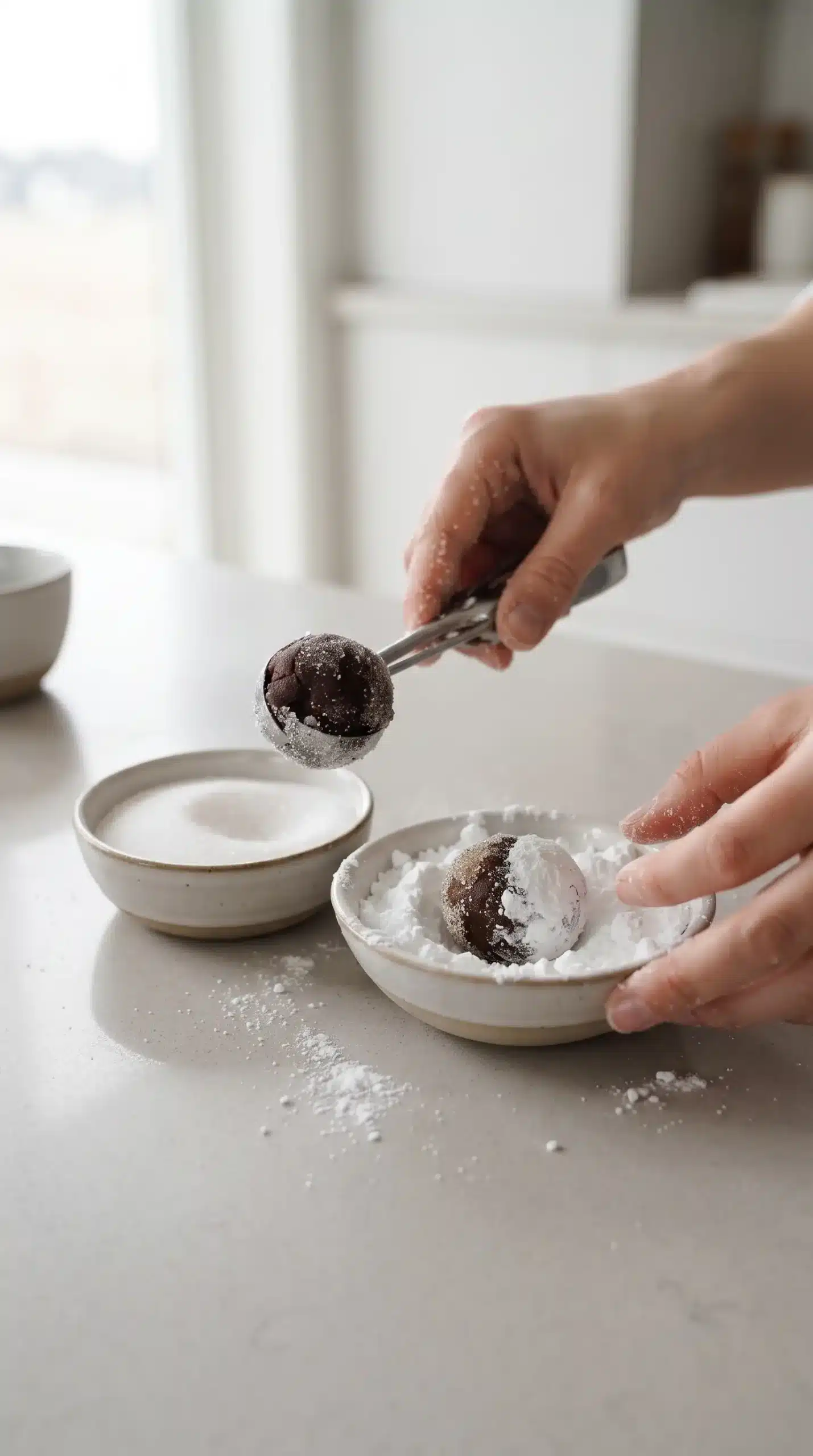
The dual-sugar coating is the visual key behind the classic crinkle appearance. Rolling chilled dough first in granulated sugar creates a protective layer before the powdered sugar is added. That barrier helps the white coating remain visible instead of absorbing into the chocolate dough.
Powdered sugar must be sifted before coating because a smooth layer creates the clean contrast expected from chocolate crinkle cookies. Uneven sugar coverage can reduce the sharp appearance of the cracks after baking.
Chilling Controls the Cookie Dough Structure
Chilling the dough gives the fats time to firm and allows the flour to hydrate, which helps the dough balls maintain their rounded shape when they first enter the oven. The cooling stage is a necessary control point for producing cookies with defined cracks instead of thin, spread-out shapes.
Baking Powder Drives the Crinkle Expansion Pattern
The rise of chocolate crinkle cookies depends on controlled expansion inside the oven. Baking powder reacts with heat and helps create the internal pressure that pushes the dough outward beneath the sugar coating.
Fresh baking powder is important because weak leavening reduces the movement needed for the surface to split. Without enough expansion, the cookies may bake with a flatter appearance and fewer visible fractures.
- Fresh leavening: Supports the expansion needed for a cracked surface.
- Moderate mixing: Prevents excess gluten development that can limit expansion.
- Controlled heat: Allows the edges to set while the center remains soft.
Rolling Technique Prevents Common Chocolate Crinkle Cookies Problems
The coating process requires attention because the two sugars perform different jobs. Granulated sugar creates the first protective layer, while powdered sugar supplies the bright finish that surrounds the cracks. Skipping this order changes the appearance of the baked cookies.
Cookie dough consistency also affects the rolling stage. If the chilled dough remains too sticky to handle, additional chilling allows it to become easier to shape without changing the intended formula.
Careful baking decisions continue after the cookies enter the oven. Removing them while the centers still appear slightly moist preserves the fudgy texture because the cookies continue firming as they cool.
Mistakes That Change Chocolate Crinkle Cookies Results
Chocolate crinkle cookies can lose their characteristic look when a few important controls are overlooked. The most common problems come from dough temperature, coating technique, and baking time.
| Problem | Likely cause | Better approach |
|---|---|---|
| No visible cracks | Insufficient chilling or weak baking powder | Chill properly and use effective leavening |
| Powdered sugar disappears | Missing protective granulated sugar layer | Use the dual-sugar coating method |
| Dry interior | Over-baking | Remove cookies while centers remain slightly moist |
Another mistake involves over-mixing after adding the dry ingredients. Excess gluten development can interfere with the expansion needed for the recognizable crinkle pattern. Folding only until the flour disappears keeps the dough suited for this style of cookie.
Variations That Transform Chocolate Crinkle Cookies Flavor
Several variations can adjust the flavor while preserving the chocolate foundation. Peppermint extract adds a holiday-inspired note, instant espresso powder intensifies the cocoa character, and mini semi-sweet chocolate chips create extra melted chocolate pockets throughout the cookie.
Storage Keeps Chocolate Crinkle Cookies Appearance Intact
Finished chocolate crinkle cookies should be stored in an airtight container at room temperature for up to 7 days. Refrigeration is not recommended because moisture from the cold environment can affect the powdered sugar coating and reduce the bright contrast.
For longer storage, the baked cookies can be frozen for up to 3 months. Thawing at room temperature preserves the texture, and a brief microwave warming can refresh the soft center without significantly affecting the sugar coating.
Serving Details Highlight the Brownie-Like Cookie Center
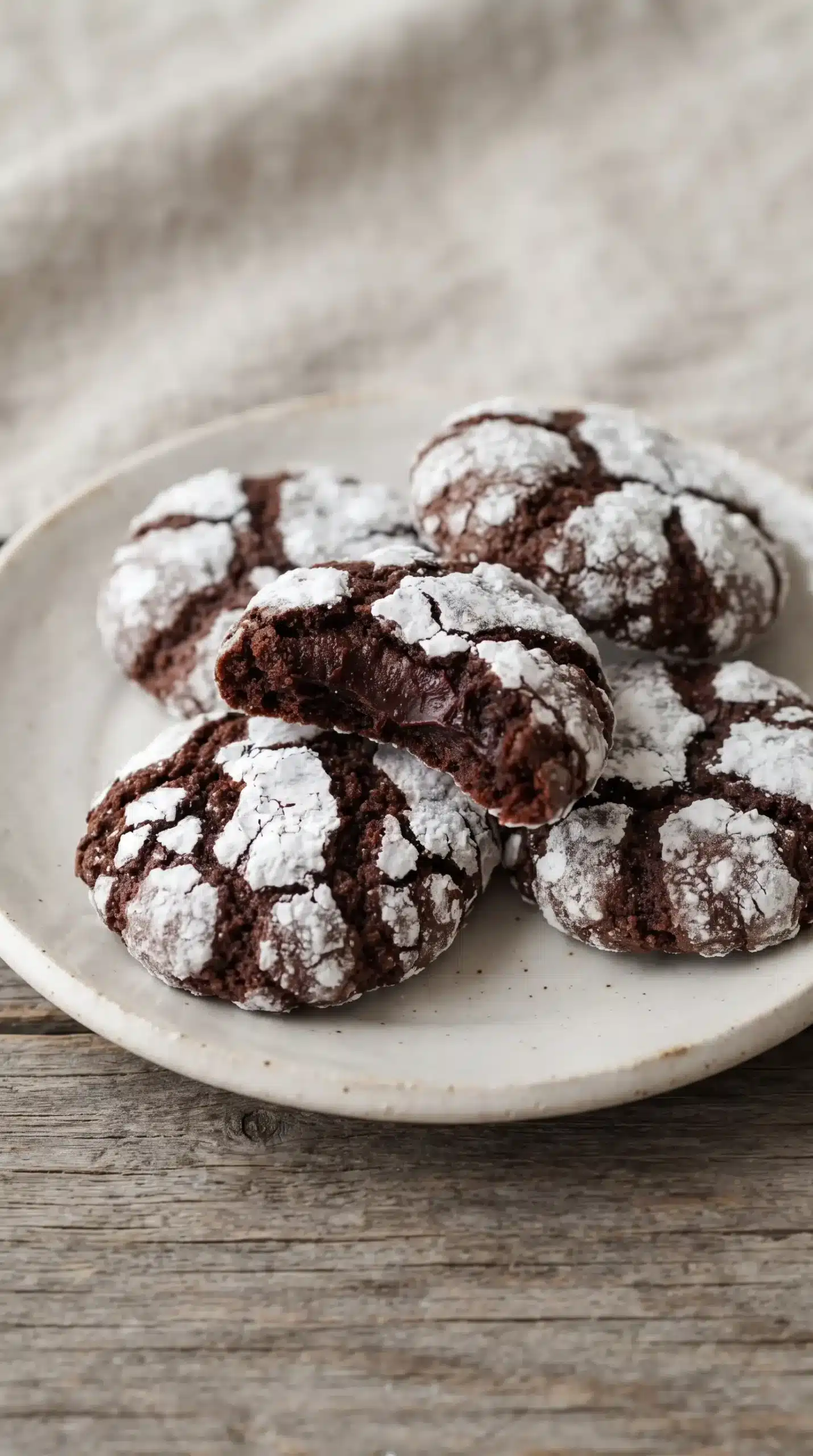
The appeal of these cookies comes from the contrast between the crisp-looking sugar exterior and the soft chocolate interior. Serving them after cooling allows the structure to settle while keeping the fudgy texture that defines this style of bake. Bakers who enjoy dense chocolate centers may appreciate the rich texture found in fudgy brownie cookies, where a soft interior remains the focus of the dessert.
Chocolate Crinkle Cookies Fit Holiday and Everyday Baking
Chocolate crinkle cookies are often associated with festive baking because of their snowy white appearance, but the method works equally well for everyday dessert preparation. The visual pattern makes them stand out without requiring decoration beyond the sugar coating.
Reliable results come from respecting the relationship between ingredients and handling. The cocoa mixture, chilled dough, and layered sugar coating each contribute to the finished appearance and texture.
Home bakers looking for a dependable chocolate dessert can use this approach to create a cookie that combines strong cocoa flavor with a soft center and recognizable cracked surface.
Professional Texture Checks for Chocolate Crinkle Cookies
A successful batch shows several signs before serving: the cookies have visible white cracks, set edges, and centers that remain soft after cooling. Checking these details helps identify whether the dough preparation and baking conditions produced the intended result.
Chocolate Crinkle Cookies Reward Controlled Dough Handling
Chocolate crinkle cookies succeed when each stage supports the next one. The oil-based dough, chilled structure, and dual-sugar coating work together to create the contrast between a dark chocolate interior and a fractured white surface.
The strongest results come from treating temperature, mixing, and coating as essential parts of the bake. With those controls in place, the best chocolate crinkle cookies recipe produces a consistent cookie with a rich center and a distinctive appearance.
Chocolate Crinkle Cookies Cracking and Texture Questions
Why did my chocolate crinkle cookies not crack?
Lack of cracks usually means the dough did not expand enough during baking. Skipping the chilling stage or using baking powder that has lost strength can prevent the surface from developing the pressure needed for the signature fractures.
Can chocolate crinkle cookies stay soft after baking?
Yes, the soft texture comes from the oil-based dough and careful baking. Removing the cookies while the centers still look slightly moist helps maintain the fudgy interior as they continue setting after leaving the oven.
Why is powdered sugar disappearing from my cookies?
The powdered sugar can absorb into the dough if the protective granulated sugar layer is missing. Rolling the dough in granulated sugar first helps preserve the bright coating during baking.
Can I replace the oil in chocolate crinkle cookies?
Butter can be used, but the texture will change. The supplied method uses oil because it supports the soft, fudgy quality associated with these chocolate crinkle cookies.
How should chocolate crinkle cookies be stored?
Keep the baked cookies in an airtight container at room temperature. Freezing is also suitable for longer storage, and the cookies can be thawed before serving to maintain their texture.
Chocolate Crinkle Cookies with Fudgy Center
Ingredients
Method
- Combine the cocoa powder, 3/4 cup granulated sugar, and oil in a large bowl, whisking until evenly mixed and the texture is sandy.
- Add the eggs one at a time, whisking after each addition, then mix in the vanilla extract until the batter looks smooth and glossy.
- Stir the flour, baking powder, and fine sea salt into the cocoa mixture until the dry ingredients are fully incorporated.
- Cover the dough and refrigerate for at least 30 minutes until it becomes firm enough to shape.
- Preheat the oven to 350°F / 175°C and prepare a baking sheet with parchment paper.
- Shape the chilled dough into 1.5-inch balls, then roll each ball in granulated sugar followed by sifted powdered sugar until coated.
- Arrange the coated dough balls on the prepared baking sheet and bake for 10 minutes until the edges are set while the centers stay slightly moist.
- Allow the cookies to cool on the baking sheet until they firm up before serving.