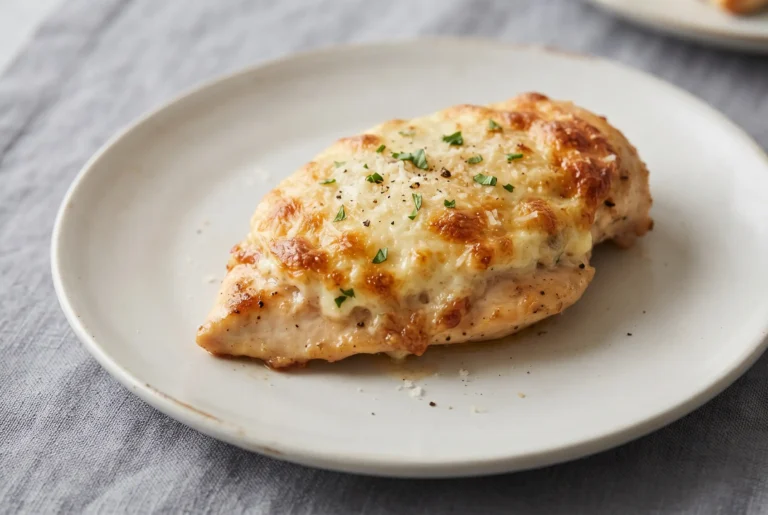
Dill Pickle Parmesan Chicken Recipe with Crispy Coating
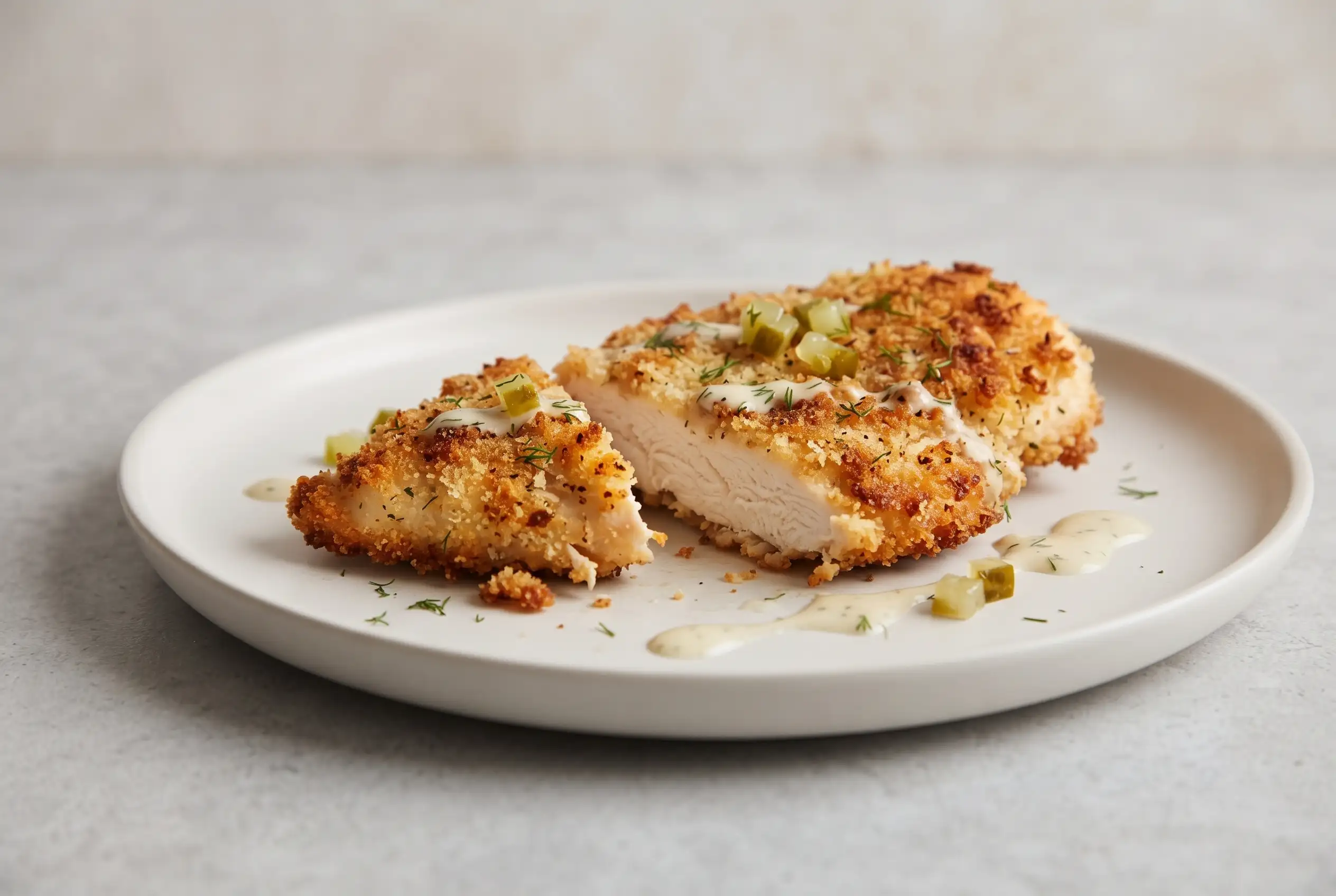
dill pickle parmesan chicken combines a tangy pickle juice marinade with a golden Parmesan coating designed for a crisp, savory finish. The dish uses a seasoned brine to prepare the chicken before a layered breading creates a sturdy crust that stays attached during frying.
The contrast comes from several carefully balanced elements: acidic pickle flavor inside the chicken, a salty Parmesan exterior, and a crunchy breadcrumb layer that delivers texture with every bite. The result is a restaurant-inspired fried chicken variation built around bold flavor and controlled cooking.
Dill Pickle Parmesan Chicken Builds Tangy Crunch
Pickle juice creates the foundation of this chicken preparation by adding seasoning before the breading begins. The brine works with the chicken breast to improve moisture retention during the high heat of frying, helping the meat stay tender beneath the crisp coating.
A multi-stage coating process gives the exterior its signature structure. Flour creates the first dry layer, eggs help the crust adhere, and Parmesan combined with breadcrumbs forms the textured surface that browns during cooking.
Unlike a simple breaded chicken cutlet, this crispy dill pickle chicken recipe depends on the relationship between the marinade and crust. The tang from the dill pickle juice carries through the meat while the Parmesan crust adds depth, creating a balanced combination of acidity, salt, and crunch.
Pickle Brine Shapes Tender Chicken Texture
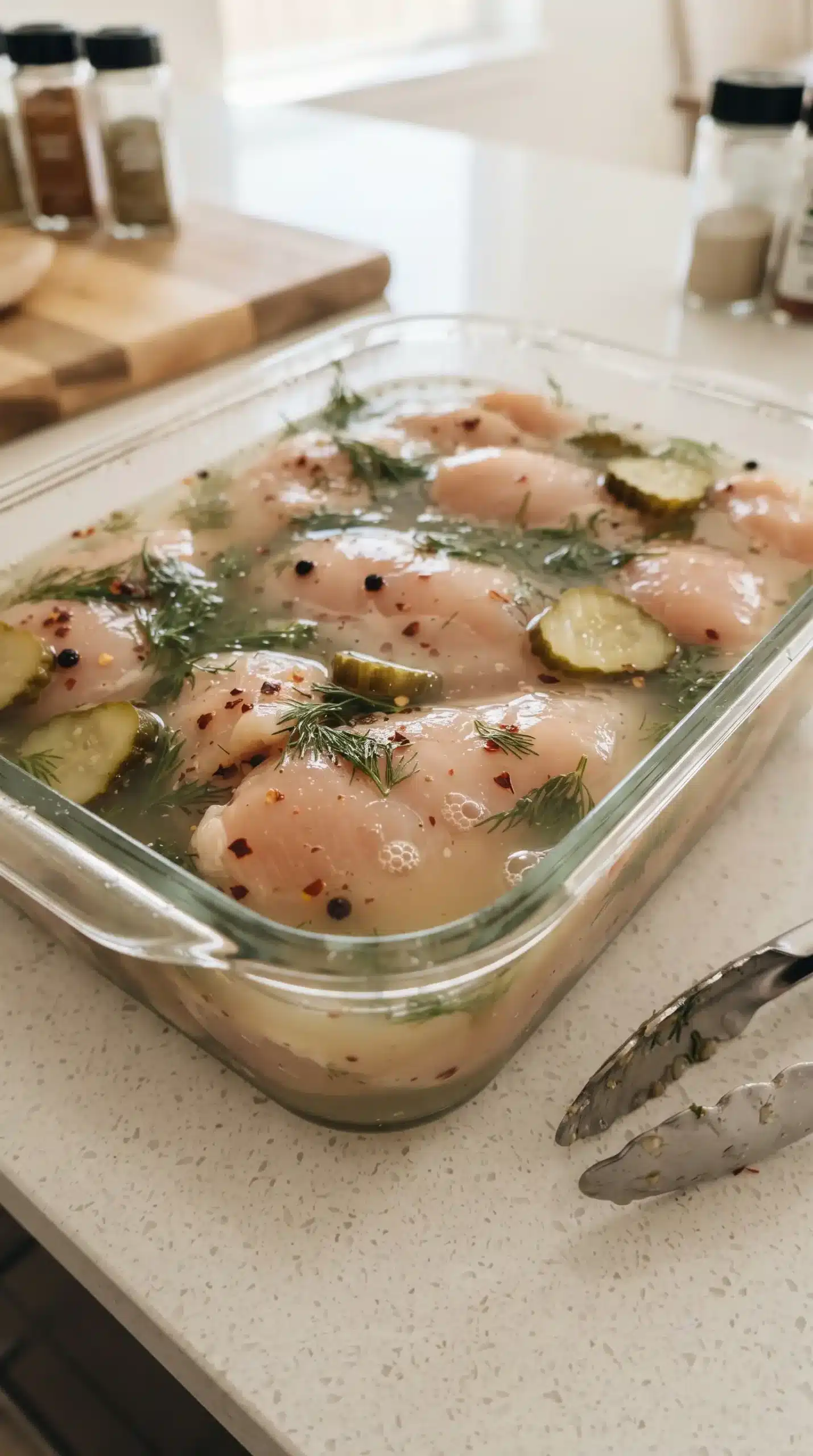
The pickle juice marinade is the defining preparation choice for this dish. Allowing the chicken to absorb the seasoned liquid before coating helps develop flavor throughout the meat while preparing it for the intense heat of frying.
Parmesan Crust Ingredients Control the Final Bite
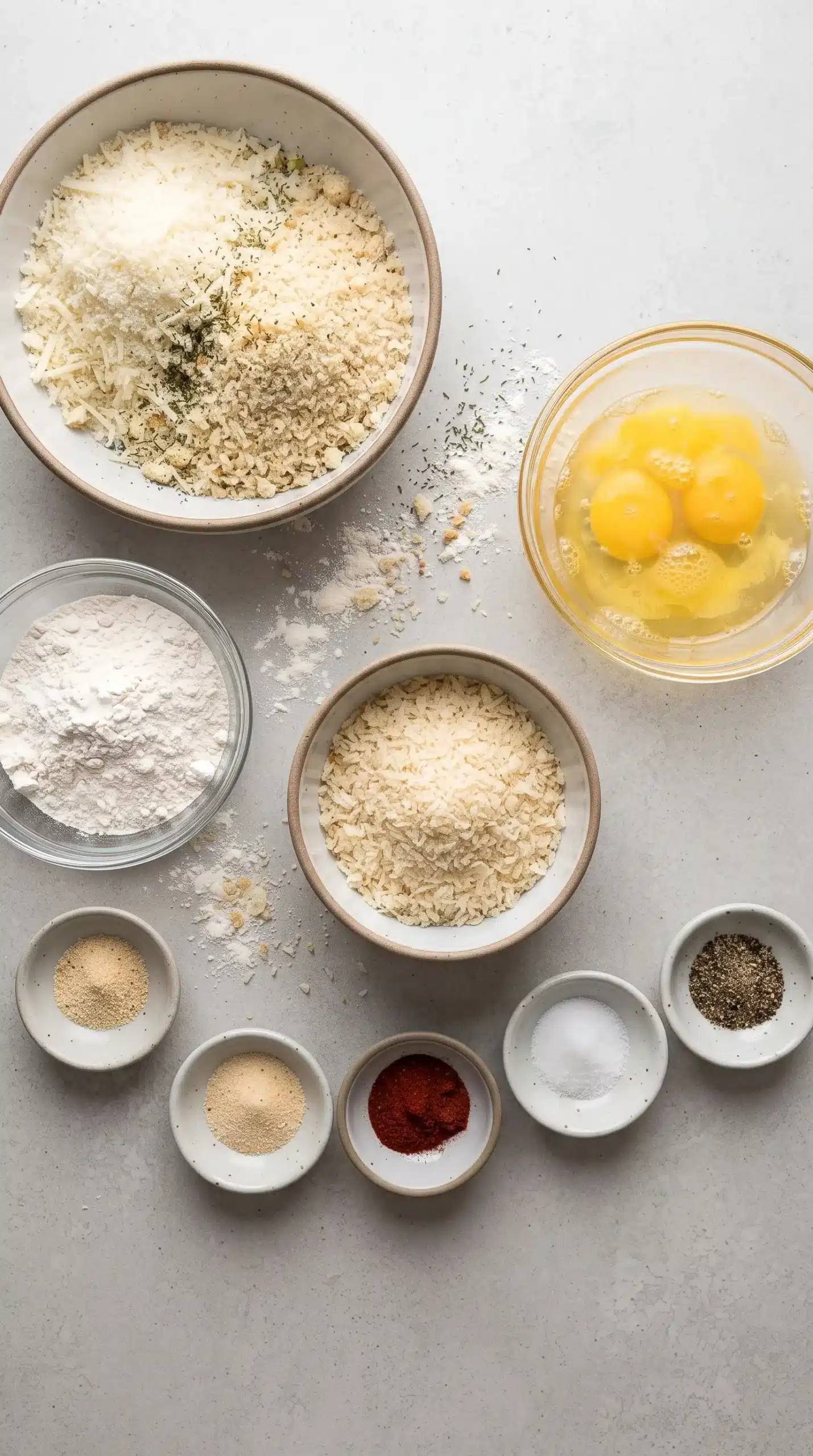
The breading mixture determines how the finished chicken feels when sliced. Freshly grated Parmesan works with breadcrumbs to create a crisp surface that develops savory browned notes as it cooks in hot oil. A breaded chicken preparation depends on careful coating and cooking control to preserve a delicate exterior.
Breadcrumb selection also affects the coating texture. Seasoned breadcrumbs provide dependable coverage, while Panko’s larger flakes can create a more open, airy crunch. Both options support the Parmesan layer when pressed firmly onto the chicken.
The supporting seasonings in the coating provide additional structure to the flavor profile. Garlic powder, onion powder, smoked paprika, sea salt, and black pepper are combined with the dry ingredients so the crust carries seasoning evenly across each piece.
| Coating Element | Primary Role | Cooking Result |
|---|---|---|
| All-purpose flour | Creates the first dry surface | Helps the egg layer attach |
| Whisked eggs | Binds the breading layers | Supports full crust coverage |
| Parmesan and breadcrumbs | Forms the outer crust | Creates savory crisp texture |
Coating Choices Create a Reliable Crispy Dill Pickle Chicken Recipe
Strong crust coverage depends on pressing the Parmesan-breadcrumb mixture firmly onto the chicken after the egg wash. Leaving bare areas can create uneven browning and reduce the signature crunch expected from parmesan crusted pickle chicken.
Frying Temperature Controls the Parmesan Crust
Cooking control matters because the crust and chicken need to finish at the same time. A heavy-bottomed skillet with oil heated to 350°F provides the environment needed for browning without allowing the Parmesan coating to burn too quickly.
Maintaining steady oil temperature prevents excess oil absorption and helps preserve the clean texture of the breading. Frying each piece carefully allows the crust to develop while the chicken reaches a safe internal temperature of 165°F.
Draining the cooked chicken on a wire rack protects the underside of the coating. Air circulation prevents trapped steam from softening the crust, keeping the exterior crisp after frying.
Crispy Dill Pickle Parmesan Chicken Mistakes That Ruin the Crust
Several small handling errors can change the texture of the finished chicken. Because the crust relies on precise layering, attention to preparation details makes a noticeable difference.
- Over-marinating: Leaving chicken in pickle juice beyond the recommended window can negatively affect texture because the acidic brine continues changing the meat.
- Skipping surface drying: Excess moisture after brining can weaken flour adhesion and create an uneven coating.
- Using unstable oil: Allowing frying oil conditions to fluctuate can leave the crust greasy or cause Parmesan to darken too quickly.
- Covering hot chicken: Trapping steam immediately after frying can soften the crispy exterior.
Preventing these issues keeps the pickle flavor noticeable while protecting the crunchy Parmesan coating that defines the dish.
Serving Choices Balance the Salty Fried Chicken
A fresh squeeze of lemon provides brightness that complements the rich fried coating. The citrus contrast helps balance the salty Parmesan and pickle flavors without overpowering the chicken.
Variations Keep Pickle Juice Marinated Chicken Flexible
The core technique can be adjusted while keeping the main flavor identity intact. Air frying offers an alternative approach by coating the chicken with olive oil spray and cooking it at 375°F until the crust becomes crisp.
A spicy version can be created by choosing hot or spicy dill pickle juice for the marinade. The pickle brine introduces heat alongside its familiar tang, creating a deeper flavor throughout the chicken.
Another option uses a buttermilk-based coating variation. Replacing the egg wash with buttermilk and a splash of pickle juice creates a thicker crust style while maintaining the connection between acidity and tenderness.
Storage Decisions Protect the Crispy Coating
Cooked chicken should be stored in an airtight container with parchment paper between stacked pieces to help protect the breading. Freezing individual pieces before bagging can also prevent them from sticking together.
Crust Recovery Depends on Careful Reheating
Reheating methods have a major effect on the coating texture. A microwave can soften the breading, while a 400°F oven or air fryer helps restore the crisp surface by reheating the fats in the Parmesan and breadcrumbs.
Placing the chicken where air can circulate during reheating supports better texture recovery. This approach is especially useful when preserving the contrast between the crunchy exterior and juicy interior.
Frozen portions benefit from careful warming because the crust needs enough heat to regain its texture without drying the chicken. Gentle reheating maintains the qualities that make this preparation distinctive.
Crispy Dill Pickle Parmesan Chicken Delivers Balanced Contrast
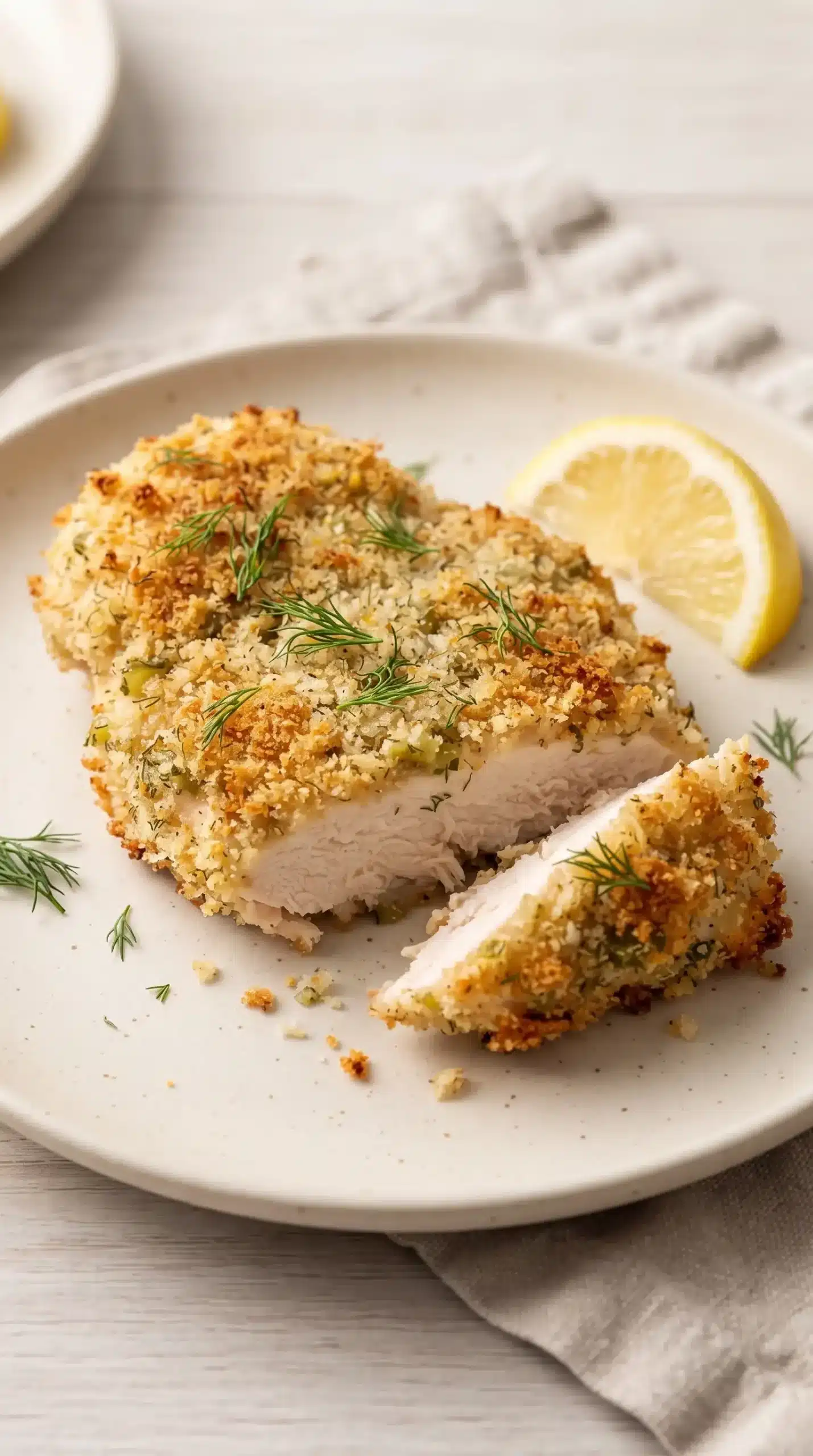
The strongest feature of dill pickle parmesan chicken comes from the way the brine and crust work together. The pickle juice creates a seasoned interior, while the Parmesan coating builds the crisp, savory exterior that defines the dish.
Careful attention to coating coverage, oil temperature, and resting technique creates a dependable fried chicken experience with bold flavor and a structured crunch.
Crispy Dill Pickle Parmesan Chicken Questions About Brining and Crispiness
How long should the chicken stay in pickle juice?
The chicken is best marinated for about 30 to 60 minutes, with the total marinating period kept under 2 hours. Longer exposure to the acidic pickle juice can begin changing the texture of the meat.
Why does Parmesan help the chicken crust become crispy?
Parmesan contributes both flavor and structure to the coating. When exposed to hot oil, the cheese browns alongside the breadcrumbs and helps create a lacy, savory exterior.
Can Crispy Dill Pickle Parmesan Chicken be made gluten-free?
The standard version uses all-purpose flour and breadcrumbs, but the coating can be adapted with almond flour and gluten-free Panko or another suitable crunchy substitute.
What keeps the breading from becoming soft after frying?
A wire rack allows steam to escape from the entire surface of the chicken. Avoiding prolonged contact with paper towels or trapped moisture helps maintain the crust.
How can the chicken be reheated without losing its crunch?
Using an oven or air fryer restores more of the original coating texture because dry heat helps reactivate the crisp qualities of the Parmesan and breadcrumb layer.
Dill Pickle Parmesan Chicken Recipe with Crispy Coating
Ingredients
Method
- Place the chicken breasts in the strained dill pickle juice, cover, and refrigerate for at least 30 minutes and up to 2 hours.
- Prepare three shallow dishes: mix the flour, garlic powder, onion powder, smoked paprika, salt, and pepper in the first; add the whisked eggs to the second; combine the breadcrumbs and Parmesan cheese in the third.
- Remove the chicken from the pickle juice and lightly pat dry. Coat each breast in the seasoned flour, dip into the eggs, then press into the Parmesan breadcrumb mixture until evenly covered.
- Heat about 1/2 inch of high-smoke point oil in a heavy-bottomed skillet to 350°F / 175°C.
- Fry the breaded chicken breasts for 5–7 minutes per side until the coating is golden and the chicken reaches an internal temperature of 165°F / 74°C.
- Move the fried chicken to a wire rack to drain before serving to help keep the coating crisp.